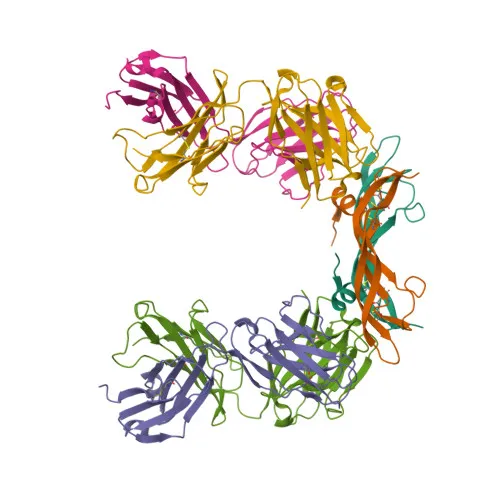
Polyclonal Antibodies
Anti-VEGFB Polyclonal Antibody for WB, IHC-P, ELISA - P49765
Item Number : CM0015955
Price varies based on specs and customizations
- Application
- WB, IHC-P, ELISA
- Cross Reactivity
- Human, Mouse, Rat
- Protein Weight
- 22kDa

Shipping:
Contact us to get shipping details Enjoy On-time Dispatch Guarantee.
Why Choose Us
Easy ordering process, quality products, and dedicated support for your business success.
Core Product Specifications and Parameters
| Parameter | Value |
|---|---|
| Product Name | VEGFB Rabbit pAb |
| Remarks/Alias | VRF; VEGFL; VEGFB |
| Species | Human |
| Gene ID (Human) | 7423 |
| Gene ID | 7423 |
| Immunogen | A synthetic peptide corresponding to a sequence within amino acids 1-100 of mouse VEGFB (NP_035827.1). |
| Source | Rabbit |
| Category | Polyclonal Antibodies |
| Application | WB, IHC-P, ELISA |
| Cross Reactivity | Human, Mouse, Rat |
| SWISS | P49765 |
| Protein Weight | 22kDa |
| Shipping | Ice bag |
Biological Background: VEGFB Function and Localization
- Vascular endothelial growth factor B (VEGFB), also known as VEGF-related factor (VRF) or VEGFL, is a member of the platelet-derived growth factor (PDGF)/VEGF family of growth factors.
- The gene encodes at least two isoforms via alternative splicing: a secreted heparin-binding form (VEGF-B167) and a cell-surface-associated form (VEGF-B186) whose neuropilin-1 binding is regulated by proteolysis.
- VEGFB primarily acts as a mitogen and survival factor for endothelial cells, playing key roles in angiogenesis and vascular maintenance.
- VEGF-B167 binds to heparin and neuropilin-1, while VEGF-B186 binding to neuropilin-1 requires proteolytic processing.
- The protein is secreted and contains a signal peptide, disulfide bonds, and glycosylation sites, characteristic of growth factors.
- It is expressed in most tissues, with highest levels in heart, skeletal muscle, and pancreas, but notably absent in the liver.
- Key structural features include a cystine-knot motif typical of the VEGF family, essential for receptor binding and dimerization.
Experimental Guidance and Technical Tips
- The synthetic peptide immunogen corresponds to amino acids 1-100 of mouse VEGFB, a region with high sequence conservation across human, mouse, and rat, supporting the observed cross-reactivity.
- For Western blotting, a band around 22 kDa is expected under reducing conditions; consider optimizing reducing agent concentrations to resolve potential isoforms.
- In immunohistochemistry (paraffin-embedded sections), antigen retrieval may be necessary; consider including heart or skeletal muscle as positive control tissues based on high VEGFB expression.
- For ELISA applications, this polyclonal antibody can be used as either capture or detection reagent; confirm compatibility with the specific assay format and validate with recombinant VEGFB standards.
CamelBio: Your One-Stop Sourcing Bridge
CamelBio offers diagnostic manufacturers, labs, and research institutes a reliable one-stop sourcing solution for high-quality IVD raw materials like this anti-VEGFB polyclonal antibody. In addition to validated antibodies for key angiogenic targets, we provide optimized antibody pairs, bulk ancillary reagents, and support for rare target sourcing to accelerate your assay development from concept to clinic. Explore our comprehensive portfolio for cardiovascular and oncology research applications.
REQUEST A QUOTE
Our professional team will reply to you within one business day. Please feel free to contact us!