Polyclonal Antibodies
Anti-VEGFB Polyclonal Antibody for WB, IF/ICC, ELISA - P49765
Item Number : CM0020978
Price varies based on specs and customizations
- Application
- WB, IF/ICC, ELISA
- Cross Reactivity
- Human, Mouse, Rat
- Protein Weight
- 22kDa

Shipping:
Contact us to get shipping details Enjoy On-time Dispatch Guarantee.
Why Choose Us
Easy ordering process, quality products, and dedicated support for your business success.
Core Product Specifications and Parameters
| Parameter | Value |
|---|---|
| Product Name | VEGFB Rabbit pAb |
| Remarks/Alias | VRF; VEGFL; VEGFB |
| Species | Human |
| Gene ID (Human) | 7423 |
| Immunogen | Recombinant fusion protein containing a sequence corresponding to amino acids 30-121 of human VEGFB (NP_003368.1) |
| Source | Rabbit |
| Category | Polyclonal Antibodies |
| Application | WB, IF/ICC, ELISA |
| Cross Reactivity | Human, Mouse, Rat |
| SWISS | P49765 |
| Protein Weight | 22kDa |
| Shipping | Ice bag |
Biological Background: VEGFB Function and Localization
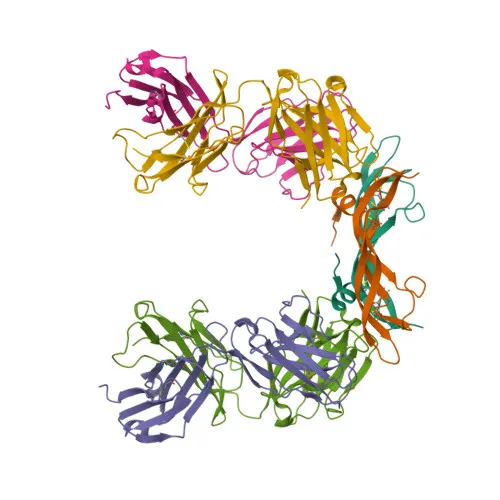
- Vascular endothelial growth factor B (VEGFB) is a secreted growth factor that promotes endothelial cell proliferation and survival, playing a key role in angiogenesis and vascular homeostasis.
- VEGFB exists as two major isoforms, VEGF-B167 and VEGF-B186, generated by alternative splicing; both isoforms share a common N-terminal region but differ in their C-terminal domains.
- VEGF-B167 binds to heparin and neuropilin-1 with high affinity, while the neuropilin-1 binding of VEGF-B186 is regulated by proteolytic processing.
- The protein is classified as a glycoprotein with disulfide bonds, characteristic of the VEGF/PDGF family of growth factors, and functions as a mitogen for endothelial cells.
- Subcellularly, VEGFB is secreted into the extracellular space, where it can interact with receptors on target cells to activate downstream signaling pathways.
- Tissue expression analysis reveals that VEGFB is broadly expressed, with highest levels in heart, skeletal muscle, and pancreas; it is absent in the liver.
Experimental Guidance and Technical Tips
- The immunogen used to raise this antibody covers amino acids 30-121 of human VEGFB, a region well-conserved between the two isoforms and across species, which may contribute to the observed cross-reactivity with mouse and rat.
- For Western blot (WB), consider using a reducing sample buffer and detect a band at approximately 22 kDa, corresponding to the mature monomeric form; however, dimers or glycosylated variants may also be observed.
- Immunofluorescence (IF/ICC) may require optimization of fixation and permeabilization conditions, as VEGFB is a secreted protein; incubation with a protein transport inhibitor may enhance intracellular staining.
- ELISA performance should be validated with appropriate recombinant VEGFB standards and sample matrices, as the antibody is a polyclonal preparation and may exhibit lot-to-lot variability.
- Always titrate the antibody in your specific experimental system to determine the optimal working dilution, and include appropriate positive and negative controls.
CamelBio: Your One-Stop Sourcing Bridge
CamelBio offers diagnostic manufacturers and research laboratories a streamlined sourcing solution for IVD raw materials, including validated antibody pairs, bulk polyclonal antibodies, and ancillary reagents. With a focus on cardiovascular and angiogenesis-related targets like VEGFB, our portfolio supports the development of robust immunoassays and research tools. We provide one-stop access to technical services and consulting to accelerate your project from concept to clinical application.
REQUEST A QUOTE
Our professional team will reply to you within one business day. Please feel free to contact us!