Monoclonal Antibodies
Anti-VDR Rabbit Monoclonal Antibody for WB, ELISA - P11473
Item Number : CM0003946
Price varies based on specs and customizations
- Application
- WB, ELISA
- Cross Reactivity
- Human, Mouse
- Protein Weight
- 48kDa

Shipping:
Contact us to get shipping details Enjoy On-time Dispatch Guarantee.
Why Choose Us
Easy ordering process, quality products, and dedicated support for your business success.
Core Product Specifications and Parameters
| Parameter | Value |
|---|---|
| Product Name | VDR Rabbit mAb |
| Remarks/Alias | NR1I1; PPP1R163; VDR |
| Species | Human |
| GeneID (Human) | 7421 |
| Immunogen | Recombinant fusion protein containing a sequence corresponding to amino acids 1-300 of human VDR (NP_000367.1). |
| Source | Rabbit |
| Category | Monoclonal Antibodies |
| Application | WB, ELISA |
| Cross Reactivity | Human, Mouse |
| SWISS | P11473 |
| Protein Weight | 48kDa |
| Shipping | Ice bag |
Biological Background: VDR Function and Localization
-
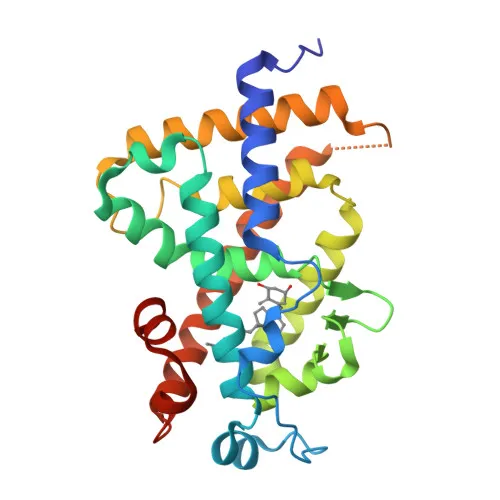
VDR acts as a nuclear receptor for calcitriol, the hormonally active form of vitamin D3, which mediates vitamin D actions on target cells. Related references: PMID:10678179, PMID:15728261, PMID:16913708
-
Upon vitamin D3 binding, VDR forms heterodimers with the retinoid X receptor (RXR) and enters the nucleus. Related references: PMID:28698609
-
The VDR-RXR heterodimers bind to specific DNA response elements and activate transcription of vitamin D3-responsive genes. Related references: PMID:28698609
-
VDR plays a central role in calcium homeostasis by regulating gene expression involved in intestinal absorption, renal reabsorption, and bone metabolism.
-
It additionally functions as a receptor for the secondary bile acid lithocholic acid (LCA) and its metabolites, suggesting roles beyond traditional vitamin D signaling. Related references: PMID:12016314, PMID:32354638
-
Subcellular localization: predominantly nuclear but also detected in the cytoplasm.
-
Features: contains a zinc-finger DNA-binding domain, undergoes alternative splicing, and belongs to the nuclear receptor subfamily 1 group I member 1 (NR1I1).
Experimental Guidance and Technical Tips
- For Western blotting, expect a band near 48 kDa; use appropriate loading controls and consider nuclear enrichment for improved detection of this low-abundance transcription factor.
- The immunogen (aa 1–300) covers the N-terminal DNA-binding domain; the antibody may detect both liganded and unliganded VDR if the epitope remains accessible.
- For ELISA applications, pairing with a detection antibody targeting a non-overlapping epitope is recommended; validate in relevant sample matrices such as cell lysates or nuclear extracts.
- Cross-reactivity with mouse VDR is confirmed; verify sequence homology for other species before use.
CamelBio: Your One-Stop Sourcing Bridge
CamelBio provides diagnostic manufacturers, laboratories, and research institutes with one-stop access to IVD raw materials, technical services, and consulting. For VDR-related projects, we supply validated monoclonal antibodies, optimized antibody pairs, and bulk ancillary reagents. Our integrated supply chain supports every stage from concept to clinic, enabling efficient development of immunoassays for vitamin D receptor research, calcium metabolism, and endocrine disorders.
REQUEST A QUOTE
Our professional team will reply to you within one business day. Please feel free to contact us!