Polyclonal Antibodies
Anti-β-Catenin Rabbit Polyclonal Antibody for WB, IHC-P, IP, ELISA - P35222
Item Number : CM0015102
Price varies based on specs and customizations
- Application
- WB, IHC-P, IP, ELISA
- Cross Reactivity
- Human, Mouse, Rat
- Protein Weight
- 85kDa

Shipping:
Contact us to get shipping details Enjoy On-time Dispatch Guarantee.
Why Choose Us
Easy ordering process, quality products, and dedicated support for your business success.
Core Product Specifications and Parameters
| Parameter | Value |
|---|---|
| Product Name | β-Catenin Rabbit pAb |
| Remarks/Alias | EVR7; CTNNB; MRD19; NEDSDV; armadillo; β-Catenin |
| Species | Human |
| Gene ID (Human) | 1499 |
| Gene ID | 1499 |
| Immunogen | Recombinant protein|Recombinant fusion protein containing a sequence corresponding to amino acids 667-781 of human β-Catenin (NP_001895.1) |
| Source | Rabbit |
| Category | Polyclonal Antibodies |
| Application | WB, IHC-P, IP, ELISA |
| Cross Reactivity | Human, Mouse, Rat |
| SWISS | P35222 |
| Protein Weight | 85kDa |
| Shipping | Ice bag |
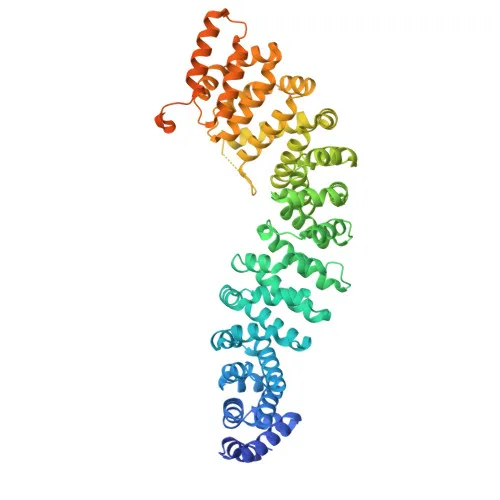
Biological Background: β-Catenin Function and Localization
- Catenin beta-1 (β-Catenin) is a multi-functional protein encoded by the CTNNB1 gene (CTNNB). It serves dual roles in cell adhesion and transcriptional regulation.
- In the absence of Wnt ligand, β-Catenin is phosphorylated by a destruction complex (AXIN, APC, GSK3B, CSNK1A1) and subsequently ubiquitinated, targeting it for proteasomal degradation. Upon Wnt stimulation, it accumulates and translocates to the nucleus to coactivate TCF/LEF transcription factors, driving expression of Wnt target genes. Related references: PMID:17524503, PMID:18077326, PMID:18086858
- It is an essential component of the E-cadherin:catenin adhesion complex at adherens junctions, linking cadherins to the actin cytoskeleton and regulating cell-cell adhesion.
- β-Catenin shuttles between multiple subcellular compartments including the cytoplasm, nucleus, adherens junctions, cell membrane, centrosomes, spindle poles, synapses, and cilium basal body, reflecting its diverse biological functions.
- Post-translational modifications such as phosphorylation, ubiquitination, acetylation, and S-nitrosylation tightly regulate its stability, localization, and transcriptional activity.
- Promotes epithelial-to-mesenchymal transition (EMT) by activating transcription of β-Catenin/TCF target genes, a process implicated in cancer metastasis. Related references: PMID:29910125
- Involved in insulin internalization through the CDK2/PTPN6/CTNNB1/CEACAM1 pathway and blocks anoikis in malignant epithelial cells by downregulating DAPK2. Related references: PMID:21262353, PMID:18957423
- Disrupts PML nuclear body formation by inhibiting RANBP2-mediated sumoylation of PML, potentially contributing to oncogenesis. Related references: PMID:22155184
- Expressed in hair follicles, colon, cortical neurons, and breast cancer tissues. Related references: PMID:29367600
Experimental Guidance and Technical Tips
- The immunogen corresponds to the C-terminal region (amino acids 667–781) of human β-Catenin. This region is relatively conserved across species, correlating with the antibody's reported cross-reactivity with mouse and rat.
- For Western blot (WB), a band at approximately 85 kDa is expected. Optimize blocking and antibody dilutions empirically, and include appropriate controls.
- In immunohistochemistry-paraffin (IHC-P), antigen retrieval methods and fixation conditions may affect staining. Validate in relevant tissue sections and consider using known positive and negative controls.
- The polyclonal nature of the antibody may provide robust detection across various applications, but lot-to-lot consistency should be confirmed for critical quantitative assays.
- When performing immunoprecipitation (IP), efficient pull-down may depend on antibody concentration, lysis buffer composition, and incubation time. Coupling the antibody to beads directly can reduce heavy chain interference in subsequent WB.
- For ELISA, use the antibody as a capture or detection reagent after determining the optimal pairing concentration and specificity.
CamelBio: Your One-Stop Sourcing Bridge
CamelBio supports diagnostic manufacturers and research laboratories by offering a comprehensive portfolio of IVD raw materials, including validated antibody pairs, optimized monoclonal and polyclonal antibodies, and bulk ancillary reagents. Our expertise in Wnt signaling, cancer biology, and cell adhesion targets ensures customized sourcing solutions for β-Catenin antibodies and related reagents. Whether you need rare-target raw materials or technical consulting from concept to clinic, CamelBio provides a reliable, integrated procurement bridge to accelerate your assay development.
Product Datasheet
Anti-β-Catenin Rabbit Polyclonal Antibody for WB, IHC-P, IP, ELISA - P35222
REQUEST A QUOTE
Our professional team will reply to you within one business day. Please feel free to contact us!