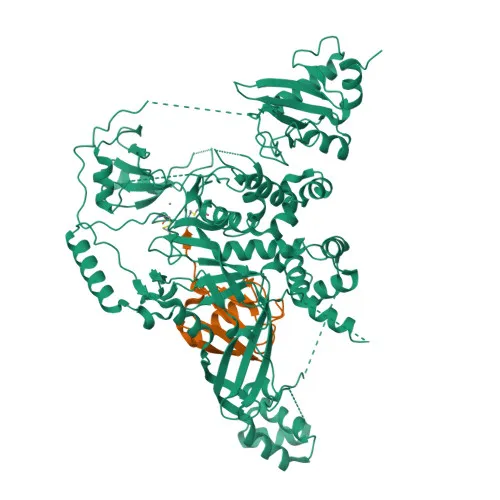
Polyclonal Antibodies
Anti-USP5 Rabbit Polyclonal Antibody for WB, IHC-P, IF/ICC, ELISA - P45974
Item Number : CM0026126
Price varies based on specs and customizations
- Application
- WB, IHC-P, IF/ICC, ELISA
- Cross Reactivity
- Human, Mouse, Rat
- Protein Weight
- 96kDa

Shipping:
Contact us to get shipping details Enjoy On-time Dispatch Guarantee.
Why Choose Us
Easy ordering process, quality products, and dedicated support for your business success.
Core Product Specifications and Parameters
| Parameter | Value |
|---|---|
| Product Name | USP5 Rabbit pAb |
| Remarks/Alias | ISOT; USP5 |
| Species | Human |
| GeneID (human) | 8078 |
| GeneID | 8078 |
| Immunogen | Recombinant fusion protein containing a sequence corresponding to amino acids 1-280 of human USP5 (NP_003472.2). |
| Source | Rabbit |
| Category | Polyclonal Antibodies |
| Application | WB, IHC-P, IF/ICC, ELISA |
| Cross Reactivity | Human, Mouse, Rat |
| SWISS | P45974 |
| Protein Weight | 96kDa |
| Shipping | Ice bag |
Biological Background: USP5 Function and Localization
- USP5 (Ubiquitin carboxyl-terminal hydrolase 5), also known as Isopeptidase T, is a deubiquitinating enzyme that cleaves isopeptide bonds between ubiquitin and target proteins, regulating key signaling pathways such as NF-kappa-B, Wnt/beta-catenin, and cytokine production.
- It promotes Wnt signaling by deubiquitinating and stabilizing FOXM1, which in turn facilitates the recruitment of beta-catenin to Wnt target gene promoters. Related references: PMID:26912724
- USP5 regulates the assembly and disassembly of heat-induced stress granules by mediating the hydrolysis of unanchored ubiquitin chains. Related references: PMID:29567855
- In innate immunity, it stabilizes TXNIP to promote lipopolysaccharide-induced apoptosis and inflammatory response. Related references: PMID:37534934
- USP5 acts as a negative regulator of autophagy by modulating ULK1 at both protein and mRNA levels. Related references: PMID:37607937
- It negatively regulates type I interferon production by removing both Lys-48 and Lys-63 linked polyubiquitin chains from IRF3. Related references: PMID:39761299
- USP5 influences DNA mismatch repair by stabilizing MLH1, counteracting the ubiquitin ligase UBR4. Related references: PMID:39032648
- Upon insulin stimulation, mTORC1-mediated phosphorylation of USP5 enhances YTHDF1 stability by removing Lys-11-linked polyubiquitination. Related references: PMID:39900921
- Subcellularly, USP5 is predominantly cytoplasmic but is also found in stress granules and the nucleus, reflecting its diverse functional roles.
- It belongs to the peptidase C19 family and contains zinc-finger domains, indicative of its metal-dependent catalytic activity.
Experimental Guidance and Technical Tips
- The immunogen comprises residues 1–280 of human USP5, located at the N-terminus; this may favor detection of full-length and N-terminal isoforms in denaturing and native conditions.
- For Western blotting, a band near 96 kDa is expected; consider including positive and negative controls to confirm specificity in human, mouse, or rat lysates.
- In IHC-P, antigen retrieval conditions should be optimized for the specific tissue; titrate antibody concentration to reduce background.
- For IF/ICC, co-staining with stress granule markers or nuclear markers can help validate USP5 localization changes under stress or signaling perturbations.
- ELISA assays should use carefully designed peptide or recombinant protein substrates to test deubiquitinase activity if functional studies are intended.
- Given the multi-species reactivity, this antibody may be a useful tool for translating findings from rodent models to human systems.
CamelBio: Your One-Stop Sourcing Bridge
CamelBio supports diagnostic manufacturers, laboratories, and research institutes with comprehensive access to IVD raw materials, including validated antibody pairs, optimized polyclonal and monoclonal antibodies, bulk ancillary reagents, and rare target sourcing. This anti-USP5 polyclonal antibody addresses targets in the ubiquitin-proteasome and signaling pathway research areas, and CamelBio’s supply network can accommodate scaling and customization needs for projects moving from concept to clinic.
Product Datasheet
Anti-USP5 Rabbit Polyclonal Antibody for WB, IHC-P, IF/ICC, ELISA - P45974
REQUEST A QUOTE
Our professional team will reply to you within one business day. Please feel free to contact us!