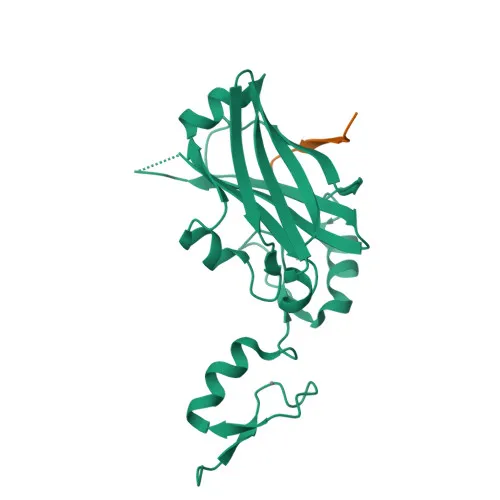
Polyclonal Antibodies
Anti-USP19 Rabbit Polyclonal Antibody for WB, IF/ICC, ELISA - O94966
Item Number : CM0029240
Price varies based on specs and customizations
- Application
- WB, IF/ICC, ELISA
- Cross Reactivity
- Human, Mouse
- Protein Weight
- 146kDa

Shipping:
Contact us to get shipping details Enjoy On-time Dispatch Guarantee.
Why Choose Us
Easy ordering process, quality products, and dedicated support for your business success.
Core Product Specifications and Parameters
| Parameter | Value |
|---|---|
| Product Name | USP19 Rabbit pAb |
| Remarks/Alias | ZMYND9; USP19 |
| Species | Human |
| GeneID (Human) | 10869 |
| Immunogen | Recombinant protein|Recombinant fusion protein containing a sequence corresponding to amino acids 1-200 of human USP19 (NP_001186089.1) |
| Source | Rabbit |
| Category | Polyclonal Antibodies |
| Application | WB, IF/ICC, ELISA |
| Cross Reactivity | Human, Mouse |
| SWISS | O94966 |
| Protein Weight | 146kDa |
| Shipping | Ice bag |
Biological Background: USP19 Function and Localization
- USP19 is a deubiquitinating enzyme that removes ubiquitin moieties from target proteins, preventing their degradation and regulating various cellular processes.
- It plays a role in endoplasmic-reticulum-associated degradation (ERAD) by stabilizing E3 ubiquitin ligases SYVN1 and MARCHF6, thus facilitating the turnover of ERAD substrates. Related references: PMID:19465887, PMID:24356957
- USP19 stabilizes BIRC2/c-IAP1 and BIRC3/c-IAP2 by preventing their ubiquitination, thereby modulating apoptosis pathways. Related references: PMID:21849505
- Critical for hypoxic response, USP19 rescues HIF1A from degradation in a non-catalytic manner and deubiquitinates FUNDC1 to promote mitophagy. Related references: PMID:22128162, PMID:33978709
- It protects against mitochondrial damage and ferroptosis by targeting and stabilizing NADPH oxidase 4 (NOX4). Related references: PMID:38943386
- USP19 negatively regulates NF-kappa-B signaling by removing Lys-27- and Lys-63-linked polyubiquitin chains from MAP3K7, attenuating inflammatory responses. Related references: PMID:31127032
- It modulates the aggregation of polyQ-expanded huntingtin (HTT) through HSP90AA1, implicating it in neurodegenerative disease mechanisms. Related references: PMID:33094816
- USP19 is localized to the endoplasmic reticulum membrane and contains a zinc-finger MYND domain, consistent with its transmembrane and thiol protease functions.
Experimental Guidance and Technical Tips
- For Western blotting, validate the ~146 kDa band with appropriate molecular weight markers and consider extended transfer times for this high molecular weight protein.
- In immunofluorescence/immunocytochemistry, employ appropriate fixation and permeabilization methods to access the endoplasmic reticulum-localized USP19.
- For ELISA, optimize coating concentrations and detection conditions using purified protein or cell lysates as controls.
- Given cross-reactivity with mouse, this antibody can be utilized in mouse tissue or cell-based studies; validate species-specific reactivity in your model system.
- To assess USP19 function, consider using positive controls such as cells treated with hypoxia mimetics (e.g., CoCl2) or ER stress inducers (e.g., tunicamycin).
- As a polyclonal antibody, lot-to-lot consistency should be verified for critical experiments.
CamelBio: Your One-Stop Sourcing Bridge
CamelBio serves as a comprehensive partner for IVD raw material sourcing, offering validated antibodies, bulk reagents, and rare target access to support diagnostic and research workflows. For studies on ubiquitination, deubiquitination, ERAD, or hypoxia, we supply tailored solutions including anti-USP19 and related ancillary materials. Contact us to streamline your procurement from discovery to clinical application.
REQUEST A QUOTE
Our professional team will reply to you within one business day. Please feel free to contact us!