Monoclonal Antibodies
Anti-UQCRFS1 Rabbit Monoclonal Antibody for WB, IF/ICC, ELISA - P47985
Item Number : CM0005813
Price varies based on specs and customizations
- Application
- WB, IF/ICC, ELISA
- Cross Reactivity
- Human, Mouse, Rat
- Protein Weight
- 30kDa

Shipping:
Contact us to get shipping details Enjoy On-time Dispatch Guarantee.
Why Choose Us
Easy ordering process, quality products, and dedicated support for your business success.
Core Product Specifications and Parameters
| Parameter | Value |
|---|---|
| Product Name | UQCRFS1 Rabbit mAb |
| Remarks/Alias | RIP1; RIS1; RISP; UQCR5; MC3DN10; UQCRFS1 |
| Species | Human |
| GeneID (Human) | 7386 |
| GeneID | 7386 |
| Immunogen | Synthetic Peptide|A synthetic peptide corresponding to a sequence within amino acids 175-274 of human UQCRFS1 (P47985). |
| Source | Rabbit |
| Category | Monoclonal Antibodies |
| Application | WB, IF/ICC, ELISA |
| Cross Reactivity | Human, Mouse, Rat |
| SWISS | P47985 |
| Protein Weight | 30kDa |
| Shipping | Ice bag |
Biological Background: UQCRFS1 Function and Localization
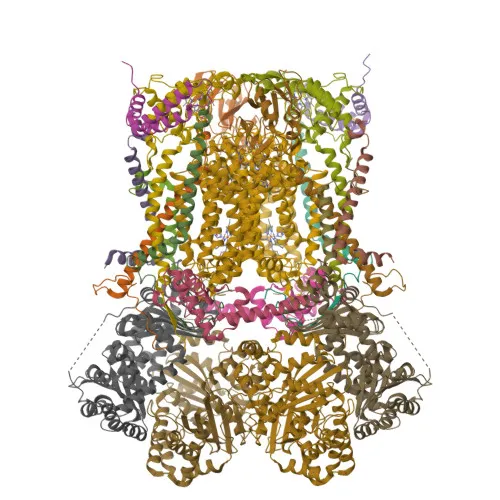
- UQCRFS1 (Rieske iron-sulfur protein, RISP) is a catalytic core subunit of the mitochondrial cytochrome b-c1 complex (complex III), which is part of the electron transport chain driving oxidative phosphorylation (PubMed:31883641). Related references: PMID:31883641
- The protein contains a 2Fe-2S iron-sulfur cluster and cycles between conformational states to transfer electrons from ubiquinol to cytochrome c during the Q cycle, linking redox reactions to proton translocation across the inner mitochondrial membrane.
- UQCRFS1 is anchored in the mitochondrial inner membrane and undergoes proteolytic processing upon incorporation into the complex III dimer; a fragment (subunit 9) is generated from its mitochondrial targeting sequence, and this processing is essential for proper complex assembly (PubMed:28673544). Related references: PMID:28673544
- Persistence of UQCRFS1-derived fragments can inhibit insertion and processing of newly imported UQCRFS1, negatively affecting complex III structure and function.
- Mutations in UQCRFS1 are linked to mitochondrial complex III deficiency, nuclear type 10 (MC3DN10), a severe mitochondrial disorder.
- The protein is a member of the Rieske iron-sulfur protein family, with conserved iron-sulfur cluster binding and disulfide bond formation.
- Keywords: 2Fe-2S, Iron-sulfur, Electron transport, Mitochondrion inner membrane, Respiratory chain, Primary mitochondrial disease.
Experimental Guidance and Technical Tips
- For Western blot, validate the antibody in your target cell line or tissue; the UQCRFS1 protein migrates at approximately 30 kDa under denaturing conditions.
- In immunofluorescence/immunocytochemistry, expect a punctate mitochondrial staining pattern; optimal fixation and permeabilization conditions should be determined empirically.
- For ELISA, consider direct or sandwich formats using recombinant UQCRFS1 protein or peptide as a positive control.
- The antibody is reported to detect human, mouse, and rat UQCRFS1; cross-reactivity with other species should be experimentally confirmed.
- When designing experiments, note that the immunogen corresponds to amino acids 175-274 within the UQCRFS1 sequence (UniProt P47985).
CamelBio: Your One-Stop Sourcing Bridge
CamelBio serves as a comprehensive IVD raw-material partner, offering diagnostic manufacturers ready access to validated antibody pairs, bulk monoclonal reagents, and ancillary components for targets like UQCRFS1 in mitochondrial research. Whether you need optimized antibodies for electron transport chain assays or reliable sourcing for complex III–related diagnostics, CamelBio streamlines procurement from discovery to clinical application. With a focus on rare target sourcing and full supply chain support, we help you accelerate assay development with confidence.
Product Datasheet
Anti-UQCRFS1 Rabbit Monoclonal Antibody for WB, IF/ICC, ELISA - P47985
REQUEST A QUOTE
Our professional team will reply to you within one business day. Please feel free to contact us!