Polyclonal Antibodies
Anti-UNC13D Polyclonal Antibody for WB, ELISA - Q70J99
Item Number : CM0014693
Price varies based on specs and customizations
- Application
- WB, ELISA
- Cross Reactivity
- Human, Mouse
- Protein Weight
- 123kDa

Shipping:
Contact us to get shipping details Enjoy On-time Dispatch Guarantee.
Why Choose Us
Easy ordering process, quality products, and dedicated support for your business success.
Core Product Specifications and Parameters
| Parameter | Value |
|---|---|
| Product Name | UNC13D Rabbit pAb |
| Remarks/Alias | FHL3, HLH3, HPLH3, Munc13-4, UNC13D |
| Species | Human |
| GeneID (Human) | 201294 |
| Immunogen | Recombinant fusion protein containing a sequence corresponding to amino acids 891-1090 of human UNC13D (NP_954712.1) |
| Source | Rabbit |
| Category | Polyclonal Antibodies |
| Application | WB, ELISA |
| Cross Reactivity | Human, Mouse |
| SWISS | Q70J99 |
| Protein Weight | 123kDa |
| Shipping | Ice bag |
Biological Background: UNC13D Function and Localization
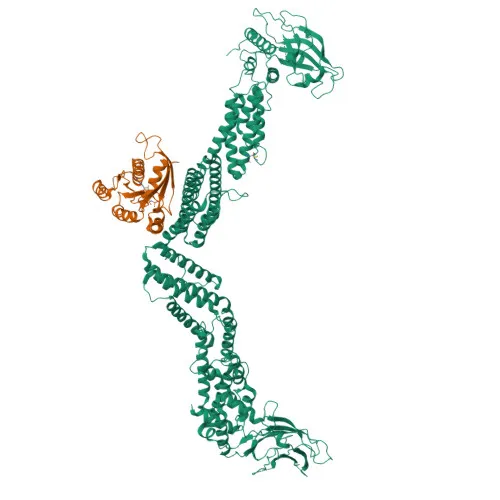
- UNC13D, also known as Munc13-4, is a member of the Unc-13 protein family and plays a critical role in cytotoxic granule exocytosis in lymphocytes.
- It is required for both granule maturation and granule docking/priming at the immunologic synapse, regulating the assembly of recycling and late endosomal structures that form an endosomal exocytic compartment.
- The protein regulates Ca(2+)-dependent secretory lysosome exocytosis in mast cells, highlighting its role in immune cell degranulation.
- Subcellular localization includes the cytoplasm, membrane, late endosome, recycling endosome, and lysosome, reflecting its dynamic trafficking roles.
- Tissue specificity: highly expressed in spleen, thymus, and leukocytes; moderate expression in lung and placenta; low expression in brain, heart, skeletal muscle, and kidney. Found in cytotoxic T-lymphocytes and mast cells.
- Key features include metal-binding and calcium-binding domains, multiple phosphorylation sites, and association with familial hemophagocytic lymphohistiocytosis (FHL).
Experimental Guidance and Technical Tips
- The immunogen covers the C‑terminal region (aa 891‑1090) of human UNC13D, which is likely well‑exposed and may generate antibodies recognizing the native protein. Consider validating specificity in knockout or knockdown models.
- For Western blot, the predicted molecular weight is ~123 kDa. Use a low‑percentage SDS‑PAGE gel (e.g., 6‑8%) and appropriate molecular weight markers. Test in human or mouse spleen, thymus, or leukocyte lysates.
- For ELISA, the recombinant immunogen or full‑length protein can serve as a coating antigen. Pairing with a capture antibody targeting a different epitope may enable sandwich ELISA development. Optimize dilutions and incubation conditions empirically.
- As a polyclonal antibody, it may recognize multiple epitopes; confirm band patterns and background with negative controls.
CamelBio: Your One-Stop Sourcing Bridge
CamelBio offers diagnostic manufacturers, labs, and research institutes one‑stop access to IVD raw materials, technical services, and consulting—from concept to clinic. The UNC13D Rabbit pAb supports immunological research into cytotoxic granule exocytosis, familial hemophagocytic lymphohistiocytosis, and immune cell function. Beyond this product, CamelBio provides validated antibody pairs, optimized polyclonal antibodies, bulk ancillary reagents, and rare‑target sourcing to accelerate your assay development and manufacturing projects.
REQUEST A QUOTE
Our professional team will reply to you within one business day. Please feel free to contact us!