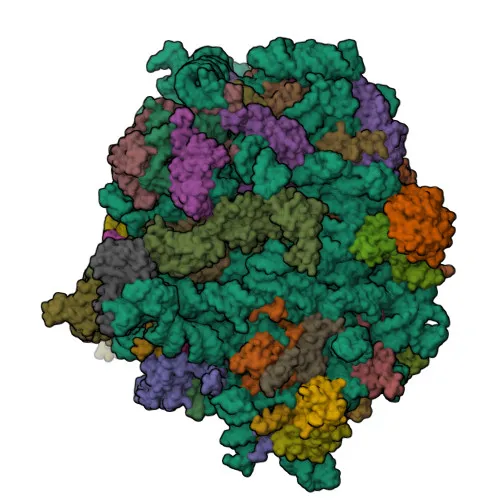
Monoclonal Antibodies
Anti-UFM1 Monoclonal Antibody for WB, IHC-P, ELISA - P61960
Item Number : CM0002216
Price varies based on specs and customizations
- Application
- WB, IHC-P, ELISA
- Cross Reactivity
- Human, Mouse, Rat
- Protein Weight
- 9kDa

Shipping:
Contact us to get shipping details Enjoy On-time Dispatch Guarantee.
Why Choose Us
Easy ordering process, quality products, and dedicated support for your business success.
Core Product Specifications and Parameters
| Parameter | Value |
|---|---|
| Product Name | UFM1 Rabbit mAb |
| Remarks/Alias | HLD14; BM-002; C13orf20; UFM1 |
| Species | Human |
| Gene ID (Human) | 51569 |
| Gene ID | 51569 |
| Immunogen | A synthetic peptide corresponding to a sequence within amino acids 1-85 of human UFM1 (P61960). |
| Source | Rabbit |
| Category | Monoclonal Antibodies |
| Application | WB, IHC-P, ELISA |
| Cross Reactivity | Human, Mouse, Rat |
| SWISS | P61960 |
| Protein Weight | 9kDa |
| Shipping | Ice bag |
Biological Background: UFM1 Function and Localization
- UFM1 is a ubiquitin-like modifier that is covalently attached to lysine residues of target proteins through a dedicated enzymatic cascade (E1: UBA5, E2: UFC1, E3: UFL1), a process termed ufmylation. Related references: PMID:15071506 PMID:20018847 PMID:27653677
- Ufmylation is involved in essential cellular processes including ribosome recycling, DNA damage response, transcriptional regulation, and reticulophagy (ER-phagy) triggered by endoplasmic reticulum stress. Related references: PMID:25219498 PMID:32160526 PMID:38383785
- The UFM1 gene (C13orf20) generates multiple isoforms via alternative splicing, with the canonical isoform having a molecular weight of approximately 9 kDa.
- UFM1 localizes predominantly to the nucleus and cytoplasm, consistent with its roles in nuclear and cytoplasmic processes.
- The protein features an isopeptide bond during conjugation and is part of the ubiquitin-like conjugation pathway. Mutations in UFM1 are associated with leukodystrophy.
Experimental Guidance and Technical Tips
- The immunogen spans the N-terminal region (aa 1-85) of human UFM1, suggesting that the antibody likely recognizes the full-length protein and possibly some isoforms that retain this region. For Western blot, run samples on a high-percentage SDS-PAGE gel (e.g., 15-20%) to retain the small 9 kDa protein. Consider using PVDF membrane with low molecular weight cutoff.
- For IHC-P, standard antigen retrieval methods such as heat-induced epitope retrieval (HIER) in citrate buffer (pH 6.0) may be suitable, but optimization is recommended for each tissue type.
- ELISA applications can be used for detecting UFM1 in cell lysates or recombinant protein. Verify cross-reactivity in relevant species by sequence alignment.
- Confirm antibody specificity by using UFM1 knockout or knockdown samples if available.
CamelBio: Your One-Stop Sourcing Bridge
CamelBio provides diagnostic manufacturers and research labs with streamlined access to premium IVD raw materials. This anti-UFM1 monoclonal antibody, targeting a key player in ufmylation and stress responses, exemplifies our commitment to supplying high-specificity reagents for challenging targets. Beyond individual antibodies, we offer validated antibody pairs, optimized monoclonal and polyclonal antibodies, bulk ancillary reagents, and sourcing support for rare target materials—all designed to accelerate your assay development from concept to clinic.
REQUEST A QUOTE
Our professional team will reply to you within one business day. Please feel free to contact us!