Monoclonal Antibodies
Anti-UCP1 Rabbit Monoclonal Antibody for WB, IF-P, IHC-P, ELISA - P25874
Item Number : CM0003725
Price varies based on specs and customizations
- Application
- WB, IF-P, IHC-P, ELISA
- Cross Reactivity
- Mouse, Rat
- Protein Weight
- 33kDa

Shipping:
Contact us to get shipping details Enjoy On-time Dispatch Guarantee.
Why Choose Us
Easy ordering process, quality products, and dedicated support for your business success.
Core Product Specifications and Parameters
| Parameter | Value |
|---|---|
| Product Name | UCP1 Rabbit mAb |
| Remarks/Alias | UCP; SLC25A7; UCP1 |
| Species | Human |
| Gene ID (Human) | 7350 |
| Gene ID | 7350 |
| Immunogen | Synthetic peptide corresponding to a sequence within amino acids 100-200 of human UCP1 (NP_068605.1) |
| Source | Rabbit |
| Category | Monoclonal Antibodies |
| Application | WB, IF-P, IHC-P, ELISA |
| Cross Reactivity | Mouse, Rat |
| SWISS | P25874 |
| Protein Weight | 33kDa |
| Shipping | Ice bag |
Biological Background: UCP1 Function and Localization
- Mitochondrial brown fat uncoupling protein 1 (UCP1), also named thermogenin or solute carrier family 25 member 7 (SLC25A7), is a member of the mitochondrial carrier protein family.
- UCP1 catalyzes thermogenic respiration by dissipating the mitochondrial proton gradient as heat, a critical mechanism for non-shivering adaptive thermogenesis and energy balance.
- Functions as a long-chain fatty acid/proton symporter, where fatty acids activate apparent proton transport through the inner mitochondrial membrane, converting energy from substrate oxidation into heat instead of ATP. Related references: PMID:24196960, PMID:28781081
- Also helps regulate the production of reactive oxygen species (ROS) by mitochondria, contributing to cellular redox homeostasis.
- Localized exclusively to the inner mitochondrial membrane, consistent with its role in manipulating the proton gradient.
- Highly specific to brown adipose tissue, reflecting its specialized function in thermogenesis.
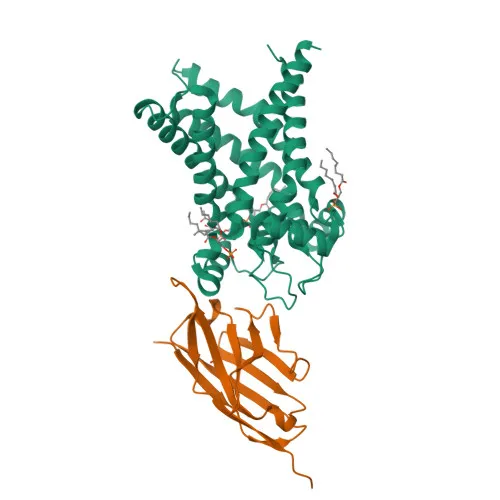
- Associated with metabolic disorders such as diabetes mellitus and obesity, and features a known 3D-structure; it contains transmembrane helices and repeat sequences typical of mitochondrial carriers.
Experimental Guidance and Technical Tips
- For Western blot (WB), UCP1 protein has a predicted molecular weight of ~33 kDa; it is advisable to include appropriate mitochondrial or brown adipose tissue lysates as positive controls.
- In immunofluorescence (IF-P) and immunohistochemistry (IHC-P), due to mitochondrial inner membrane localization, mild permeabilization and fixation conditions should be optimized; consider using tissue sections from brown adipose tissue.
- For ELISA applications, the monoclonal nature of this antibody may be suitable for either capture or detection; however, pairing with another clone may be necessary for sandwich formats.
- The synthetic peptide immunogen (aa 100–200) directs the antibody against a specific linear epitope; thus, it may perform well in denaturing assays like WB but could require optimization for native conformations.
- Cross-reactivity with mouse and rat UCP1 enables translational studies in rodent models of thermogenesis and metabolism; verify reactivity in your experimental system.
- Always titrate the antibody to determine the optimal working dilution for your specific application and sample type.
CamelBio: Your One-Stop Sourcing Bridge
CamelBio supports diagnostic manufacturers and researchers with a comprehensive portfolio of IVD raw materials, including validated monoclonal antibodies like this UCP1 rabbit mAb. Covering thermogenesis and metabolic disease targets, we offer reliable antibody pairs, bulk ancillary reagents, and expert sourcing for niche research needs, streamlining your path from concept to clinic.
Product Datasheet
Anti-UCP1 Rabbit Monoclonal Antibody for WB, IF-P, IHC-P, ELISA - P25874
REQUEST A QUOTE
Our professional team will reply to you within one business day. Please feel free to contact us!