Polyclonal Antibodies
Anti-UBE2O Polyclonal Antibody for IHC-P, ELISA - Q9C0C9
Item Number : CM0019554
Price varies based on specs and customizations
- Application
- IHC-P, ELISA
- Cross Reactivity
- Human
- Protein Weight
- 141kDa

Shipping:
Contact us to get shipping details Enjoy On-time Dispatch Guarantee.
Why Choose Us
Easy ordering process, quality products, and dedicated support for your business success.
Core Product Specifications and Parameters
| Parameter | Value |
|---|---|
| Product Name | UBE2O Rabbit pAb |
| Remarks/Alias | E2-230K; UBE2O |
| Species | Human |
| Gene ID | 63893 |
| Immunogen | Recombinant fusion protein containing a sequence corresponding to amino acids 1073-1292 of human UBE2O (NP_071349.3). |
| Source | Rabbit |
| Category | Polyclonal Antibodies |
| Application | IHC-P, ELISA |
| Cross Reactivity | Human |
| SWISS | Q9C0C9 |
| Protein Weight | 141kDa |
| Shipping | Ice bag |
Biological Background: UBE2O Function and Localization
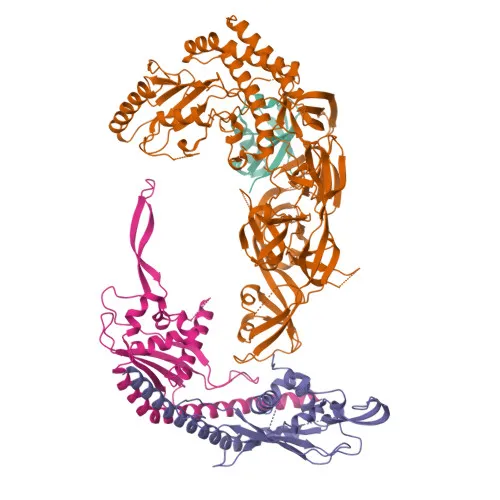
- UBE2O is an E2/E3 hybrid ubiquitin-protein ligase that possesses both E2 and E3 activities, catalyzing the monoubiquitination of target proteins (PubMed:23455153, PubMed:24703950). Related references: PMID:23455153 PMID:24703950
- It functions as a negative regulator of TRAF6-mediated NF-kappa-B activation, operating independently of its E2 activity (PubMed:23381138). Related references: PMID:23381138
- UBE2O positively regulates BMP7 signaling by monoubiquitinating SMAD6, a key step in adipogenesis (PubMed:23455153). Related references: PMID:23455153
- The enzyme controls the subcellular localization of chromatin-associated proteins (e.g., BAP1, INO80, CXXC1) by monoubiquitinating their nuclear localization signals, leading to cytoplasmic retention (PubMed:24703950). Related references: PMID:24703950
- It acts as a regulator of retrograde transport by assisting the TRIM27:MAGEL2 E3 ligase complex to mediate 'Lys-63'-linked ubiquitination of WASHC1, promoting endosomal F-actin assembly (PubMed:23452853). Related references: PMID:23452853
- UBE2O monoubiquitinates cytoplasmic CTNNA1, triggering a binding switch from beta-catenin to vinculin and promoting cell-to-extracellular matrix adhesions (PubMed:40983751). Related references: PMID:40983751
- The protein is predominantly expressed in skeletal muscle and heart, and localizes to both the cytoplasm and nucleus.
- As a phosphoprotein, UBE2O may be subject to regulatory phosphorylation, consistent with its involvement in multiple signaling pathways.
Experimental Guidance and Technical Tips
- The immunogen corresponds to amino acids 1073–1292 of human UBE2O, a C-terminal region; this design may confer specificity for the target, but cross-reactivity with isoforms or truncated forms should be assessed.
- For IHC-P analysis, standard antigen retrieval protocols are recommended; high expression in skeletal muscle and heart can serve as positive control tissues; validate staining specificity via absorption or knockdown controls.
- In ELISA applications, the antibody can be used to detect recombinant UBE2O or endogenous protein in tissue lysates; calibration with a recombinant UBE2O standard is suggested.
- As this product is a polyclonal antibody, lot-to-lot consistency should be verified; for quantitative assays, a suitable reference preparation is advised.
CamelBio: Your One-Stop Sourcing Bridge
CamelBio offers a comprehensive portfolio of IVD raw materials, including validated antibody pairs, optimized monoclonal and polyclonal antibodies, and bulk ancillary reagents for ubiquitination research. Our UBE2O polyclonal antibody supports your investigations into protein ubiquitination, NF‑κB signaling, and BMP7‑mediated pathways, with reliable supply and technical support. As your one‑stop sourcing bridge, CamelBio accelerates your transition from concept to clinic.
REQUEST A QUOTE
Our professional team will reply to you within one business day. Please feel free to contact us!