Polyclonal Antibodies
Anti-UBE2D3 Rabbit Polyclonal Antibody for WB and ELISA - P61077
Item Number : CM0013606
Price varies based on specs and customizations
- Application
- WB, ELISA
- Cross Reactivity
- Human, Mouse, Rat
- Protein Weight
- 17kDa

Shipping:
Contact us to get shipping details Enjoy On-time Dispatch Guarantee.
Why Choose Us
Easy ordering process, quality products, and dedicated support for your business success.
Core Product Specifications and Parameters
| Parameter | Value |
|---|---|
| Product Name | UBE2D3 Rabbit pAb |
| Remarks/Alias | UBC4/5; UBCH5C; E2(17)KB3; UBE2D3 |
| Species | Human |
| Gene ID (Human) | 7323 |
| Gene ID | 7323 |
| Immunogen | Synthetic peptide |
| Source | Rabbit |
| Category | Polyclonal Antibodies |
| Application | WB, ELISA |
| Cross Reactivity | Human, Mouse, Rat |
| SWISS | P61077 |
| Protein Weight | 17kDa |
| Shipping | Ice bag |
Biological Background: UBE2D3 Function and Localization
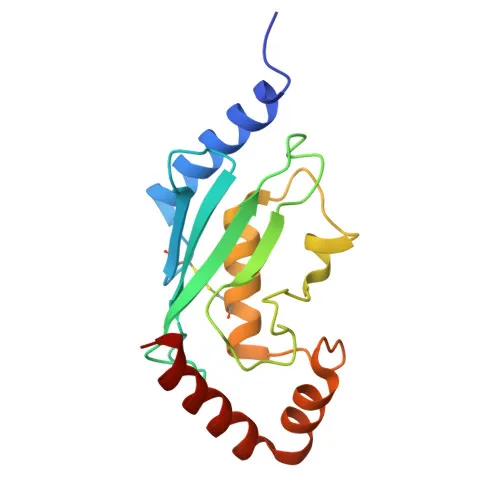
- Protein identity and molecular weight: UBE2D3 (UBCH5C, UBC4/5, E2(17)KB3) is a member of the ubiquitin-conjugating enzyme E2 family, encoded by the UBE2D3 gene. Its predicted molecular weight is approximately 16.7 kDa.
- Core catalytic function: Accepts ubiquitin from the E1 enzyme and catalyzes its covalent attachment to substrate proteins, mediating both 'Lys-11'- and 'Lys-48'-linked polyubiquitination in vitro. Related references: PMID:15247280 PMID:15496420 PMID:18284575
- NF-kappa-B pathway: Cooperates with the E2 enzyme CDC34 and the SCF(FBXW11) E3 ligase complex to polyubiquitinate NFKBIA, leading to proteasomal degradation. UBE2D3 primes NFKBIA with monoubiquitin at 'Lys-21'/'Lys-22', followed by chain elongation by CDC34. Related references: PMID:20347421 PMID:10329681
- DNA damage tolerance: Acts as an initiator E2 with RNF8 for priming PCNA with monoubiquitin, a key step in the DNA damage tolerance pathway activated during S-phase. Related references: PMID:18948756
- DNA repair: Associates with the BRCA1/BARD1 E3 ligase complex to ubiquitinate substrates at ionizing radiation-induced DNA damage sites. Related references: PMID:16628214
- Receptor tyrosine kinase regulation and subcellular localization: In conjunction with the CBL E3 ligase, targets EGFR for polyubiquitination at the plasma membrane and during endosomal transport. UBE2D3 localizes to the cell membrane and endosome membrane. Related references: PMID:18508924
- Protein quality control and other substrates: Along with STUB1, ubiquitinates unfolded proteins for proteasomal destruction. Also mediates ubiquitination of p53/TP53 with MDM2 and TOPORS, and DAPK3 influencing PML nuclear bodies. Related references: PMID:11743028 PMID:12646252 PMID:15280377 PMID:18515077
- Immune signaling and translation surveillance: With RNF135, catalyzes viral RNA-dependent 'Lys-63'-linked polyubiquitination of RIGI for interferon beta production. Also, together with ZNF598, ubiquitinates 40S ribosomal proteins following ribosome collisions, and cooperates with GATOR2 to ubiquitinate NPRL2. Related references: PMID:28469175 PMID:28685749 PMID:36528027
Experimental Guidance and Technical Tips
- The immunogen is a synthetic peptide spanning amino acids 1-100 of human UBE2D3 (NP_003331.1). This N-terminal region may provide specificity; consider sequence alignment with mouse and rat orthologs when planning cross-species experiments.
- For Western blotting, UBE2D3 has a predicted molecular weight of ~17 kDa. Use an appropriate gel percentage (e.g., 12-15% SDS-PAGE) and verify the band with a known positive control lysate from human, mouse, or rat cells.
- In ELISA applications, the antibody may be used for indirect detection of the peptide antigen or endogenous UBE2D3; validate assay conditions with recombinant protein or cell lysates.
- Note that alternative splicing products exist; confirm that the antibody recognizes the intended isoform in your experimental system.
- Because UBE2D3 is involved in many cellular processes, consider inducing relevant stress conditions (e.g., DNA damage, proteotoxic stress) to modulate its expression or activity for functional studies.
CamelBio: Your One-Stop Sourcing Bridge
CamelBio provides diagnostic manufacturers, labs, and research institutes with one-stop access to IVD raw materials, technical services, and consulting—covering every stage from concept to clinic. For ubiquitin pathway research tools like anti-UBE2D3 antibodies, we offer validated antibody pairs, optimized monoclonal/polyclonal antibodies, bulk ancillary reagents, and rare target raw-material sourcing. Streamline your procurement with CamelBio's integrated supply chain support.
REQUEST A QUOTE
Our professional team will reply to you within one business day. Please feel free to contact us!