Polyclonal Antibodies
Anti-UBA5 Rabbit Polyclonal Antibody for WB, IHC-P, ELISA - Q9GZZ9
Item Number : CM0014309
Price varies based on specs and customizations
- Application
- WB, IHC-P, ELISA
- Cross Reactivity
- Human, Mouse, Rat
- Protein Weight
- 45kDa

Shipping:
Contact us to get shipping details Enjoy On-time Dispatch Guarantee.
Why Choose Us
Easy ordering process, quality products, and dedicated support for your business success.
Core Product Specifications and Parameters
| Parameter | Value |
|---|---|
| Product Name | UBA5 Rabbit pAb |
| Remarks/Alias | DEE44; EIEE44; SCAR24; THIFP1; UBE1DC1; UBA5 |
| Species | Human |
| Gene ID (Human) | 79876 |
| Immunogen | Recombinant Protein|Recombinant fusion protein containing a sequence corresponding to amino acids 1-404 of human UBA5 (NP_079094.1). |
| Source | Rabbit |
| Category | Polyclonal Antibodies |
| Application | WB, IHC-P, ELISA |
| Cross Reactivity | Human, Mouse, Rat |
| SWISS | Q9GZZ9 |
| Protein Weight | 45kDa |
| Shipping | Ice bag |
Biological Background: UBA5 Function and Localization
-
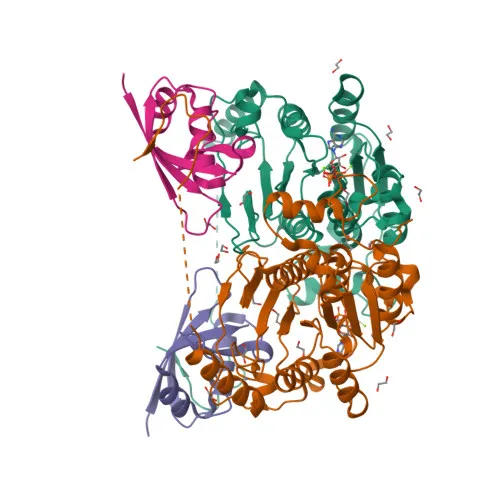
UBA5 is the E1-like enzyme that catalyzes the initial step of UFM1 activation in the ufmylation pathway, a ubiquitin-like modification system. Related references: PMID:15071506, PMID:18442052, PMID:20368332
-
The enzyme activates UFM1 by adenylating its C-terminal glycine with ATP, followed by thioester bond formation between UFM1 and the catalytic cysteine of UBA5, releasing AMP. Related references: PMID:20368332, PMID:26929408, PMID:27653677
-
UFM1 activation occurs via a trans-binding mechanism where UFM1 interacts with both subunits of the UBA5 homodimer, enhancing ATP binding and homodimer stability. Related references: PMID:27653677, PMID:29295865
-
UBA5 then transfers activated UFM1 to the E2-like enzyme UFC1 through another trans-mechanism. Related references: PMID:27653677, PMID:34588452
-
Ufmylation, mediated by UBA5, is involved in diverse cellular processes including ribosome recycling, DNA damage response, interferon signaling, and reticulophagy (ER-phagy). Related references: PMID:30412706, PMID:32160526, PMID:35394863
-
Ufmylation is essential for erythroid differentiation of megakaryocytes and erythrocytes.
-
UBA5 localizes to the cytoplasm, nucleus, endoplasmic reticulum membrane, and Golgi apparatus.
-
It is widely expressed across tissues and contains a zinc-binding domain; phosphorylation has been identified.
Experimental Guidance and Technical Tips
- The immunogen spans full-length human UBA5 (aa 1–404), so the antibody may recognize both native and denatured protein. For Western blot, standard denaturing and reducing conditions are recommended.
- For immunohistochemistry (IHC-P), antigen retrieval methods should be optimized per tissue type; positive control tissues with known UBA5 expression (e.g., liver, kidney) may be used.
- ELISA performance can vary with coating conditions; perform a checkerboard titration to determine optimal antibody and antigen concentrations.
- Due to high sequence identity across human, mouse, and rat UBA5, cross‑reactivity is expected, but confirm specificity in your experimental model.
- For quantitative assays, consider using a recombinant UBA5 protein standard curve.
CamelBio: Your One-Stop Sourcing Bridge
CamelBio specializes in providing diagnostic manufacturers and research institutes with one‑stop access to validated IVD raw materials, including this anti‑UBA5 rabbit polyclonal antibody for ufmylation pathway research. Beyond individual antibodies, we supply optimized antibody pairs, bulk recombinant proteins, and ancillary reagents, supporting every stage from assay development to clinical validation. Our sourcing network also enables the procurement of rare‑target materials to accelerate your diagnostic project timelines.
REQUEST A QUOTE
Our professional team will reply to you within one business day. Please feel free to contact us!