Polyclonal Antibodies
Anti-TXNL4A Rabbit Polyclonal Antibody for WB and ELISA - P83876
Item Number : CM0016977
Price varies based on specs and customizations
- Application
- WB, ELISA
- Cross Reactivity
- Human, Mouse
- Protein Weight
- 17kDa

Shipping:
Contact us to get shipping details Enjoy On-time Dispatch Guarantee.
Why Choose Us
Easy ordering process, quality products, and dedicated support for your business success.
Core Product Specifications and Parameters
| Parameter | Value |
|---|---|
| Product Name | TXNL4A Rabbit pAb |
| Remarks/Alias | BMKS, DIB1, DIM1, TXNL4, SNRNP15, U5-15kD, TXNL4A |
| Species | Human |
| GeneID (Human) | 10907 |
| GeneID | 10907 |
| Immunogen | Recombinant fusion protein containing a sequence corresponding to amino acids 1-142 of human TXNL4A (NP_006692.1) |
| Source | Rabbit |
| Category | Polyclonal Antibodies |
| Application | WB, ELISA |
| Cross Reactivity | Human, Mouse |
| SWISS | P83876 |
| Protein Weight | 17kDa |
| Shipping | Ice bag |
Biological Background: TXNL4A Function and Localization
- TXNL4A, also known as Thioredoxin-like protein 4A, DIM1 protein homolog, or U5-15kD, is an evolutionarily conserved component of the spliceosome.
- It is a core subunit of the U5 small nuclear ribonucleoprotein (snRNP) and the U4/U6-U5 tri-snRNP complex, essential for pre-mRNA splicing.
- Functions in the assembly of the spliceosome and is present in the precatalytic spliceosome (B complex), facilitating the transition to catalytically active states.
- Localizes exclusively to the nucleus, consistent with its role in mRNA processing.
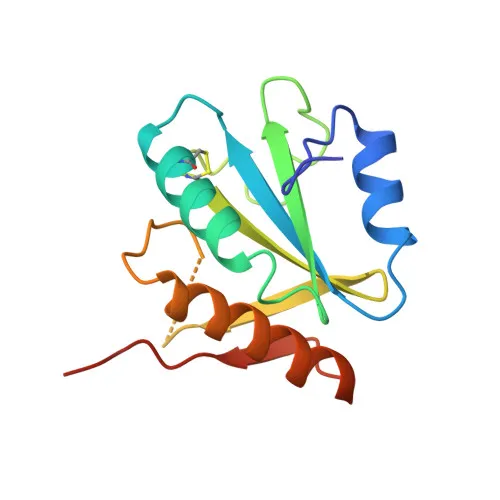
- The protein contains a thioredoxin-like domain; structural studies (3D-structure) have informed its interactions within the spliceosomal machinery.
- Post-translational modifications include phosphorylation, and it has been identified by proteomics in various cellular contexts.
- Mutations in TXNL4A are linked to autosomal recessive non-syndromic deafness, highlighting its tissue-specific importance in the inner ear.
- Listed keywords include Cell cycle, Cell division, Mitosis, mRNA processing, mRNA splicing, and Spliceosome, reflecting its participation in fundamental cellular processes.
Experimental Guidance and Technical Tips
- The immunogen corresponds to full-length human TXNL4A (amino acids 1-142), which is highly conserved; cross-reactivity with mouse is confirmed, but for other species, validate by sequence alignment.
- For Western blot, the predicted molecular weight is approximately 17 kDa; use appropriate gel percentage and loading controls. Optimize primary antibody dilution and exposure time for your specific samples.
- For ELISA, ensure the recombinant protein or peptide coating matches the immunogen region; consider using a blocking buffer that minimizes background from rabbit polyclonal sera.
- Since this is a polyclonal antibody, lot-to-lot variability may occur; verify performance with positive and negative controls in your assay.
- In immunofluorescence or immunohistochemistry, note that nuclear localization may require permeabilization and antigen retrieval optimization.
CamelBio: Your One-Stop Sourcing Bridge
CamelBio offers diagnostic manufacturers and researchers one-stop access to IVD raw materials, including validated antibody pairs and bulk ancillary reagents. This anti-TXNL4A polyclonal antibody is suitable for spliceosome and mRNA processing studies, and we can support your development with additional rare target raw-material sourcing and custom production. Whether you need monoclonal or polyclonal antibodies, or technical consulting from concept to clinic, CamelBio is your reliable partner.
REQUEST A QUOTE
Our professional team will reply to you within one business day. Please feel free to contact us!