Polyclonal Antibodies
Anti-TXNL1 Polyclonal Antibody for WB, IHC-P, IF/ICC, ELISA - O43396
Item Number : CM0022924
Price varies based on specs and customizations
- Application
- WB, IHC-P, IF/ICC, ELISA
- Cross Reactivity
- Human, Mouse, Rat
- Protein Weight
- 32kDa

Shipping:
Contact us to get shipping details Enjoy On-time Dispatch Guarantee.
Why Choose Us
Easy ordering process, quality products, and dedicated support for your business success.
Core Product Specifications and Parameters
| Parameter | Specification |
|---|---|
| Product Name | TXNL1 Rabbit pAb |
| Remarks/Alias | Txl; TXNL; TRP32; TXL-1; HEL-S-114; TXNL1 |
| Species | Human |
| Gene ID (Human) | 9352 |
| Gene ID | 9352 |
| Immunogen | Recombinant protein; Recombinant fusion protein containing a sequence corresponding to amino acids 1-289 of human TXNL1 (NP_004777.1). |
| Source | Rabbit |
| Category | Polyclonal Antibodies |
| Application | WB, IHC-P, IF/ICC, ELISA |
| Cross Reactivity | Human, Mouse, Rat |
| SWISS | O43396 |
| Protein Weight | 32kDa |
| Shipping | Ice bag |
Biological Background: TXNL1 Function and Localization
- TXNL1 encodes thioredoxin-like protein 1 (32 kDa thioredoxin-related protein, TRP32), a member of the thioredoxin family containing a conserved redox-active center.
- It functions as an active thioredoxin with a redox potential of about -250 mV, enabling disulfide reduction and electron transport roles.
- Subcellularly, TXNL1 distributes to both the cytoplasm and nucleus, consistent with functions in antioxidant defense and redox signaling.
- Expression of TXNL1 is ubiquitous across tissues, suggesting a fundamental housekeeping role in cellular redox homeostasis.
- The protein is subject to phosphorylation, potentially regulating its activity or interactions.
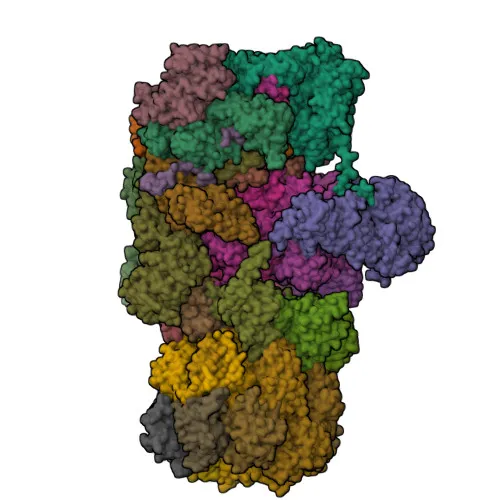
- Key structural features include a disulfide bond within the redox-active site, and it has been identified in proteasome complexes, hinting at involvement in redox-regulated degradation processes.
Experimental Guidance and Technical Tips
- The immunogen consists of full-length recombinant human TXNL1 (aa 1-289); the resulting rabbit polyclonal serum likely recognizes multiple native epitopes.
- For Western blot, expect a band near 32 kDa; use appropriate reducing conditions to resolve redox-dependent shifts.
- In immunohistochemistry (IHC-P) and immunofluorescence (IF/ICC), validate the antibody in known TXNL1-expressing tissues/cells and include appropriate controls.
- Cross-reactivity with mouse and rat TXNL1 is indicated; when testing additional species, check sequence homology to predict reactivity.
- As with all polyclonal preparations, evaluate lot-to-lot consistency for critical applications and consider titration for optimal signal-to-noise.
CamelBio: Your One-Stop Sourcing Bridge
CamelBio provides researchers and diagnostic developers with streamlined access to IVD raw materials, including this TXNL1 polyclonal antibody for redox biology and proteostasis studies. Beyond single reagents, we offer validated antibody pairs, optimized monoclonals/polyclonals, bulk ancillary reagents, and rare-target sourcing—bridging the gap from concept to clinical assay development.
REQUEST A QUOTE
Our professional team will reply to you within one business day. Please feel free to contact us!