Polyclonal Antibodies
Anti-TSHR Rabbit Polyclonal Antibody for WB, IHC-P, ELISA - P16473
Item Number : CM0028019
Price varies based on specs and customizations
- Application
- WB, IHC-P, ELISA
- Cross Reactivity
- Human, Mouse, Rat
- Protein Weight
- 87kDa

Shipping:
Contact us to get shipping details Enjoy On-time Dispatch Guarantee.
Why Choose Us
Easy ordering process, quality products, and dedicated support for your business success.
Core Product Specifications and Parameters
| Parameter | Value |
|---|---|
| Product Name | TSHR Rabbit pAb |
| Remarks/Alias | LGR3; CHNG1; hTSHR-I; TSHR |
| Species | Human |
| Gene ID (Human) | 7253 |
| Immunogen | Recombinant protein|Recombinant fusion protein containing a sequence corresponding to amino acids 21-253 of human TSHR (NP_001018046.1). |
| Source | Rabbit |
| Category | Polyclonal Antibodies |
| Application | WB, IHC-P, ELISA |
| Cross Reactivity | Human, Mouse, Rat |
| SWISS | P16473 |
| Protein Weight | 87kDa |
| Shipping | Ice bag |
Biological Background: TSHR Function and Localization
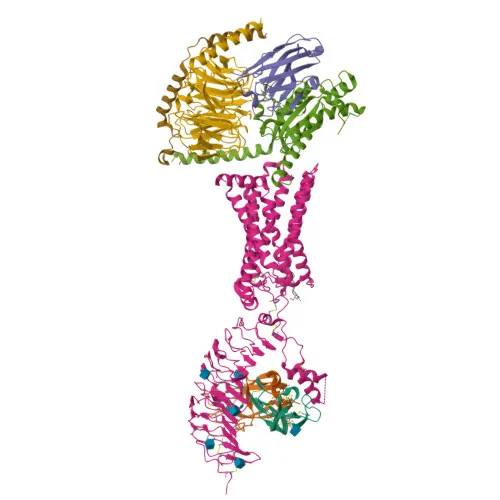
- Thyrotropin receptor (TSHR, also designated TSH-R, LGR3, CHNG1, hTSHR-I) is a glycoprotein receptor encoded by the TSHR gene; alternative splicing produces multiple isoforms.
- Functions as the primary receptor for thyroid-stimulating hormone (TSH) and thyrostimulin (GPHA2:GPHB5), mediating critical thyroid hormone regulation. Related references: PMID:11847099 PMID:12045258
- Upon ligand binding, TSHR couples to G(s) proteins, stimulating adenylate cyclase to generate cyclic AMP (cAMP), which then activates protein kinase A (PKA). Related references: PMID:11847099 PMID:35940205 PMID:35940204
- Downstream PKA signaling phosphorylates key effectors such as thyroid peroxidase (TPO) and the sodium/iodide symporter (NIS), driving thyroid hormone biosynthesis and secretion, and controlling thyroid cell metabolism. Related references: PMID:27638195
- The receptor localizes predominantly to the cell membrane, with enrichment at the basolateral surface in polarized thyroid epithelial cells.
- Expression is highly specific to the thyroid gland, detected at the protein level in thyroid cells and tissues.
- Post-translational modifications include glycosylation, disulfide bond formation, and sulfation, which are critical for receptor stability and function.
- Mutations and variants in TSHR are associated with congenital hypothyroidism and other thyroid disorders, underscoring its clinical importance.
Experimental Guidance and Technical Tips
- The immunogen corresponds to amino acids 21–253 of the human TSHR extracellular domain; thus, the antibody may preferentially recognize the ectodomain and potentially detect shed receptor fragments.
- For western blotting, consider probing lysates from human thyroid cell lines (e.g., Nthy-ori 3-1) or recombinant TSHR-overexpressing cells; a band near 87 kDa is anticipated, but glycosylation may cause minor shifts.
- In immunohistochemistry (IHC-P), validate antibody performance with appropriate antigen retrieval and isotype controls; thyroid tissue sections serve as a positive control.
- Evaluate cross-reactivity with mouse and rat samples in the intended application before large-scale studies.
- Polyclonal antibodies may exhibit lot-to-lot variability; we recommend titrating and validating each new lot in your assay system.
CamelBio: Your One-Stop Sourcing Bridge
As your trusted one-stop IVD raw-material partner, CamelBio supplies high-quality antibodies, antigens, and ancillary reagents to support endocrinology and thyroid disorder research. Our TSHR polyclonal antibody is part of a broader portfolio that includes validated antibody pairs, optimized monoclonal antibodies, and bulk reagents, streamlining your diagnostic development from discovery to clinical application.
REQUEST A QUOTE
Our professional team will reply to you within one business day. Please feel free to contact us!