Monoclonal Antibodies
Anti-TSC2 (Tuberin) Rabbit Monoclonal Antibody for WB, IP, ELISA - P49815
Item Number : CM0003082
Price varies based on specs and customizations
- Application
- WB, IP, ELISA
- Cross Reactivity
- Human
- Protein Weight
- 201kDa

Shipping:
Contact us to get shipping details Enjoy On-time Dispatch Guarantee.
Why Choose Us
Easy ordering process, quality products, and dedicated support for your business success.
Core Product Specifications and Parameters
| Parameter | Value |
|---|---|
| Product Name | TSC2 Rabbit mAb |
| Remarks/Alias | LAM; TSC4; PPP1R160; TSC2 |
| Species | Human |
| GeneID (human) | 7249 |
| GeneID | 7249 |
| Immunogen | Synthetic Peptide: A synthetic peptide corresponding to a sequence within amino acids 1700-1807 of human Tuberin (P49815). |
| Source | Rabbit |
| Category | Monoclonal Antibodies |
| Application | WB, IP, ELISA |
| Cross Reactivity | Human |
| SWISS | P49815 |
| Protein Weight | 201kDa |
| Shipping | Ice bag |
Biological Background: Tuberin Function and Localization
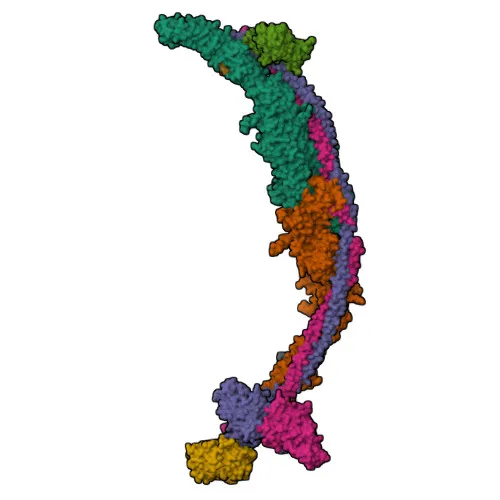
- Tuberin (also known as TSC2) is the protein product of the TSC2 gene; aliases include LAM, TSC4, and PPP1R160.
- It serves as the catalytic component of the TSC-TBC complex, functioning as a GTPase-activating protein (GAP) for RHEB, a direct activator of mTORC1. Related references: PMID:12172553 PMID:12820960 PMID:12842888
- Under nutrient-deprived conditions, the TSC-TBC complex inhibits mTORC1, blocking phosphorylation of downstream effectors like RPS6KB1 and EIF4EBP1. Related references: PMID:12172553 PMID:12271141 PMID:12842888
- Nutrient signals inactivate the TSC-TBC complex, relieving mTORC1 suppression to promote anabolic cell growth. Related references: PMID:12172553 PMID:24529379
- Subcellularly, tuberin localizes to the lysosome membrane and the cytosol.
- It is broadly expressed, with notable levels in liver, brain, heart, lymphocytes, fibroblasts, biliary epithelium, pancreas, skeletal muscle, kidney, lung, and placenta.
- Tuberin is regulated by phosphorylation (a phosphoprotein) and ubiquitin conjugation (Ubl conjugation); mutations in TSC2 are linked to tuberous sclerosis complex, and the protein acts as a tumor suppressor.
Experimental Guidance and Technical Tips
- The immunogen is a synthetic peptide spanning amino acids 1700–1807 of human tuberin (P49815); antibody recognition may be epitope‑specific and may not cross‑react with other species unless experimentally verified.
- For Western blot, the full‑length tuberin has a predicted molecular mass of ~201 kDa; use a low‑percentage SDS‑PAGE gel (e.g., 6%) with extended transfer times and a suitable high‑molecular‑weight marker.
- For immunoprecipitation, validate enrichment of tuberin complexes in the relevant cell lysate; include appropriate negative controls.
- ELISA performance can be assessed using the peptide immunogen as a coating antigen, though reactivity against the native protein should be confirmed in the specific assay format.
CamelBio: Your One‑Stop Sourcing Bridge
CamelBio connects diagnostic manufacturers and research laboratories with a reliable supply of IVD antibody raw materials, including this tuberin‑specific clone for mTOR/TSC pathway studies. We offer validated antibody pairs, optimized monoclonal and polyclonal antibodies, bulk ancillary reagents, and support for rare‑target sourcing to streamline your development pipeline.
Product Datasheet
Anti-TSC2 (Tuberin) Rabbit Monoclonal Antibody for WB, IP, ELISA - P49815
REQUEST A QUOTE
Our professional team will reply to you within one business day. Please feel free to contact us!