Polyclonal Antibodies
Anti-TSC2 Rabbit Polyclonal Antibody for IF/ICC, ELISA - P49815
Item Number : CM0021027
Price varies based on specs and customizations
- Application
- IF/ICC, ELISA
- Cross Reactivity
- Human, Mouse, Rat
- Protein Weight
- 201kDa

Shipping:
Contact us to get shipping details Enjoy On-time Dispatch Guarantee.
Why Choose Us
Easy ordering process, quality products, and dedicated support for your business success.
Core Product Specifications and Parameters
| Parameter | Value |
|---|---|
| Product Name | TSC2 Rabbit pAb |
| Remarks/Alias | LAM, TSC4, PPP1R160, TSC2 |
| Species | Human |
| GeneID (Human) | 7249 |
| GeneID | 7249 |
| Immunogen | Recombinant fusion protein corresponding to amino acids 1531-1807 of TSC2 (NP_000539.2) |
| Source | Rabbit |
| Category | Polyclonal Antibodies |
| Application | IF/ICC, ELISA |
| Cross Reactivity | Human, Mouse, Rat |
| SWISS | P49815 |
| Protein Weight | 201kDa |
| Shipping | Ice bag |
Biological Background: TSC2 Function and Localization
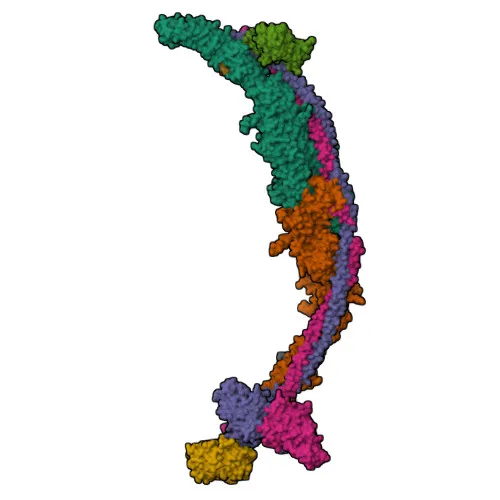
- Tuberin (TSC2) acts as the catalytic component of the TSC-TBC complex, a key negative regulator of the mTORC1 signaling pathway, which controls cell growth and metabolism.
Related references: PMID:12172553, PMID:12271141, PMID:12842888 - Within the complex, TSC2 functions as a GTPase-activating protein (GAP) for the small GTPase RHEB, thereby inhibiting mTORC1 kinase activity.
Related references: PMID:12172553, PMID:12820960, PMID:12842888 - The TSC-TBC complex is regulated by nutrient availability: under nutrient deprivation, it suppresses mTORC1, while nutrient abundance inactivates the complex to allow mTORC1 signaling.
Related references: PMID:12172553, PMID:24529379 - TSC2 also stimulates the intrinsic GTPase activity of RAP1A and RAB5, implicating it in additional signaling pathways.
- Tuberin localizes primarily to the lysosome membrane and cytosol, consistent with its role in nutrient sensing.
- It is widely expressed in tissues including liver, brain, heart, lymphocytes, fibroblasts, biliary epithelium, pancreas, skeletal muscle, kidney, lung, and placenta.
- Mutations in TSC2 are associated with tuberous sclerosis complex, epilepsy, and tumor suppression; the protein undergoes phosphorylation and ubiquitin conjugation.
Experimental Guidance and Technical Tips
- The immunogen spans the C-terminal region (aa 1531-1807), which contains the GAP domain; consider this when assessing isoform specificity.
- For immunofluorescence (IF/ICC), use fixation and permeabilization conditions appropriate for cytosolic and membrane-associated antigens; validate in relevant cell lines (e.g., HeLa, HEK293).
- In ELISA applications, optimize coating conditions and antibody concentrations; pairing with a capture antibody specific for TSC2 may enhance detection.
- Cross-reactivity with mouse and rat is anticipated, but verify performance in your specific sample system.
CamelBio: Your One-Stop Sourcing Bridge
CamelBio provides diagnostic manufacturers and research laboratories with streamlined access to a comprehensive portfolio of IVD raw materials, including validated antibodies, recombinant proteins, and ancillary reagents. This anti-TSC2 polyclonal antibody supports investigations into mTORC1 signaling, nutrient sensing, and associated pathologies such as tuberous sclerosis and cancer. Leverage CamelBio’s one-stop sourcing capabilities for bulk reagents, custom antibody development, and rare target materials to accelerate your assay development pipeline.
REQUEST A QUOTE
Our professional team will reply to you within one business day. Please feel free to contact us!