Polyclonal Antibodies
Anti-TRRAP Polyclonal Antibody for WB, IHC-P, ELISA - Q9Y4A5
Item Number : CM0019854
Price varies based on specs and customizations
- Application
- WB, IHC-P, ELISA
- Cross Reactivity
- Human, Rat
- Protein Weight
- 438kDa

Shipping:
Contact us to get shipping details Enjoy On-time Dispatch Guarantee.
Why Choose Us
Easy ordering process, quality products, and dedicated support for your business success.
Core Product Specifications and Parameters
| Parameter | Value |
|---|---|
| Product Name | TRRAP Rabbit pAb |
| Remarks/Alias | Tra1; TR-AP; DEDDFA; DFNA75; PAF400; STAF40; PAF350/400; TRRAP |
| Species | Human |
| GeneID (Human) | 8295 |
| GeneID | 8295 |
| Immunogen | Recombinant fusion protein containing a sequence corresponding to amino acids 3660-3859 of TRRAP (NP_001231509.1). |
| Source | Rabbit |
| Category | Polyclonal Antibodies |
| Application | WB, IHC-P, ELISA |
| Cross Reactivity | Human, Rat |
| SWISS | Q9Y4A5 |
| Protein Weight | 438kDa |
| Shipping | Ice bag |
Biological Background: TRRAP Function and Localization
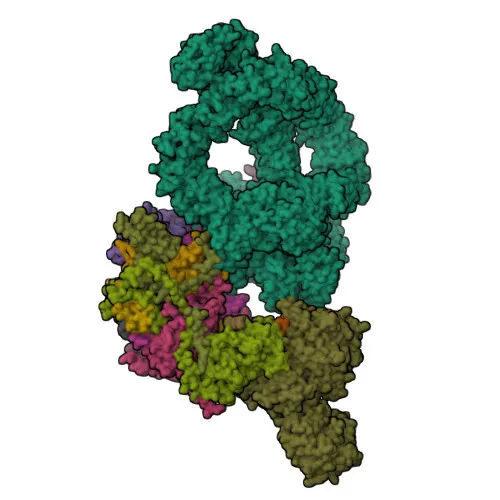
- TRRAP (Transformation/transcription domain-associated protein), also known as PAF350/400, is a large ~438 kDa adapter protein and a key component of histone acetyltransferase (HAT) complexes such as NuA4 and STAGA.
- As a scaffold within the NuA4 complex, TRRAP facilitates acetylation of nucleosomal histones H4 and H2A, marking active chromatin for epigenetic transcription activation.
- TRRAP mediates transcription activation by oncogenic transcription factors, including MYC, E2F1, and adenoviral E1A, linking these regulators to HAT activity.
- It is also involved in p53/TP53- and E2F4-dependent transcription, and may contribute to cell cycle control and the mitotic checkpoint.
- TRRAP participates in a SWR1-like chromatin remodeling complex that removes histone variant H2A.Z from nucleosomes, influencing chromatin structure.
- Localized to the nucleus, TRRAP undergoes post-translational modifications including acetylation, phosphorylation, and ubiquitination (isopeptide bond formation).
- Genetic variations in TRRAP are associated with autism spectrum disorder, intellectual disability, and non-syndromic deafness (DFNA75), hinting at a role in the auditory system.
Experimental Guidance and Technical Tips
- The immunogen (amino acids 3660–3859) targets the C‑terminal region of TRRAP; ensure this epitope is conserved in your experimental model.
- For western blot (WB), TRRAP migrates at approximately 438 kDa; use appropriate high‑molecular‑weight markers and low‑percentage polyacrylamide gels for optimal resolution.
- When performing immunohistochemistry (IHC‑P), consider antigen retrieval protocols (heat‑induced or enzymatic) to expose the target epitope.
- Validate antibody specificity in your tissue or cell type; TRRAP expression may vary across cell lines and tissues.
- For ELISA applications, the polyclonal nature may offer sensitive detection; include suitable negative controls to assess background.
CamelBio: Your One-Stop Sourcing Bridge
CamelBio supports diagnostic manufacturers and researchers with one‑stop access to IVD raw materials, including this TRRAP antibody for chromatin and transcription studies. From validated polyclonal and monoclonal antibodies to ancillary reagents and bulk supply, we streamline sourcing from concept to clinic. Need a custom antibody pair or a rare reagent? Our team is ready to assist.
REQUEST A QUOTE
Our professional team will reply to you within one business day. Please feel free to contact us!