Polyclonal Antibodies
Anti-TRPM8 Rabbit Polyclonal Antibody for WB, ELISA - Q7Z2W7
Item Number : CM0029724
Price varies based on specs and customizations
- Application
- WB, ELISA
- Cross Reactivity
- Human
- Protein Weight
- 128kDa

Shipping:
Contact us to get shipping details Enjoy On-time Dispatch Guarantee.
Why Choose Us
Easy ordering process, quality products, and dedicated support for your business success.
Core Product Specifications and Parameters
| Parameter | Value |
|---|---|
| Product Name | TRPM8 Rabbit pAb |
| Remarks/Alias | TRPP8; LTRPC6; trp-p8; LTrpC-6; TRPM8 |
| Species | Human |
| GeneID (Human) | 79054 |
| Immunogen | Recombinant fusion protein containing a sequence corresponding to amino acids 980-1104 of human TRPM8 (NP_076985.4). |
| Source | Rabbit |
| Category | Polyclonal Antibodies |
| Application | WB, ELISA |
| Cross Reactivity | Human |
| SWISS | Q7Z2W7 |
| Protein Weight | 128kDa |
| Shipping | Ice bag |
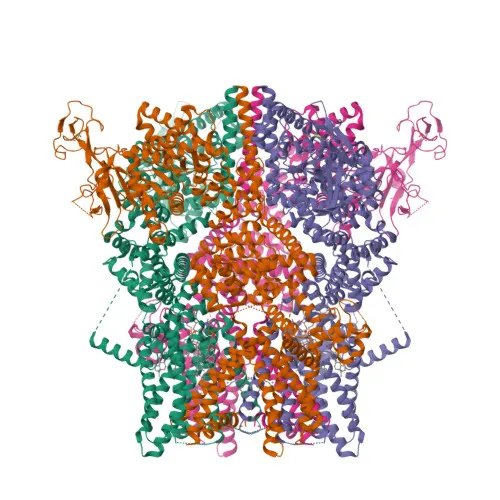
Biological Background: TRPM8 Function and Localization
- TRPM8 is a non-selective cation channel permeable to monovalent and divalent cations, with higher permeability for Ca(2+). It is activated by cool temperatures (<23-28°C) and chemical ligands such as menthol and icilin, and serves as a primary cold sensor in peripheral sensory neurons. Related references: PMID:15306801, PMID:15852009, PMID:16174775
- The channel features voltage-dependent gating; cooling or chemical agonists shift its activation threshold toward physiological membrane potentials, enabling temperature-dependent depolar. Related references: PMID:15306801
- Beyond thermosensation, TRPM8 regulates basal tear secretion by sensing evaporation-induced cooling and changes in osmolality at the corneal surface.
- In prostate cancer, TRPM8 may contribute to cell migration and invasion, and its expression is elevated in prostate tumors and other malignancies including colon, lung, breast, and skin tumors. Related references: PMID:16174775, PMID:25559186
- TRPM8 localizes to the plasma membrane, membrane rafts, and the endoplasmic reticulum membrane, consistent with roles in rapid sensory signaling and intracellular calcium handling.
- The protein is a member of the transient receptor potential (TRP) channel family and contains six transmembrane domains, coiled-coil regions, and a TRP domain, characteristic of TRPM subfamily members.
- Post-translational modifications include glycosylation, and the channel activity may be modulated by alternative splicing to yield isoforms with distinct regulatory properties.
Experimental Guidance and Technical Tips
- The immunogen encompasses the cytosolic C-terminus (aa 980-1104), a region likely accessible in denaturing Western blot; a band around 128 kDa is expected based on the theoretical molecular weight.
- For Western blot, use standard SDS-PAGE and transfer to PVDF or nitrocellulose; optimize blocking and detection conditions for this moderate-to-large membrane protein.
- ELISA applications may use direct or indirect antigen coating; titrate antibody to determine optimal working concentration for the assay format.
- Validate antibody specificity in relevant human cell lines or tissues known to express TRPM8, such as prostate cancer lines (e.g., LNCaP) or sensory neuron models.
CamelBio: Your One-Stop Sourcing Bridge
CamelBio offers a seamless procurement experience for IVD raw materials, supporting research and development from concept to clinic. For TRPM8-focused studies in sensory biology or oncology, we provide validated antibody pairs, optimized monoclonal/polyclonal antibodies, bulk ancillary reagents, and specialized sourcing for rare targets. Our integrated supply chain ensures reliable access to the critical tools you need to advance your diagnostic assays.
REQUEST A QUOTE
Our professional team will reply to you within one business day. Please feel free to contact us!