Monoclonal Antibodies
Anti-TRPM4 Monoclonal Antibody for WB and ELISA - Q8TD43
Item Number : CM0008700
Price varies based on specs and customizations
- Application
- WB, ELISA
- Cross Reactivity
- Human
- Protein Weight
- 134kDa

Shipping:
Contact us to get shipping details Enjoy On-time Dispatch Guarantee.
Why Choose Us
Easy ordering process, quality products, and dedicated support for your business success.
Core Product Specifications and Parameters
| Parameter | Value |
|---|---|
| Product Name | TRPM4 Rabbit mAb |
| Remarks/Alias | EKVP6; LTrpC4; PFHB1B; TRPM4B; hTRPM4 |
| Species | Human |
| Gene ID (Human) | 54795 |
| Gene ID | 54795 |
| Immunogen | Recombinant fusion protein containing a sequence corresponding to amino acids 1097–1214 of human TRPM4 (NP_060106.2) |
| Source | Rabbit |
| Category | Monoclonal Antibodies |
| Application | WB, ELISA |
| Cross Reactivity | Human |
| SWISS | Q8TD43 |
| Protein Weight | 134kDa |
| Shipping | Ice bag |
Biological Background: TRPM4 Function and Localization
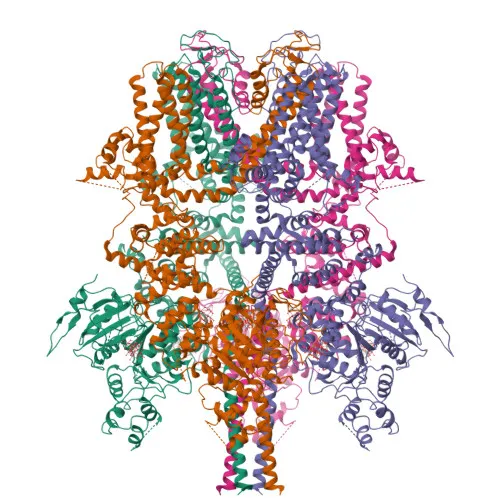
- TRPM4 is a calcium-activated, non-selective monovalent cation channel that mediates Na⁺, K⁺, Cs⁺, and Li⁺ influx, leading to membrane depolarization (PubMed:12015988; PubMed:12842017; PubMed:29211723). Related references: PMID:12015988 PMID:12842017 PMID:29211723
- It is involved in diverse physiological processes including cardiac action potential modulation, insulin secretion, neuronal excitability, and smooth muscle contraction.
- TRPM4 contributes to immune function by regulating Ca²⁺ oscillations in T lymphocytes, influencing NFAT-dependent IL-2 production and T-helper cell motility.
- The channel enhances cell proliferation via β-catenin signaling and plays a role in keratinocyte differentiation (PubMed:30528822). Related references: PMID:30528822
- TRPM4 localizes to the cell membrane, endoplasmic reticulum, and Golgi apparatus.
- It is widely expressed, with highest levels in intestine and prostate; in brain, it is found in cerebral artery smooth muscle cells and Purkinje fibers, and it is more abundant in Th2 than Th1 cells.
- The protein undergoes post-translational modifications including phosphorylation, glycosylation, and ubiquitination, and contains multiple transmembrane domains and a coiled-coil region.
- Mutations in TRPM4 are associated with progressive familial heart block type IB (PFHB1B) and other cardiac conduction disorders, as well as palmoplantar keratoderma.
Experimental Guidance and Technical Tips
- The immunogen corresponds to the C-terminal intracellular region (amino acids 1097–1214); consider that the antibody may detect full-length TRPM4 (~134 kDa) and potentially some splice variants containing this epitope.
- For Western blot, ensure adequate membrane protein extraction and use appropriate positive controls, as TRPM4 expression levels can vary by tissue and cell type.
- In ELISA, the recombinant immunogen fragment can serve as a positive control for antibody binding validation.
- Since cross-reactivity is only confirmed for human, validate the antibody in your specific sample system, especially if working with closely related melastatin family members.
CamelBio: Your One-Stop Sourcing Bridge
CamelBio supports diagnostic and research communities with comprehensive access to IVD-grade raw materials, including validated antibody pairs, optimized monoclonal and polyclonal antibodies, and bulk ancillary reagents. This anti-TRPM4 monoclonal antibody belongs to our portfolio of ion channel research tools, designed for cardiovascular, neuronal, and immunological applications. Whether you need rare target sourcing or ready-to-use assay components, our team bridges your concept-to-clinic pipeline.
REQUEST A QUOTE
Our professional team will reply to you within one business day. Please feel free to contact us!