Methylated Antibodies
Anti-TriMethyl-Histone H3-K9 (Q16695/P68431) Rabbit Monoclonal Antibody for Epigenetics
Item Number : CM0000400
Price varies based on specs and customizations
- Application
- WB, DB, IF/ICC, ELISA, ChIP, ChIP-seq, CUT&Tag
- Cross Reactivity
- Human, Mouse, Rat, Other (Wide Range Predicted)

Shipping:
Contact us to get shipping details Enjoy On-time Dispatch Guarantee.
Why Choose Us
Easy ordering process, quality products, and dedicated support for your business success.
Core Product Specifications and Parameters
| Parameter | Value |
|---|---|
| Product Name | TriMethyl-Histone H3-K9 Rabbit mAb |
| Remarks/Alias | H3.4; H3/g; H3FT; H3t; HIST3H3; Histone H3; HIST1H3A; TriMethyl-Histone H3-K9 |
| Species | Human |
| GeneID (human) | 8290/8350 |
| GeneID | 8290/8350 |
| Immunogen | Synthetic peptide: A synthetic trimethylated peptide around K9 of human Histone H3 (NP_003520.1) |
| Source | Rabbit |
| Category | Methylated Antibodies |
| Application | WB, DB, IF/ICC, ELISA, ChIP, ChIP-seq, CUT&Tag |
| Cross Reactivity | Human, Mouse, Rat, Other (Wide Range Predicted) |
| SWISS | Q16695/P68431 |
| Protein Weight | 15 kDa |
| Shipping | Ice bag |
Biological Background: Histone H3 Function and Localization
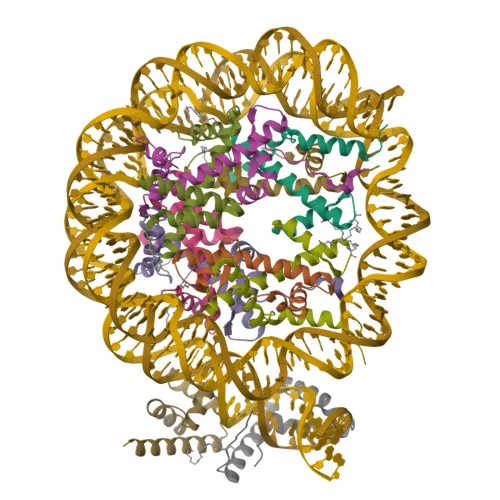
- Function: Histone H3 is a core component of the nucleosome, wrapping and compacting DNA into chromatin to regulate transcription, DNA repair, replication, and chromosomal stability. Post-translational modifications of histones, known as the histone code, modulate chromatin structure and gene expression.
- Subcellular Localization: Predominantly localized in the nucleus and associated with chromosomes throughout the cell cycle.
- Tissue Specificity: The histone H3 variant H3.1t (Q16695) is specifically expressed in testicular cells, while the canonical H3.1 (P68431) is ubiquitously expressed across tissues.
- Post-Translational Modifications: Histone H3 is subject to a vast array of covalent modifications, with lysine 9 being a key regulatory site. Lysine 9 can undergo citrullination (conversion of arginine to citrulline) PMID:15345777 PMID:16567635 and symmetric dimethylarginine. Additionally, trimethylation of lysine 9 (H3K9me3) is a well-characterized repressive chromatin mark. This antibody specifically detects Histone H3 trimethylated at lysine 9. Related references: PMID:15345777, PMID:16567635
Experimental Guidance and Technical Tips
- Immunogen Design: The antibody was raised against a synthetic trimethylated peptide encompassing lysine 9 of human Histone H3. When using this antibody, consider validating its specificity by testing against unmodified H3 peptide or peptides carrying alternative modifications (e.g., monomethyl, dimethyl, acetyl) to confirm selectivity for the trimethylated state.
- Western Blot (WB) and Dot Blot (DB): For WB, use standard histone extraction protocols (acid extraction or high-salt) to enrich for basic proteins. Ensure adequate blocking and antibody dilution to minimize non-specific binding. For DB, verify cross-reactivity against other histone modifications if needed.
- Immunofluorescence/Immunocytochemistry (IF/ICC): Optimize permeabilization and fixation conditions to preserve nuclear morphology and antigen accessibility. Co-staining with DAPI can help confirm nuclear localization.
- ELISA: Use for high-throughput screening; consider coating plates with synthetic methylated vs. non-methylated peptides to assess specificity.
- Chromatin Immunoprecipitation (ChIP, ChIP-seq) and CUT&Tag: This antibody is suitable for ChIP-based enrichment of H3K9me3-marked chromatin. Cross-linking ChIP (X-ChIP) or native ChIP (N-ChIP) may be used; validate with positive and negative control genomic loci (e.g., heterochromatin vs. active promoters). For CUT&Tag, follow published protocols for low-input or single-cell applications. Validate the antibody in your relevant sample system before large-scale experiments.
CamelBio: Your One-Stop Sourcing Bridge
CamelBio provides diagnostic manufacturers, laboratories, and research institutes with one-stop access to IVD raw materials, technical services, and consulting—covering every stage from concept to clinic. For epigenetic and chromatin research, we offer validated antibody pairs, optimized monoclonal/polyclonal antibodies including this anti-trimethyl-Histone H3-K9 product, and bulk ancillary reagents. Our sourcing expertise extends to rare target raw materials, enabling IVD development from biomarker discovery through commercial production.
REQUEST A QUOTE
Our professional team will reply to you within one business day. Please feel free to contact us!