Polyclonal Antibodies
Anti-TRIM63 Polyclonal Antibody for WB, IHC-P, IF/ICC, ELISA - Q969Q1
Item Number : CM0026969
Price varies based on specs and customizations
- Application
- WB, IHC-P, IF/ICC, ELISA
- Cross Reactivity
- Human, Mouse, Rat
- Protein Weight
- 40 kDa

Shipping:
Contact us to get shipping details Enjoy On-time Dispatch Guarantee.
Why Choose Us
Easy ordering process, quality products, and dedicated support for your business success.
Core Product Specifications and Parameters
| Parameter | Value |
|---|---|
| Product Name | TRIM63 Rabbit pAb |
| Remarks/Alias | IRF; SMRZ; MURF1; MURF2; RNF28; TRIM63 |
| Species | Human |
| GeneID (Human) | 84676 |
| Immunogen | A synthetic peptide corresponding to a sequence within amino acids 253-353 of human TRIM63 (NP_115977.2) |
| Source | Rabbit |
| Category | Polyclonal Antibodies |
| Application | WB, IHC-P, IF/ICC, ELISA |
| Cross Reactivity | Human, Mouse, Rat |
| SWISS | Q969Q1 |
| Protein Weight | 40 kDa |
| Shipping | Ice bag |
Biological Background: TRIM63 Function and Localization
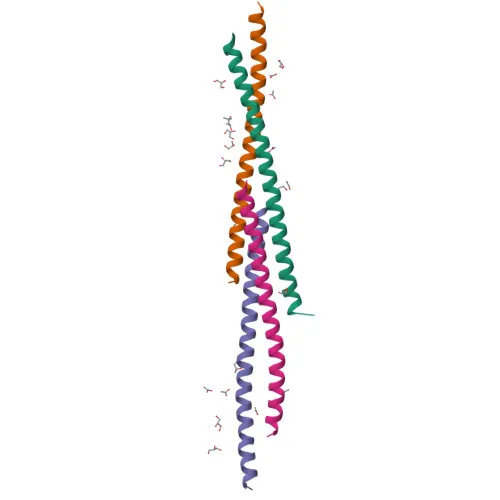
- TRIM63, also known as MuRF1 or IRF, is a muscle-specific E3 ubiquitin-protein ligase belonging to the tripartite motif (TRIM) family, characterized by a RING finger domain, B-box, and coiled-coil region.
- It mediates ubiquitination and proteasomal degradation of key muscle proteins such as CKM, GMEB1, and HIBADH, and regulates the turnover of sarcomeric proteins including cardiac troponin I (TNNI3).
- Under amino acid starvation, TRIM63 promotes muscle protein catabolism to supply other organs with amino acids, while inhibiting de novo skeletal muscle protein synthesis.
- It plays a role in striated muscle atrophy and hypertrophy by modulating an anti-hypertrophic PKC-mediated signaling pathway and may regulate myofibril organization through interaction with titin (TTN).
- Subcellularly, TRIM63 localizes to the cytoplasm and nucleus, and within muscle cells it associates with the sarcomere at both the M line and Z line.
- Expression is highly tissue-specific: selectively found in heart and skeletal muscle, with additional expression reported in the iris.
Experimental Guidance and Technical Tips
- The immunogen corresponds to a peptide within the central region (aa 253-353) of human TRIM63; verify epitope accessibility in the target application and sample preparation.
- For Western blotting, a band near 40 kDa is expected; consider using positive control lysates from human, mouse, or rat skeletal muscle or heart.
- In IHC-P, test appropriate antigen retrieval methods and antibody dilutions on muscle tissue sections; include isotype controls to confirm specificity.
- For IF/ICC, fixation and permeabilization conditions should be optimized; co-staining with sarcomeric markers (e.g., α-actinin for Z-line) may help confirm localization.
- Cross-reactivity with mouse and rat TRIM63 is predicted based on sequence homology; however, perform parallel testing across species to ensure consistent performance.
CamelBio: Your One-Stop Sourcing Bridge
CamelBio supports diagnostic manufacturers, laboratories, and research institutes with reliable access to IVD raw materials, offering validated antibody pairs, optimized monoclonal and polyclonal antibodies, and bulk ancillary reagents. This anti-TRIM63 polyclonal antibody is well-suited for muscle biology, atrophy, and ubiquitination pathway studies. Through global sourcing and technical expertise, CamelBio simplifies procurement of rare-target raw materials to accelerate your concept-to-clinic journey.
Product Datasheet
Anti-TRIM63 Polyclonal Antibody for WB, IHC-P, IF/ICC, ELISA - Q969Q1
REQUEST A QUOTE
Our professional team will reply to you within one business day. Please feel free to contact us!