Polyclonal Antibodies
Anti-TRIM29 Polyclonal Antibody for WB, ELISA - Q14134
Item Number : CM0028330
Price varies based on specs and customizations
- Application
- WB, ELISA
- Cross Reactivity
- Human, Mouse
- Protein Weight
- 66kDa

Shipping:
Contact us to get shipping details Enjoy On-time Dispatch Guarantee.
Why Choose Us
Easy ordering process, quality products, and dedicated support for your business success.
Core Product Specifications and Parameters
| Parameter | Value |
|---|---|
| Product Name | TRIM29 Rabbit pAb |
| Remarks/Alias | ATDC; TRIM29 |
| Species | Human |
| GeneID | 23650 |
| Immunogen | Recombinant fusion protein containing a sequence corresponding to amino acids 309-588 of human TRIM29 (NP_036233.2). |
| Source | Rabbit |
| Category | Polyclonal Antibodies |
| Application | WB, ELISA |
| Cross Reactivity | Human, Mouse |
| SWISS | Q14134 |
| Protein Weight | 66kDa |
| Shipping | Ice bag |
Biological Background: TRIM29 Function and Localization
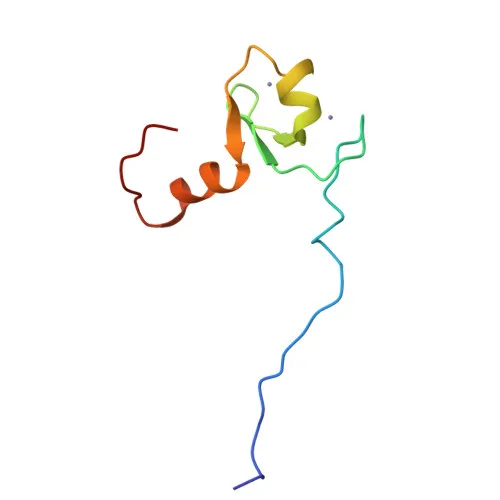
- TRIM29, also known as Ataxia telangiectasia group D-associated protein (ATDC), is a member of the tripartite motif (TRIM) family, characterized by a coiled-coil domain and a zinc-finger motif, with alternative splicing reported.
- It plays a crucial role in regulating macrophage activation during viral or bacterial infections in the respiratory tract, functioning as a negative regulator of innate immune responses.
- Mechanistically, TRIM29 interacts with IKBKG/NEMO in the lysosome, inducing its Lys-48 ubiquitination and subsequent degradation, thereby inhibiting the expression of type I interferons and pro-inflammatory cytokines.
- Additionally, TRIM29 induces Lys-48 ubiquitination and degradation of STING1, further dampening innate immune signaling pathways.
- The protein localizes to the cytoplasm and lysosomes, consistent with its role in mediating the degradation of immune signaling adaptors via the lysosomal pathway.
- Tissue expression of TRIM29 is detected in the placenta, prostate, and thymus, suggesting a role in immune-privileged or hormonally regulated environments.
- Post-translational modifications include phosphorylation, and the protein contains metal-binding zinc-finger motifs essential for its structural integrity and function.
Experimental Guidance and Technical Tips
- The immunogen encompasses amino acids 309–588 of human TRIM29, a region that spans the coiled-coil and C-terminal domains; consider this design when interpreting results, as it may recognize multiple isoforms or post-translationally modified forms.
- For Western blotting, validate the antibody in relevant sample systems such as whole-cell lysates from human placenta, prostate, or thymus tissue, or from macrophage cell lines stimulated with viral or bacterial mimics.
- In ELISA, the antibody can be utilized as a capture or detection reagent; optimize coating concentrations and detection conditions to achieve optimal signal-to-noise ratios, and include appropriate controls for non-specific binding.
- As a polyclonal antibody, lot-to-lot variability may occur; it is advisable to perform internal validation with each new batch and to use consistent experimental conditions.
CamelBio: Your One-Stop Sourcing Bridge
CamelBio provides diagnostic manufacturers, labs, and research institutes with one-stop access to IVD raw materials, technical services, and consulting—covering every stage from concept to clinic. For TRIM29 and other innate immunity targets, CamelBio offers validated antibody pairs, optimized polyclonal and monoclonal antibodies, bulk ancillary reagents, and rare target raw-material sourcing to streamline your assay development. Explore our comprehensive portfolio to accelerate your infectious disease and immunology research.
REQUEST A QUOTE
Our professional team will reply to you within one business day. Please feel free to contact us!