Polyclonal Antibodies
Anti-TRIM29 Polyclonal Antibody for WB, ELISA - Q14134
Item Number : CM0025008
Price varies based on specs and customizations
- Application
- WB, ELISA
- Cross Reactivity
- Human, Mouse, Rat
- Protein Weight
- 66kDa

Shipping:
Contact us to get shipping details Enjoy On-time Dispatch Guarantee.
Why Choose Us
Easy ordering process, quality products, and dedicated support for your business success.
Core Product Specifications and Parameters
| Parameter | Value |
|---|---|
| Product Name | TRIM29 Rabbit pAb |
| Remarks/Alias | ATDC; TRIM29 |
| Species | Human |
| GeneID (Human) | 23650 |
| GeneID | 23650 |
| Immunogen | Recombinant fusion protein containing a sequence corresponding to amino acids 309-588 of human TRIM29 (NP_036233.2). |
| Source | Rabbit |
| Category | Polyclonal Antibodies |
| Application | WB, ELISA |
| Cross Reactivity | Human, Mouse, Rat |
| SWISS | Q14134 |
| Protein Weight | 66kDa |
| Shipping | Ice bag |
Biological Background: TRIM29 Function and Localization
- TRIM29 (Tripartite motif-containing protein 29), also known as ATDC (ataxia telangiectasia group D-associated protein), is a member of the TRIM family characterized by a tripartite motif that includes a RING finger, B-box, and coiled-coil domain.
- It functions as a negative regulator of innate immune responses by interacting with IKBKG/NEMO in the lysosome, inducing its K48-linked ubiquitination and degradation, thereby suppressing type I interferon and pro-inflammatory cytokine production.
- TRIM29 also targets STING1 for K48-linked ubiquitination and degradation, further dampening antiviral and antibacterial signaling pathways.
- The protein is predominantly localized in the cytoplasm and lysosomes, consistent with its role in immune signal attenuation.
- Expression is tissue-specific, with highest levels observed in placenta, prostate, and thymus.
- Post-translational modifications include phosphorylation, and the protein contains zinc-binding domains essential for its ubiquitin ligase activity.
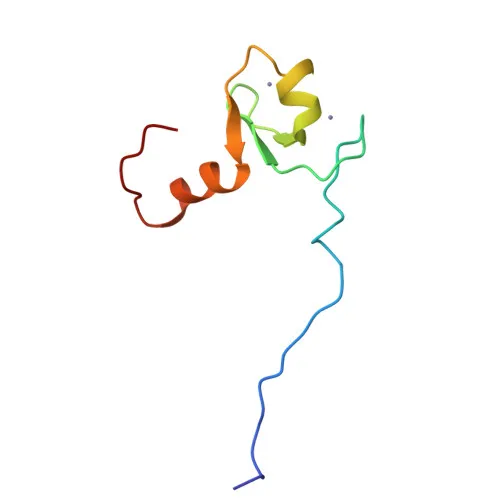
- Alternative splicing yields multiple isoforms, and structural studies (3D-structure available) highlight features like coiled-coil regions mediating protein interactions.
Experimental Guidance and Technical Tips
- The immunogen spans the C-terminal region (amino acids 309–588) of human TRIM29; this may provide good target specificity, but potential cross-reactivity with TRIM family members or isoforms should be verified in the relevant sample system.
- For Western blot, the expected molecular weight is approximately 66 kDa. Use appropriate positive controls (e.g., placenta, prostate, or thymus lysates) and validate band identity with knockdown/knockout samples if available.
- In ELISA applications, consider using the recombinant immunogen as a coating antigen and titrate the antibody to determine optimal working dilutions for your specific assay format.
- The antibody exhibits cross-reactivity with mouse and rat orthologs, enabling studies in commonly used model organisms; however, sequence homology should be checked for your specific species/strain.
- Store at -20°C upon receipt, minimize freeze-thaw cycles, and aliquot if necessary to maintain antibody stability.
CamelBio: Your One-Stop Sourcing Bridge
CamelBio serves as a comprehensive sourcing partner for IVD raw materials, connecting diagnostic manufacturers and research laboratories with high-quality reagents like this TRIM29 antibody for innate immunity research. Beyond individual antibodies, we offer validated antibody pairs, optimized monoclonal/polyclonal formats, and bulk ancillary reagents—streamlining procurement for projects requiring rare or difficult-to-source targets.
REQUEST A QUOTE
Our professional team will reply to you within one business day. Please feel free to contact us!