Monoclonal Antibodies
Anti-Transcription Factor AP-2-alpha (TFAP2A) Monoclonal Antibody for WB, ELISA - P05549
Item Number : CM0007491
Price varies based on specs and customizations
- Application
- WB, ELISA
- Cross Reactivity
- Human, Mouse
- Protein Weight
- 48kDa

Shipping:
Contact us to get shipping details Enjoy On-time Dispatch Guarantee.
Why Choose Us
Easy ordering process, quality products, and dedicated support for your business success.
Core Product Specifications and Parameters
| Parameter | Value |
|---|---|
| Product Name | Activator protein 2 (AP-2/TFAP2A) Rabbit mAb |
| Remarks/Alias | AP-2; BOFS; AP2TF; TFAP2; AP-2alpha; Activator protein 2 (AP-2/TFAP2A) |
| Species | Human |
| Gene ID (Human) | 7020 |
| Immunogen | Synthetic Peptide | A synthetic peptide corresponding to a sequence within amino acids 50-150 of human Activator protein 2 (AP-2/TFAP2A) (P05549). |
| Source | Rabbit |
| Category | Monoclonal Antibodies |
| Application | WB, ELISA |
| Cross Reactivity | Human, Mouse |
| SWISS | P05549 |
| Protein Weight | 48kDa |
| Shipping | Ice bag |
Biological Background: Transcription Factor AP-2-alpha Function and Localization
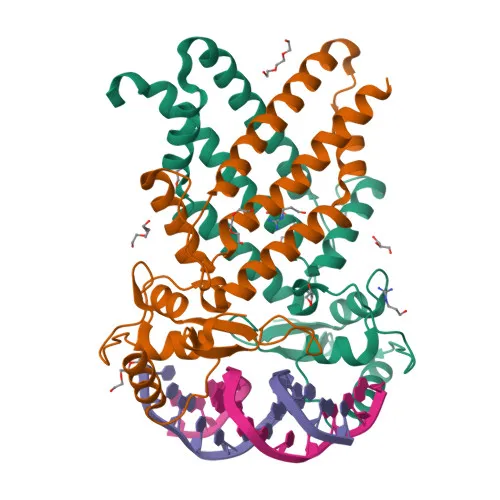
- Transcription factor AP-2-alpha (TFAP2A) is a sequence-specific DNA-binding protein that regulates transcription by binding to the consensus motif 5'-GCCNNNGGC-3' in promoters of target genes.
- AP-2-alpha activates genes essential for proper eye, face, body wall, limb, and neural tube development, and is the only AP-2 protein required for early lens vesicle morphogenesis.
- It also functions as a transcriptional repressor, suppressing genes such as MCAM/MUC18 and C/EBP alpha, and negatively regulates Wnt canonical signaling; AP-2-alpha is a transcriptional repressor of MYC. Related references: PMID:33000225
- The protein is localized to the nucleus where it associates with chromatin; together with coactivator CITED2, it stimulates PITX2 P1 promoter transcription activation.
- Post-translational modifications include phosphorylation and isopeptide bond formation (Ubl conjugation), suggesting complex regulatory mechanisms.
- Alternative splicing generates multiple isoforms of AP-2-alpha, expanding its functional diversity.
- Mutations in TFAP2A are associated with branchiooculofacial syndrome (BOFS), highlighting its role in developmental disorders.
Experimental Guidance and Technical Tips
- The antibody was generated against a synthetic peptide spanning amino acids 50–150 of human AP-2-alpha; this region may be conserved in mouse, consistent with the reported cross-reactivity.
- For Western blot (WB), expect a band near 48 kDa; consider using nuclear-enriched lysates to improve detection of this transcription factor.
- In ELISA, the peptide immunogen can serve as a positive control, but endpoint validation with recombinant protein or cell lysates is recommended.
- Since AP-2-alpha is involved in early development and oncogenesis, including appropriate positive (e.g., HeLa, MCF-7) and negative controls in your assays is advised.
CamelBio: Your One-Stop Sourcing Bridge
CamelBio serves as a comprehensive sourcing partner for diagnostic manufacturers and researchers, offering one-stop access to IVD raw materials. This anti-AP-2-alpha antibody supports studies in transcription regulation and developmental biology; beyond antibodies, we can source matched antibody pairs, bulk ancillary reagents, and assist with rare target raw-material procurement to streamline your assay development from concept to clinic.
REQUEST A QUOTE
Our professional team will reply to you within one business day. Please feel free to contact us!