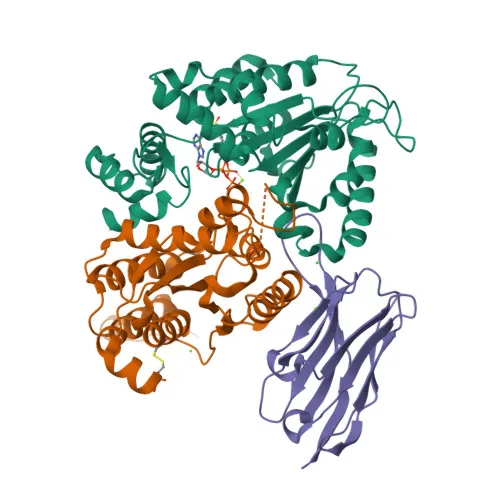
Monoclonal Antibodies
Anti-TorsinA/TOR1A Rabbit Monoclonal Antibody for WB, IF/ICC, ELISA - O14656
Item Number : CM0011751
Price varies based on specs and customizations
- Application
- WB, IF/ICC, ELISA
- Cross Reactivity
- Human, Mouse, Rat
- Protein Weight
- 38kDa

Shipping:
Contact us to get shipping details Enjoy On-time Dispatch Guarantee.
Why Choose Us
Easy ordering process, quality products, and dedicated support for your business success.
Core Product Specifications and Parameters
| Parameter | Value |
|---|---|
| Product Name | TorsinA/TOR1A Rabbit mAb |
| Remarks/Alias | DQ2; AMC5; DYT1; TorsinA/TOR1A |
| Species | Human |
| GeneID (Human) | 1861 |
| Immunogen | A synthetic peptide corresponding to a sequence within amino acids 233-332 of human TorsinA/TOR1A (O14656) |
| Source | Rabbit |
| Category | Monoclonal Antibodies |
| Application | WB, IF/ICC, ELISA |
| Cross Reactivity | Human, Mouse, Rat |
| SWISS | O14656 |
| Protein Weight | 38kDa |
| Shipping | Ice bag |
Biological Background: TorsinA/TOR1A Function and Localization
- Torsin-1A, also known as Dystonia 1 protein or TOR1A, is encoded by the TOR1A gene (GeneID: 1861) and belongs to the torsin ATPase family.
- Functions as a molecular chaperone, controlling protein folding, processing, stability, and localization; helps reduce misfolded protein aggregates.
- Regulates synaptic vesicle recycling by stabilizing STON2 in collaboration with the COP9 signalosome complex.
- Links the cytoskeleton to the nuclear envelope, crucial for nuclear polarity, cell movement, and neuronal nuclear envelope integrity.
- Modulates subcellular localization of multipass membrane proteins like dopamine transporter SLC6A3, thereby influencing dopamine neurotransmission.
- Localizes to the endoplasmic reticulum lumen, nucleus membrane, cell projections (growth cones), cytoplasmic vesicles (secretory, synaptic), and the cytoskeleton.
- Widely expressed with highest levels in kidney, liver, and brain; prominently expressed in dopaminergic neurons of substantia nigra, neocortex, hippocampus, cerebellum, and spinal cord.
- Post-translationally modified as a glycoprotein; mutations in TOR1A cause early-onset torsion dystonia (DYT1).
Experimental Guidance and Technical Tips
- The immunogen corresponds to amino acids 233–332 within the C-terminal region of human TorsinA; verify epitope accessibility in your specific assay format.
- For Western blot, expect a band near 38 kDa under reducing conditions; consider using positive controls derived from tissues with high TorsinA expression (e.g., kidney, brain, liver).
- In IF/ICC, permeabilization is essential for detecting nuclear membrane and ER-localized pools; co-stain with organelle markers to confirm localization.
- ELISA applications may benefit from a peptide competition assay to confirm signal specificity.
- Cross-reactivity with mouse and rat is reported; validate the antibody in your model system to ensure consistent performance.
CamelBio: Your One-Stop Sourcing Bridge
CamelBio supports diagnostic manufacturers and research laboratories with validated antibody pairs, optimized monoclonal/polyclonal antibodies, and bulk ancillary reagents. For TorsinA/TOR1A-related studies in neuroscience and protein misfolding disorders, we offer one-stop access to IVD raw materials, technical consultation, and rare-target sourcing. Partner with us to streamline your development pipeline from concept to clinic.
REQUEST A QUOTE
Our professional team will reply to you within one business day. Please feel free to contact us!