Polyclonal Antibodies
Anti-TorsinA/TOR1A Polyclonal Antibody for WB, IHC-P, ELISA - O14656
Item Number : CM0019693
Price varies based on specs and customizations
- Application
- WB, IHC-P, ELISA
- Cross Reactivity
- Human, Mouse, Rat
- Protein Weight
- 38kDa

Shipping:
Contact us to get shipping details Enjoy On-time Dispatch Guarantee.
Why Choose Us
Easy ordering process, quality products, and dedicated support for your business success.
Core Product Specifications and Parameters
| Parameter | Value |
|---|---|
| Product Name | TorsinA/TOR1A Rabbit pAb |
| Remarks/Alias | DQ2; AMC5; DYT1; TorsinA/TOR1A |
| Species | Human |
| GeneID (Human) | 1861 |
| GeneID | 1861 |
| Immunogen | Recombinant fusion protein containing a sequence corresponding to amino acids 63-332 of human TorsinA/TOR1A (NP_000104.1) |
| Source | Rabbit |
| Category | Polyclonal Antibodies |
| Application | WB, IHC-P, ELISA |
| Cross Reactivity | Human, Mouse, Rat |
| SWISS | O14656 |
| Protein Weight | 38kDa |
| Shipping | Ice bag |
Biological Background: TorsinA/TOR1A Function and Localization
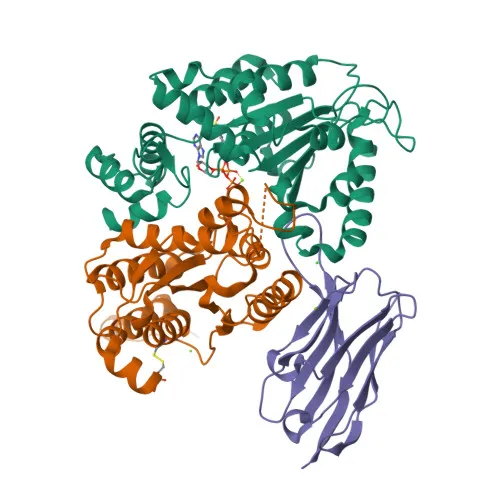
- Torsin-1A (TorsinA) is a member of the torsin family of AAA+ ATPase chaperone proteins, encoded by the TOR1A gene (also known as DQ2, DYT1). It shares redundancy with TOR1B in non-neural tissues.
- Functions as a molecular chaperone crucial for protein folding, processing, stability, and localization, and helps reduce misfolded protein aggregates in the ER.
- Involved in the regulation of synaptic vesicle recycling by controlling STON2 protein stability in collaboration with the COP9 signalosome complex.
- Links the cytoskeleton to the nuclear envelope, playing a critical role in nuclear polarity, cell movement, and nuclear envelope integrity, particularly in neurons.
- Participates in cellular trafficking and modulates dopamine neurotransmission by regulating the subcellular location of the dopamine transporter SLC6A3.
- Subcellularly localizes to the endoplasmic reticulum lumen, nucleus membrane, cell projections (growth cones), cytoplasmic vesicle membranes (including secretory and synaptic vesicles), and the cytoskeleton.
- Widely expressed with highest levels in kidney and liver; in the brain, strongly present in dopaminergic neurons of the substantia nigra, neocortex, hippocampus, cerebellum, and spinal cord.
- Post-translationally modified as a glycoprotein and contains an N-terminal signal peptide, ATP-binding domain, and hydrolase activity; mutations are associated with early-onset dystonia (DYT1).
Experimental Guidance and Technical Tips
- The immunogen spans the core ATPase domain (aa 63–332), which is well-conserved, supporting reported cross-reactivity with mouse and rat.
- For Western blot, expect a band at ~38 kDa (predicted ~37.8 kDa); use mild lysis conditions to preserve native interactions if studying chaperone complexes.
- In IHC-P, consider heat-induced antigen retrieval (e.g., citrate buffer pH 6.0) as for many nuclear envelope/ER targets. Optimize with positive control tissues like brain or kidney.
- Due to the protein’s dynamic trafficking role, vesicular or membrane localization may be observed in immunofluorescence; validate with organelle-specific markers.
- As a polyclonal antibody, verify specificity with appropriate positive (e.g., brain/kidney lysate) and negative (knockdown/knockout) controls. Be aware of potential cross-reactivity with TOR1B.
CamelBio: Your One-Stop Sourcing Bridge
CamelBio streamlines IVD raw material procurement for diagnostic manufacturers and research laboratories. For targets like TorsinA/TOR1A—relevant in neurobiology, dystonia, and protein misfolding disorders—we provide validated antibody pairs, optimized polyclonal antibodies, and bulk ancillary reagents. Our expert team also assists with rare target sourcing and technical consulting to accelerate your assay development from concept to clinic.
REQUEST A QUOTE
Our professional team will reply to you within one business day. Please feel free to contact us!