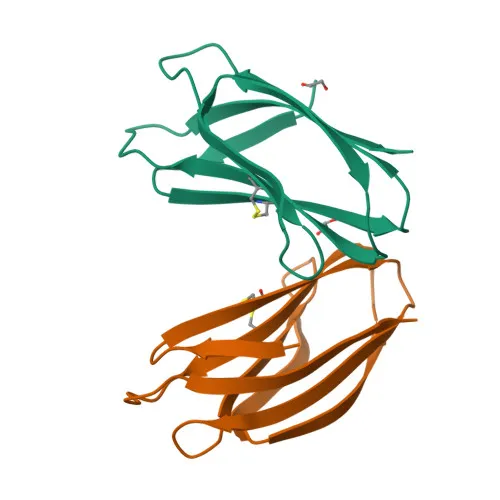
Polyclonal Antibodies
Anti-TMED2 Polyclonal Antibody for WB, IF/ICC, ELISA - Q15363
Item Number : CM0022154
Price varies based on specs and customizations
- Application
- WB, IF/ICC, ELISA
- Cross Reactivity
- Human, Mouse, Rat
- Protein Weight
- 23kDa

Shipping:
Contact us to get shipping details Enjoy On-time Dispatch Guarantee.
Why Choose Us
Easy ordering process, quality products, and dedicated support for your business success.
Core Product Specifications and Parameters
| Parameter | Value |
|---|---|
| Product Name | TMED2 Rabbit pAb |
| Remarks/Alias | p24; P24A; RNP24; p24b1; p24beta1; TMED2 |
| Species | Human |
| Gene ID (Human) | 10959 |
| Gene ID | 10959 |
| Immunogen | Recombinant fusion protein containing a sequence corresponding to amino acids 60-170 of human TMED2 (NP_006806.1) |
| Source | Rabbit |
| Category | Polyclonal Antibodies |
| Application | WB, IF/ICC, ELISA |
| Cross Reactivity | Human, Mouse, Rat |
| SWISS | Q15363 |
| Protein Weight | 23kDa |
| Shipping | Ice bag |
Biological Background: TMED2 Function and Localization
- TMED2, also known as p24, p24beta1, or RNP24, is a member of the p24 family of transmembrane proteins that function in vesicular trafficking.
- It acts as a cargo receptor in the early secretory pathway, specifically for GPI-anchored proteins in COPII vesicles, in partnership with TMED10.
- TMED2 also participates in COPI-mediated retrograde transport by inhibiting ARFGAP1 activity, regulating vesicle uncoating.
- It facilitates the exocytic trafficking of certain G protein-coupled receptors (GPCRs) such as F2RL1, OPRM1, and P2RY4 from the Golgi to the plasma membrane.
- Subcellularly, TMED2 localizes to the endoplasmic reticulum, ER-Golgi intermediate compartment, Golgi cisternae, and COPI-coated vesicles.
- The protein contains a signal peptide, a coiled-coil domain, and a single transmembrane helix, and is involved in the maintenance of Golgi architecture.
- It may also play a role in the biosynthesis and processing of secreted cargo.
Experimental Guidance and Technical Tips
- The immunogen corresponds to the lumenal domain (a.a. 60-170) of human TMED2, a region conserved across human, mouse, and rat, supporting the observed cross-reactivity.
- For western blot (WB), the predicted molecular weight is ~23 kDa; however, post-translational modifications such as N-glycosylation may result in a higher apparent band.
- For immunofluorescence (IF/ICC), permeabilization is required due to TMED2's membrane association; consider co-staining with organelle markers to confirm localization.
- For ELISA, the antibody can be used for antigen detection; optimal working concentration should be determined experimentally.
- Always include appropriate positive and negative controls (e.g., TMED2-overexpressing and knockout cell lines) to validate specificity in your experimental system.
- These are suggestions; actual performance may vary depending on experimental conditions and should be verified by the end user.
CamelBio: Your One-Stop Sourcing Bridge
CamelBio offers a comprehensive suite of IVD raw materials and technical support for research and diagnostic development, from concept to clinic. This anti-TMED2 polyclonal antibody exemplifies our expertise in providing high-quality antibodies for studying vesicular trafficking and cargo receptor biology. Explore our catalog for validated antibody pairs, bulk reagents, and custom sourcing solutions for rare targets to accelerate your projects.
REQUEST A QUOTE
Our professional team will reply to you within one business day. Please feel free to contact us!