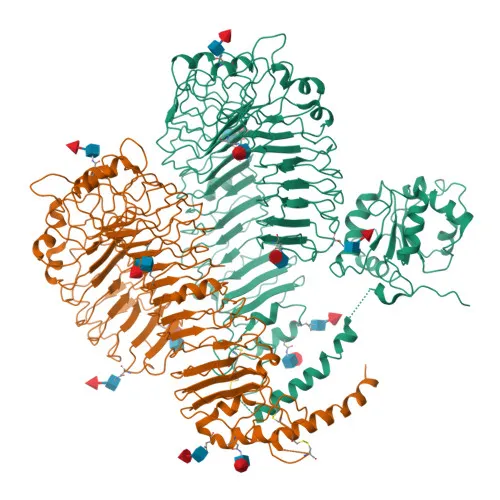
Polyclonal Antibodies
Anti-TLR5 Rabbit Polyclonal Antibody for WB, IHC-P, ELISA - O60602
Item Number : CM0021751
Price varies based on specs and customizations
- Application
- WB, IHC-P, ELISA
- Cross Reactivity
- Human
- Protein Weight
- 98kDa

Shipping:
Contact us to get shipping details Enjoy On-time Dispatch Guarantee.
Why Choose Us
Easy ordering process, quality products, and dedicated support for your business success.
Core Product Specifications and Parameters
| Parameter | Value |
|---|---|
| Product Name | TLR5 Rabbit pAb |
| Remarks/Alias | SLE1; TIL3; SLEB1; MELIOS; TLR5 |
| Species | Human |
| GeneID (Human) | 7100 |
| GeneID | 7100 |
| Immunogen | Recombinant fusion protein containing a sequence corresponding to amino acids 714-858 of human TLR5 (NP_003259.2). |
| Source | Rabbit |
| Category | Polyclonal Antibodies |
| Application | WB, IHC-P, ELISA |
| Cross Reactivity | Human |
| SWISS | O60602 |
| Protein Weight | 98kDa |
| Shipping | Ice bag |
Biological Background: TLR5 Function and Localization
-
TLR5, also known as Toll/interleukin-1 receptor-like protein 3 (TIL3), is a member of the toll-like receptor family that plays a pivotal role in innate immunity.
-
It functions as a pattern recognition receptor (PRR) on the cell surface, initiating inflammatory responses upon pathogen detection.
Related references: PMID:11323673 PMID:18490781
-
TLR5 specifically recognizes bacterial flagellin, a key pathogen-associated molecular pattern (PAMP), as well as microbe-associated molecular patterns (MAMPs) from resident microbiota.
Related references: PMID:29934223
-
Ligand binding triggers the recruitment of adaptor proteins MYD88 and TRIF, leading to NF-kappa-B activation and subsequent cytokine secretion.
Related references: PMID:11489966 PMID:20855887
-
This receptor plays a critical role in maintaining gut microbiota homeostasis and intestinal epithelial barrier function (By similarity).
-
TLR5 localizes to the plasma membrane and is highly expressed on the basolateral surface of intestinal epithelia and in lung epithelial cells.
Related references: PMID:11489966 PMID:18490781
-
Post-translational modifications include glycosylation, phosphorylation, and disulfide bond formation.
-
Genetic variations in TLR5 are associated with susceptibility to systemic lupus erythematosus (SLE).
Experimental Guidance and Technical Tips
- The immunogen is a recombinant fusion protein covering amino acids 714-858 of human TLR5, corresponding to the C-terminal region. This region may be less conserved among TLR family members, potentially reducing cross-reactivity.
- For Western blot (WB), consider using whole cell lysates from TLR5-expressing cell lines such as intestinal epithelial cells (e.g., Caco-2) or lung epithelial cells, and expect a band around 98 kDa.
- For immunohistochemistry (IHC-P), validate antigen retrieval methods and antibody dilution on formalin-fixed paraffin-embedded tissue sections known to express TLR5, such as intestinal or lung tissue.
- For ELISA, this antibody can be used as a detection or capture reagent; pairing with a matched antibody pair may enhance assay sensitivity.
CamelBio: Your One-Stop Sourcing Bridge
CamelBio provides a comprehensive sourcing solution for IVD raw materials, including validated antibody pairs, recombinant proteins, and ancillary reagents, to support your diagnostic assay development from concept to clinic. Our portfolio covers critical innate immunity targets like TLR5, enabling research and development in autoimmune and infectious disease areas.
REQUEST A QUOTE
Our professional team will reply to you within one business day. Please feel free to contact us!