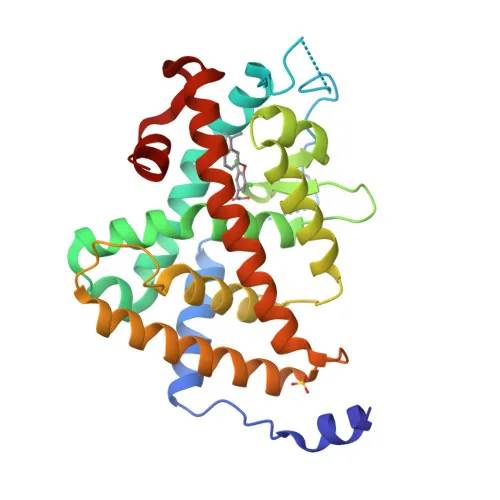
Polyclonal Antibodies
Anti-THRA Polyclonal Antibody for WB, IHC-P, ELISA - P10827
Item Number : CM0030230
Price varies based on specs and customizations
- Application
- WB, IHC-P, ELISA
- Cross Reactivity
- Human, Mouse, Rat
- Protein Weight
- 55kDa

Shipping:
Contact us to get shipping details Enjoy On-time Dispatch Guarantee.
Why Choose Us
Easy ordering process, quality products, and dedicated support for your business success.
Core Product Specifications and Parameters
| Parameter | Value |
|---|---|
| Product Name | THRA Rabbit pAb |
| Remarks/Alias | AR7; EAR7; ERBA; CHNG6; ERBA1; NR1A1; THRA1; THRA2; c-erbA; ERB-T-1; TRalpha; THRalpha; TRalpha1; TRalpha2; c-ERBA-1; THRalpha1; THRalpha2; THRA |
| Species | Human |
| GeneID (Human) | 7067 |
| GeneID | 7067 |
| Immunogen | Recombinant protein |
| Source | Rabbit |
| Category | Polyclonal Antibodies |
| Application | WB, IHC-P, ELISA |
| Cross Reactivity | Human, Mouse, Rat |
| SWISS | P10827 |
| Protein Weight | 55kDa |
| Shipping | Ice bag |
Biological Background: THRA Function and Localization
- THRA encodes thyroid hormone receptor alpha (TRα), also known as nuclear receptor subfamily 1 group A member 1 (NR1A1), c-erbA-1, and EAR-7.
- It functions as a high-affinity receptor for thyroid hormones, including triiodothyronine (T3) and thyroxine (T4), regulating gene transcription.
- TRα can act both as an activator and a repressor of transcription, depending on the presence of ligands and coregulatory factors.
- Certain isoforms of THRA (e.g., TRα2) do not bind thyroid hormone and function as weak dominant-negative inhibitors of thyroid hormone action.
- The receptor contains a DNA-binding domain with two zinc-finger motifs, enabling it to bind thyroid response elements (TREs) on target genes.
- Subcellularly, THRA localizes predominantly to the nucleus, but can also be found in the cytoplasm.
- Mutations in THRA are associated with congenital hypothyroidism (CHNG6), highlighting its role in development and metabolism.
Experimental Guidance and Technical Tips
- The immunogen corresponds to a region within the ligand-binding domain of human THRA (aa 138–180). Verify sequence homology across species and isoforms for your experimental context.
- For Western blotting, the predicted molecular weight is approximately 55 kDa, but multiple bands may appear due to alternative splicing isoforms (e.g., TRα1 at ~48 kDa, TRα2 at ~58 kDa). Adjust exposure times accordingly.
- In immunohistochemistry (IHC-P), perform antigen retrieval (e.g., citrate buffer, pH 6.0) and include appropriate positive and negative tissue controls (e.g., thyroid tissue for high expression, skeletal muscle for lower expression).
- For ELISA, consider direct or sandwich formats; the antibody can be paired with a detection system after optimizing coating and blocking conditions.
- Cross-reactivity is validated for human, mouse, and rat; however, always confirm specificity in your assay by including knockout or knockdown controls.
CamelBio: Your One-Stop Sourcing Bridge
CamelBio provides diagnostic manufacturers and research labs with streamlined access to high-quality IVD raw materials, including this anti-THRA polyclonal antibody. Our portfolio covers validated antibody pairs, optimized recombinant proteins, and bulk ancillary reagents to support your nuclear receptor and endocrinology research. From concept to clinic, we offer one-stop procurement solutions tailored to your development needs.
REQUEST A QUOTE
Our professional team will reply to you within one business day. Please feel free to contact us!