Monoclonal Antibodies
Anti-TGFBI (TGF beta induced) Rabbit Monoclonal Antibody for WB, IHC-P, ELISA - Q15582
Item Number : CM0004943
Price varies based on specs and customizations
- Application
- WB, IHC-P, ELISA
- Cross Reactivity
- Human, Mouse, Rat
- Protein Weight
- 75 kDa

Shipping:
Contact us to get shipping details Enjoy On-time Dispatch Guarantee.
Why Choose Us
Easy ordering process, quality products, and dedicated support for your business success.
Core Product Specifications and Parameters
| Parameter | Value |
|---|---|
| Product Name | TGF beta induced (TGFBI) Rabbit mAb |
| Remarks/Alias | CSD, CDB1, CDG2, CSD1, CSD2, CSD3, EBMD, LCD1, BIGH3, CDGG1, TGF beta induced (TGFBI) |
| Species | Human |
| Gene ID (Human) | 7045 |
| Gene ID | 7045 |
| Immunogen | Synthetic Peptide |
| Source | Rabbit |
| Category | Monoclonal Antibodies |
| Application | WB, IHC-P, ELISA |
| Cross Reactivity | Human, Mouse, Rat |
| SWISS | Q15582 |
| Protein Weight | 75 kDa |
| Shipping | Ice bag |
Biological Background: TGFBI Function and Localization
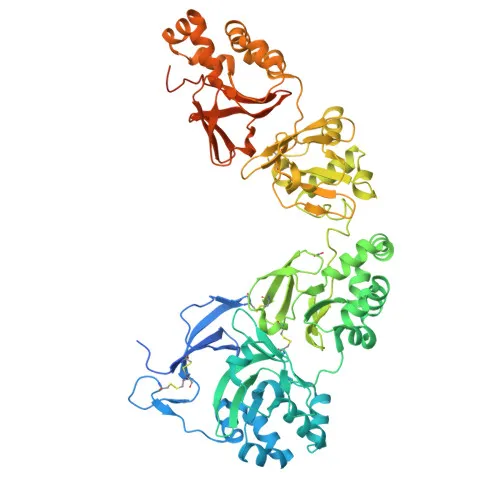
- TGFBI encodes transforming growth factor-beta-induced protein ig-h3, also known as kerato-epithelin and RGD-CAP, which is a secreted extracellular matrix protein.
- The protein mediates cell adhesion through interactions with integrins and other matrix components, contributing to cell-extracellular matrix communication (PubMed:8024701). Related references: PMID:8024701
- It may also play a role in cell-collagen interactions, facilitating tissue organization and integrity.
- TGFBI is highly expressed in the corneal epithelium, as well as in heart, placenta, lung, liver, skeletal muscle, kidney, and pancreas (PubMed:27609313, PubMed:8077289). Related references: PMID:27609313 PMID:8077289
- Mutations in TGFBI are linked to diverse corneal dystrophies (e.g., granular, lattice, Avellino types), emphasizing its essential role in preserving corneal transparency.
- The protein undergoes gamma-carboxylation and phosphorylation, modifications that may influence its function and stability.
- Subcellularly, TGFBI is secreted into the extracellular space and matrix, consistent with its roles in cell adhesion and matrix assembly.
Experimental Guidance and Technical Tips
- The immunogen (a synthetic peptide spanning amino acids 50–150) targets a conserved region; cross-reactivity with human, mouse, and rat TGFBI is expected, but validation in the relevant species is recommended.
- For western blot (WB), a band around 75 kDa (or 74.7 kDa based on UniProt) is anticipated; use appropriate loading controls and consider reducing conditions.
- In immunohistochemistry (IHC-P), antigen retrieval steps (e.g., heat-mediated citrate buffer) may improve detection; include isotype controls and optimize antibody concentration.
- For ELISA, pairing this antibody with a suitable detection antibody can establish a sandwich assay; empirical determination of capture/detection concentrations is advised.
CamelBio: Your One-Stop Sourcing Bridge
CamelBio offers a comprehensive one-stop sourcing solution for IVD raw materials, including validated antibody pairs, optimized monoclonal and polyclonal antibodies, bulk ancillary reagents, and rare target raw-material sourcing. For researchers focused on TGFBI—a key player in cell adhesion, corneal dystrophy, and extracellular matrix biology—we supply high-quality reagents to accelerate your assay development from concept to clinic. Let our technical and procurement experts streamline your supply chain for this target and beyond.
Product Datasheet
Anti-TGFBI (TGF beta induced) Rabbit Monoclonal Antibody for WB, IHC-P, ELISA - Q15582
REQUEST A QUOTE
Our professional team will reply to you within one business day. Please feel free to contact us!