Polyclonal Antibodies
Anti-TGFB3 Polyclonal Antibody for WB, IHC-P, ELISA - P10600
Item Number : CM0026578
Price varies based on specs and customizations
- Application
- WB, IHC-P, ELISA
- Cross Reactivity
- Human, Mouse, Rat
- Protein Weight
- 47kDa

Shipping:
Contact us to get shipping details Enjoy On-time Dispatch Guarantee.
Why Choose Us
Easy ordering process, quality products, and dedicated support for your business success.
Core Product Specifications and Parameters
| Parameter | Value |
|---|---|
| Product Name | TGFB3 Rabbit pAb |
| Remarks/Alias | ARVD; LDS5; RNHF; ARVD1; TGF-beta3; TGFB3 |
| Species | Human |
| Gene ID | 7043 |
| Immunogen | Recombinant protein | Recombinant fusion protein containing a sequence corresponding to amino acids 25-300 of human TGFB3 (NP_003230.1). |
| Source | Rabbit |
| Category | Polyclonal Antibodies |
| Application | WB, IHC-P, ELISA |
| Cross Reactivity | Human, Mouse, Rat |
| SWISS | P10600 |
| Protein Weight | 47kDa |
| Shipping | Ice bag |
Biological Background: TGFB3 Function and Localization
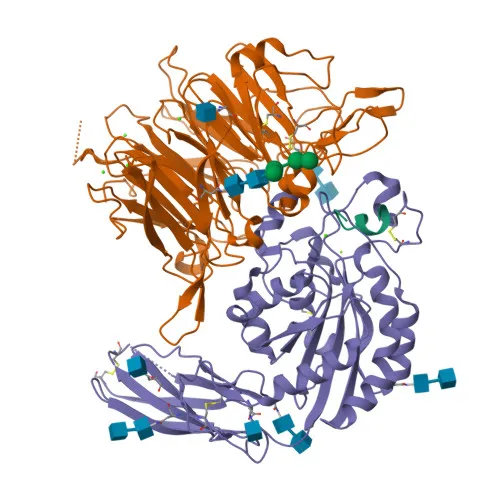
- TGFB3 encodes the transforming growth factor beta-3 proprotein, which is cleaved into the Latency-associated peptide (LAP) and the active Transforming growth factor beta-3 (TGF-β3) chain.
- TGF-β3 is a multifunctional cytokine that regulates embryogenesis and cell differentiation, and is essential for processes such as secondary palate development.
- It belongs to the TGF-β superfamily of growth factors, playing a critical role in development and tissue homeostasis.
- Subcellularly, TGF-β3 is secreted and stored in the extracellular matrix in a latent complex with LAP and milieu molecules like LTBP1 and LRRC32/GARP.
- Activation of latent TGF-β3 is mediated by integrins, which distort LAP to release the active growth factor, enabling it to bind TGF-β receptors (TGFBR1 and TGFBR2).
- Key post-translational modifications include cleavage at a pair of basic residues, disulfide bond formation, glycosylation, and methylation.
- Mutations in TGFB3 are associated with human diseases such as Arrhythmogenic Right Ventricular Dysplasia 1 (ARVD1), Loeys-Dietz syndrome 5 (LDS5), and other cardiomyopathies.
Experimental Guidance and Technical Tips
- The immunogen corresponds to amino acids 25-300 of the TGFB3 proprotein (NP_003230.1), spanning the latency-associated peptide (LAP) and the cleavage site; thus, the antibody is expected to detect the full-length proprotein (~47 kDa) and potentially the LAP fragment.
- For Western blotting, reduce and denature samples; validate with known positive controls (e.g., TGFB3-expressing cell lines or tissues) and consider using molecular weight markers near 47 kDa.
- In IHC-P, since TGF-β3 is secreted and matrix-associated, optimize antigen retrieval and consider enzymatic digestion to reveal epitopes; include negative controls to assess background.
- For ELISA, test the antibody as a capture reagent or for detection; pair with a different TGFB3 antibody for a sandwich format or use direct detection.
CamelBio: Your One-Stop Sourcing Bridge
CamelBio is your trusted one-stop sourcing partner for IVD raw materials, offering a comprehensive portfolio of antibodies and reagents for TGF-β signaling research. From this validated anti-TGFB3 polyclonal antibody to monoclonal antibody pairs and bulk ancillary reagents, we provide scalable solutions for diagnostic manufacturers and research laboratories. Let us bridge your sourcing needs from concept to clinic with expert technical support.
REQUEST A QUOTE
Our professional team will reply to you within one business day. Please feel free to contact us!