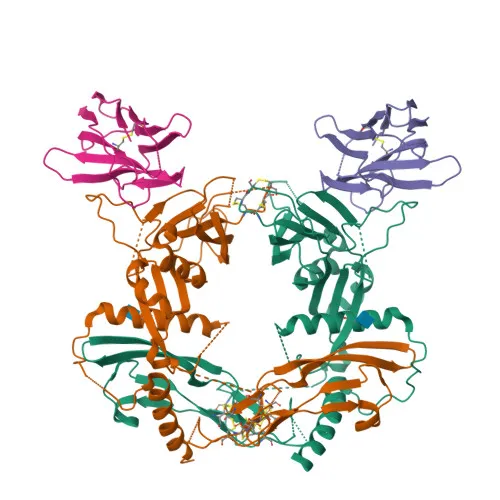
Polyclonal Antibodies
Anti-TGFB2 Rabbit Polyclonal Antibody for WB, IHC-P, ELISA - P61812
Item Number : CM0020048
Price varies based on specs and customizations
- Application
- WB, IHC-P, ELISA
- Cross Reactivity
- Human
- Protein Weight
- 48kDa

Shipping:
Contact us to get shipping details Enjoy On-time Dispatch Guarantee.
Why Choose Us
Easy ordering process, quality products, and dedicated support for your business success.
Core Product Specifications and Parameters
| Parameter | Value |
|---|---|
| Product Name | TGFB2 Rabbit pAb |
| Remarks/Alias | LDS4; G-TSF; TGF-beta2; TGFB2 |
| Species | Human |
| Gene ID (Human) | 7042 |
| Gene ID | 7042 |
| Immunogen | Recombinant fusion protein containing a sequence corresponding to amino acids 20-160 of human TGFB2 (NP_001129071.1) |
| Source | Rabbit |
| Category | Polyclonal Antibodies |
| Application | WB, IHC-P, ELISA |
| Cross Reactivity | Human |
| SWISS | P61812 |
| Protein Weight | 48kDa |
| Shipping | Ice bag |
Biological Background: TGFB2 Function and Localization
- Encodes the transforming growth factor beta-2 proprotein, which is cleaved into Latency-associated peptide (LAP) and the active Transforming growth factor beta-2 chain.
- TGF-beta-2 is a multifunctional cytokine that regulates processes such as angiogenesis and heart development. Related references: PMID:22772368 PMID:22772371
- The mature TGF-beta-2 is maintained in a latent state through non-covalent association with LAP and interactions with 'milieu molecules' like LTBP1 and LRRC32/GARP in the extracellular matrix.
- Active TGF-beta-2 signals by binding to TGF-beta receptors (TGFBR1 and TGFBR2).
- Localizes to the extracellular space and extracellular matrix; it is secreted.
- Contains a signal peptide, is glycosylated, and features disulfide bonds; belongs to the TGF-beta family.
- Alternative splicing yields multiple isoforms; the proprotein undergoes cleavage at pairs of basic residues.
Experimental Guidance and Technical Tips
- The immunogen corresponds to amino acids 20–160 of the human TGFB2 proprotein (NP_001129071.1), which covers part of the LAP region. This polyclonal antibody should recognize both the proprotein and, potentially, the mature ligand after cleavage.
- For Western blotting (WB), consider running samples under reducing conditions and using a suitable positive control such as recombinant TGFB2 or cell lysates known to express TGFB2.
- In immunohistochemistry (IHC-P), antigen retrieval methods (e.g., heat-induced epitope retrieval) may enhance detection; validate with known TGFB2-positive tissue sections.
- For ELISA, the antibody can be explored as a capture or detection reagent; pairing with another clone or antibody may be necessary for sandwich ELISA development.
- Cross-reactivity has been confirmed only for human; verify performance in your species or sample system if extended beyond human.
CamelBio: Your One-Stop Sourcing Bridge
CamelBio is your partner for streamlined access to IVD raw materials, technical services, and consultancy—from concept to clinic. This anti-TGFB2 polyclonal antibody supports research into TGF-beta signaling pathways in angiogenesis and cardiac biology. We supply validated antibody pairs, optimized monoclonal/polyclonal antibodies, bulk ancillary reagents, and specialized sourcing for rare targets, all aligned with your diagnostic manufacturing and assay development workflows.
REQUEST A QUOTE
Our professional team will reply to you within one business day. Please feel free to contact us!