Polyclonal Antibodies
Anti-TGF beta Receptor I (TGFBR1) Rabbit Polyclonal Antibody for WB and ELISA - P36897
Item Number : CM0016349
Price varies based on specs and customizations
- Application
- WB, ELISA
- Cross Reactivity
- Human, Mouse, Rat
- Protein Weight
- 56 kDa

Shipping:
Contact us to get shipping details Enjoy On-time Dispatch Guarantee.
Why Choose Us
Easy ordering process, quality products, and dedicated support for your business success.
Core Product Specifications and Parameters
| Parameter | Value |
|---|---|
| Product Name | TGF beta Receptor I (TGFBR1) Rabbit pAb |
| Remarks/Alias | AAT5; ALK5; ESS1; LDS1; MSSE; SKR4; TBRI; ALK-5; LDS1A; LDS2A; TBR-i; TGFR-1; ACVRLK4; tbetaR-I; TGF beta Receptor I (TGFBR1) |
| Species | Human |
| GeneID (human) | 7046 |
| GeneID | 7046 |
| Immunogen | Synthetic peptide|A synthetic peptide corresponding to a sequence within amino acids 100-200 of human TGF beta Receptor I (TGFBR1) (NP_004603.1). |
| Source | Rabbit |
| Category | Polyclonal Antibodies |
| Application | WB, ELISA |
| Cross Reactivity | Human, Mouse, Rat |
| SWISS | P36897 |
| Protein Weight | 56 kDa |
| Shipping | Ice bag |
Biological Background: TGF-beta receptor type-1 Function and Localization
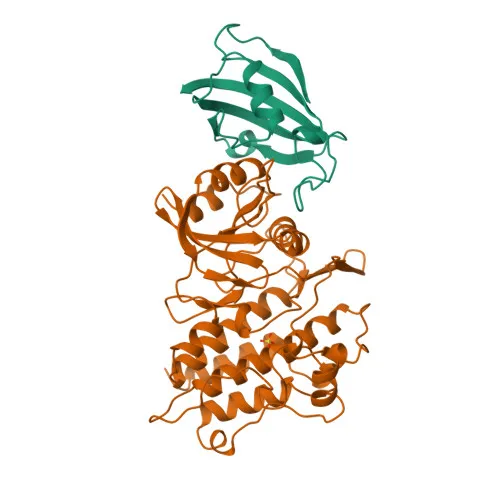
- Encoded by the TGFBR1 gene, TGF-beta receptor type-1 (TGFBR1), also known as ALK-5 or SKR4, is a transmembrane serine/threonine kinase that forms the high-affinity receptor complex for TGF-beta cytokines (TGFB1, TGFB2, TGFB3) with TGFBR2.
- Upon ligand binding, the receptor complex of two TGFBR1 and two TGFBR2 molecules triggers TGFBR1 phosphorylation by TGFBR2, leading to SMAD2 phosphorylation, SMAD4 complex formation, and nuclear translocation to regulate gene transcription. This canonical SMAD-dependent pathway controls diverse processes including cell cycle arrest, proliferation, differentiation, and immunosuppression. Related references: PMID:33914044
- TGFBR1 also mediates non-canonical, SMAD-independent signaling, such as inducing TRAF6 autoubiquitination and MAP3K7 activation to trigger apoptosis, and phosphorylating PARD6A to regulate epithelial-mesenchymal transition.
- The protein localizes to the cell membrane, cell surface, membrane rafts, and tight junctions, underscoring its role in cell-cell communication and polarity.
- TGFBR1 is expressed in all tissues, with highest levels in placenta and relatively lower in brain and heart; it is also detected in various cancer cell lines. Related references: PMID:25893292
- Post-translational modifications including phosphorylation, glycosylation, disulfide bond formation, and ubiquitination modulate its kinase activity, stability, and signaling output.
- Alternative splicing produces multiple isoforms, and mutations are associated with diseases such as Loeys-Dietz syndrome, aortic aneurysm, craniosynostosis, and cancer.
Experimental Guidance and Technical Tips
- The antibody was raised against a synthetic peptide spanning the intracellular region (amino acids 100–200). For Western blotting, expect a band near 56 kDa; use positive control lysates from human, mouse, or rat cells with known TGFBR1 expression.
- For ELISA applications, optimize coating conditions and consider a sandwich ELISA format with a matched capture antibody or direct antigen immobilization.
- Due to widespread tissue expression, validate the antibody's performance in your specific sample type (e.g., placenta for high expression, cancer cell lines).
- Cross-reactivity with mouse and rat indicates sequence conservation in the epitope region; confirm using sequence alignment if needed.
- Include appropriate blocking agents (e.g., BSA, non-fat milk) and wash buffers to minimize background, especially for chemiluminescent detection.
CamelBio: Your One-Stop Sourcing Bridge
CamelBio provides diagnostic manufacturers, labs, and research institutes with a one-stop solution for IVD raw materials, covering every stage from concept to clinic. For TGF-beta signaling research, we offer this anti-TGFBR1 rabbit polyclonal antibody along with a comprehensive portfolio of monoclonal/polyclonal antibodies, validated antibody pairs, and bulk ancillary reagents. We also support rare-target raw-material sourcing and technical consulting to accelerate your assay development and clinical translation.
Product Datasheet
Anti-TGF beta Receptor I (TGFBR1) Rabbit Polyclonal Antibody for WB and ELISA - P36897
REQUEST A QUOTE
Our professional team will reply to you within one business day. Please feel free to contact us!