Monoclonal Antibodies
Anti-TGF beta 1 Monoclonal Antibody for WB, IF-P, IHC-P, ELISA - P01137
Item Number : CM0010908
Price varies based on specs and customizations
- Application
- WB, IF-P, IHC-P, ELISA
- Cross Reactivity
- Human, Mouse, Rat
- Protein Weight
- 44 kDa

Shipping:
Contact us to get shipping details Enjoy On-time Dispatch Guarantee.
Why Choose Us
Easy ordering process, quality products, and dedicated support for your business success.
Core Product Specifications and Parameters
| Parameter | Value |
|---|---|
| Product Name | TGF beta 1 Rabbit mAb |
| Remarks/Alias | CED; LAP; DPD1; TGFB; IBDIMDE; TGFbeta; TGF-beta1; CAEND1 |
| Species | Human |
| GeneID (Human) | 7040 |
| GeneID | 7040 |
| Immunogen | Recombinant fusion protein containing a sequence corresponding to amino acids 279-390 of human TGF beta 1 (NP_000651.3). |
| Source | Rabbit |
| Category | Monoclonal Antibodies |
| Application | WB, IF-P, IHC-P, ELISA |
| Cross Reactivity | Human, Mouse, Rat |
| SWISS | P01137 |
| Protein Weight | 44 kDa |
| Shipping | Ice bag |
Biological Background: TGF beta 1 Function and Localization
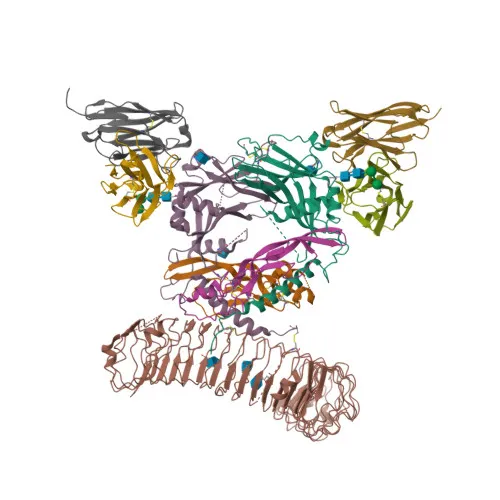
- TGFB1 encodes the transforming growth factor beta-1 proprotein, which is proteolytically cleaved to generate the Latency-associated peptide (LAP) and the biologically active TGF-beta-1 cytokine.
- TGF-beta-1 is secreted as an inactive latent complex; activation occurs when integrins (ITGAV:ITGB6 or ITGAV:ITGB8) bind LAP, causing a conformational distortion and release of the active cytokine (PubMed:22278742, PubMed:28117447). Related references: PMID:22278742 PMID:28117447
- Active TGF-beta-1 signals through TGF-beta receptors (TGFBR1 and TGFBR2), leading to SMAD2/3 phosphorylation and nuclear translocation to regulate gene expression (PubMed:20207738, PubMed:25893292, PubMed:29483653, PubMed:30696809). Related references: PMID:20207738 PMID:25893292 PMID:29483653 PMID:30696809
- It is a multifunctional cytokine that can induce epithelial-to-mesenchymal transition (EMT), cell migration, and sustained collagen production via CREB3L1 activation (PubMed:25310401, PubMed:25893292, PubMed:30696809). Related references: PMID:25310401 PMID:25893292 PMID:30696809
- TGF-beta-1 modulates immune cell differentiation: at high concentrations it promotes regulatory T-cell (Treg) development, while at low concentrations with IL-6/IL-21 it favors Th17 cell differentiation (By similarity).
- In bone, it is highly expressed and acts as a potent stimulator of osteoblastic bone formation, chemotaxis, proliferation, and differentiation; it is also abundant in articular cartilage and increased in osteoarthritis (PubMed:11746498, PubMed:17827158). Related references: PMID:11746498 PMID:17827158
- Subcellular localization is primarily to the extracellular space and extracellular matrix.
- Post-translational modifications include cleavage at dibasic residues, disulfide bond formation, and glycosylation, which are essential for proper folding and dimerization.
Experimental Guidance and Technical Tips
- The immunogen (amino acids 279–390 of human TGFB1 proprotein) lies within the LAP domain; therefore, the antibody may recognize the full‑length proprotein and LAP but not necessarily the mature TGF‑β1 dimer. Validate detection specificity using appropriate recombinant proteins or cell lysates.
- For Western Blot, expect a band around 44 kDa corresponding to the proprotein under reducing conditions; the mature monomer (~12.5 kDa) may or may not be observed depending on epitope accessibility.
- For immunohistochemistry and immunofluorescence, consider antigen retrieval conditions and fixation methods, especially when working with tissues rich in extracellular matrix (e.g., bone, cartilage) where latent complexes accumulate.
- ELISA performance can be assessed by coating recombinant LAP or proprotein and testing serial dilutions of the antibody.
- Cross‑reactivity with mouse and rat is reported, but we recommend verifying binding in the specific experimental system used.
CamelBio: Your One-Stop Sourcing Bridge
CamelBio provides comprehensive access to IVD raw materials, technical services, and consulting, supporting every stage from concept to clinic. For researchers and manufacturers focusing on TGF‑beta signaling, immune regulation, and bone biology, CamelBio offers validated antibody pairs, optimized monoclonal/polyclonal antibodies, bulk ancillary reagents, and rare target raw‑material sourcing to accelerate diagnostic development.
Product Datasheet
Anti-TGF beta 1 Monoclonal Antibody for WB, IF-P, IHC-P, ELISA - P01137
REQUEST A QUOTE
Our professional team will reply to you within one business day. Please feel free to contact us!