Polyclonal Antibodies
Anti-TFF3 Rabbit Polyclonal Antibody for WB, IF-P, ELISA - Q07654
Item Number : CM0019824
Price varies based on specs and customizations
- Application
- WB, IF-P, ELISA
- Cross Reactivity
- Human
- Protein Weight
- 9kDa

Shipping:
Contact us to get shipping details Enjoy On-time Dispatch Guarantee.
Why Choose Us
Easy ordering process, quality products, and dedicated support for your business success.
Core Product Specifications and Parameters
| Parameter | Value |
|---|---|
| Product Name | TFF3 Rabbit pAb |
| Remarks/Alias | ITF; P1B; TFI; TFF3 |
| Species | Human |
| Gene ID (Human) | 7033 |
| Immunogen | Recombinant fusion protein containing a sequence corresponding to amino acids 22-94 of human TFF3 (NP_003217.3) |
| Source | Rabbit |
| Category | Polyclonal Antibodies |
| Application | WB, IF-P, ELISA |
| Cross Reactivity | Human |
| SWISS | Q07654 |
| Protein Weight | 9kDa |
| Shipping | Ice bag |
Biological Background: TFF3 Function and Localization
- Trefoil factor 3 (TFF3), also known as intestinal trefoil factor (hITF), is a small secreted protein belonging to the trefoil factor family characterized by a conserved trefoil domain.
- TFF3 plays a critical role in the maintenance and repair of the intestinal mucosa, promoting epithelial restitution and acting as a motogen to enhance cell migration during wound healing.
- The protein is predominantly expressed in goblet cells of the small and large intestine and colon, with additional expression reported in the uterus and specific hypothalamic nuclei (paraventricular, periventricular, and supraoptic nuclei).
- TFF3 is synthesized as a precursor with a signal peptide and is secreted into the extracellular space, where it can interact with mucins to stabilize the mucus layer.
- Subcellularly, TFF3 is localized to the extracellular matrix, secreted, and also detected in the cytoplasm, consistent with its secretory pathway transit.
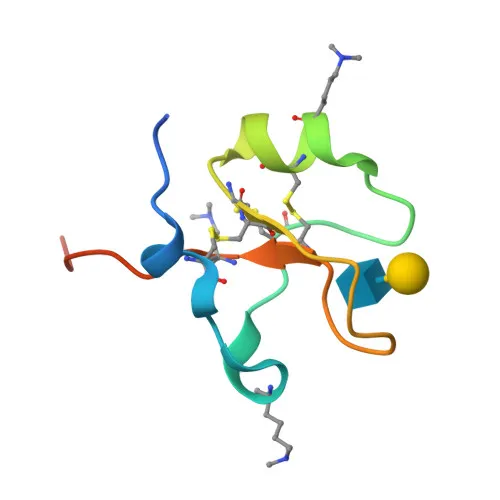
- The mature protein contains intramolecular disulfide bonds that stabilize its trefoil domain structure, which is essential for its biological activity and resistance to proteolysis.
Experimental Guidance and Technical Tips
- The immunogen corresponds to the mature peptide region (aa 22-94) of human TFF3, suggesting the antibody likely recognizes the secreted, active form of the protein.
- For Western blot, a band around 9 kDa is expected, consistent with the monomeric form of TFF3; reducing conditions may disrupt disulfide bonds. Consider using low-molecular-weight markers and optimized transfer times for PVDF membranes.
- For immunofluorescence, paraformaldehyde fixation and permeabilization are recommended to detect both intracellular and extracellular TFF3. Validate in intestinal or colonic tissue sections.
- In ELISA, consider pairing with a capture antibody targeting a different epitope if developing a sandwich assay; the rabbit polyclonal may serve as a detection reagent.
CamelBio: Your One-Stop Sourcing Bridge
CamelBio is your one-stop sourcing partner for IVD raw materials, offering a comprehensive portfolio of validated antibodies and ancillary reagents. This TFF3 polyclonal antibody supports gastrointestinal and mucosal research applications, and CamelBio can supply bulk quantities, matched antibody pairs, and other trefoil factor family reagents to streamline your assay development. From concept to clinic, count on us for reliable, scalable sourcing solutions.
REQUEST A QUOTE
Our professional team will reply to you within one business day. Please feel free to contact us!