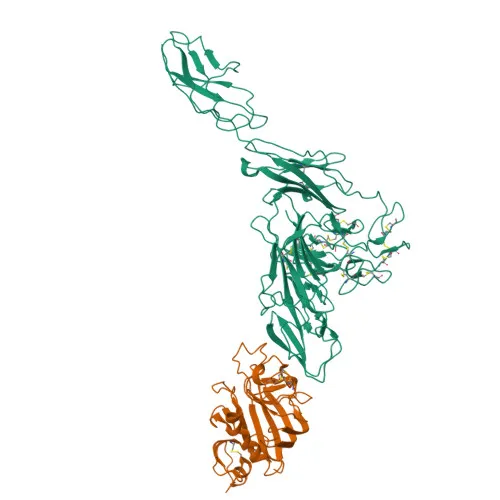
Polyclonal Antibodies
Anti-TEK Rabbit Polyclonal Antibody for WB and ELISA - Q02763
Item Number : CM0018027
Price varies based on specs and customizations
- Application
- WB, ELISA
- Cross Reactivity
- Human, Mouse, Rat
- Protein Weight
- 126kDa

Shipping:
Contact us to get shipping details Enjoy On-time Dispatch Guarantee.
Why Choose Us
Easy ordering process, quality products, and dedicated support for your business success.
Core Product Specifications and Parameters
| Parameter | Value |
|---|---|
| Product Name | TEK Rabbit pAb |
| Remarks/Alias | TIE2; VMCM; GLC3E; TIE-2; VMCM1; CD202B; TEK |
| Species | Human |
| GeneID (Human) | 7010 |
| GeneID | 7010 |
| Immunogen | Recombinant fusion protein containing a sequence corresponding to amino acids 500-750 of human TEK (NP_000450.2) |
| Source | Rabbit |
| Category | Polyclonal Antibodies |
| Application | WB, ELISA |
| Cross Reactivity | Human, Mouse, Rat |
| SWISS | Q02763 |
| Protein Weight | 126kDa |
| Shipping | Ice bag |
Biological Background: TEK (Angiopoietin-1 Receptor) Function and Localization
- TEK (TIE2, CD202B) is a receptor tyrosine kinase that binds angiopoietins (ANGPT1, ANGPT2, ANGPT4) and plays a central role in angiogenesis and vascular stability.
- It regulates endothelial cell survival, proliferation, migration, adhesion, and cytoskeletal reorganization, and is required for normal embryonic angiogenesis and heart development.
- TEK exists as a full-length transmembrane receptor and a soluble decoy receptor generated by proteolytic processing; the soluble form is detected in blood plasma.
- It is predominantly expressed in endothelial cells and their progenitors, with high expression in placenta and lung, and lower levels in brain and kidney.
- Subcellular localization includes the cell membrane, cell junctions, focal adhesions, and cytoplasm/cytoskeleton; it is also secreted as a soluble form.
- Key post-translational modifications include ligand-induced autophosphorylation, disulfide bond formation, glycosylation, and ubiquitin conjugation.
- Mutations in TEK are associated with venous malformations and glaucoma.
- The protein contains an EGF-like domain, immunoglobulin domains, and a kinase domain.
Experimental Guidance and Technical Tips
- For Western blot, consider using endothelial cell lines (e.g., HUVEC) to validate a band near 126 kDa under reducing conditions.
- For ELISA, the immunogen fragment (aa 500-750) may capture both full-length and soluble forms; optimize coating antigen and detection conditions accordingly.
- Because TEK shares domains with other receptors, confirm specificity using knockdown controls or by cross-referencing with known expression patterns.
- The antibody cross-reacts with mouse and rat, but validate sequence homology in the immunogen region if working with these species.
- Integrin-linked signaling complexes may affect TEK detection; use appropriate lysis buffers and inhibitors to preserve phosphorylation states if interested in active receptor forms.
CamelBio: Your One-Stop Sourcing Bridge
CamelBio serves as a comprehensive sourcing partner for IVD raw materials, offering validated antibody pairs, optimized polyclonal antibodies, and ancillary reagents for assay development. This anti-TEK antibody supports angiogenesis and vascular biology research programs, and our supply network can additionally source rare-target antibodies, bulk reagents, and complementary proteins to streamline your diagnostic pipeline from concept to clinic.
REQUEST A QUOTE
Our professional team will reply to you within one business day. Please feel free to contact us!