Monoclonal Antibodies
Anti-TEAD4 Rabbit Monoclonal Antibody for WB, ELISA - Q15561
Item Number : CM0006755
Price varies based on specs and customizations
- Application
- WB, ELISA
- Cross Reactivity
- Human
- Protein Weight
- 34kDa/44kDa/48kDa

Shipping:
Contact us to get shipping details Enjoy On-time Dispatch Guarantee.
Why Choose Us
Easy ordering process, quality products, and dedicated support for your business success.
Core Product Specifications and Parameters
| Parameter | Value |
|---|---|
| Product Name | TEAD4 Rabbit mAb |
| Remarks/Alias | TEAD4; EFTR-2; RTEF1; TCF13L1; TEF-3; TEF3; TEFR-1; hRTEF-1B; TEA domain transcription factor 4 |
| Species | Human |
| Gene ID (Human) | 7004 |
| Gene ID | 7004 |
| Immunogen | Synthetic peptide corresponding to a sequence within amino acids 140-240 of human TEAD4 (Q15561) |
| Source | Rabbit |
| Category | Monoclonal Antibodies |
| Application | WB, ELISA |
| Cross Reactivity | Human |
| SWISS | Q15561 |
| Protein Weight | 34kDa/44kDa/48kDa |
| Shipping | Ice bag |
Biological Background: TEAD4 Function and Localization
- TEAD4 (TEA domain transcription factor 4), also known as TEF-3, RTEF1, and TCF13L1, is a member of the TEA domain family of transcription factors, with multiple isoforms expressed due to alternative splicing (reflected by protein weights of 34, 44, and 48 kDa).
- It functions as a key nuclear effector of the Hippo signaling pathway, which controls organ size by regulating cell proliferation and apoptosis. In this cascade, MST1/2 kinases activate LATS1/2, which phosphorylate and inhibit the YAP1/TAZ co-activators; TEAD4 mediates the transcriptional output of YAP1/TAZ.
- Binds specifically to the Sph and GT-IIC enhancer motifs (5'-GTGGAATGT-3') as well as M-CAT elements in target gene promoters, thereby activating transcription of genes involved in cell growth and differentiation.
- Plays a central role in regulating cell proliferation, migration, and epithelial-mesenchymal transition (EMT), linking Hippo signaling to developmental processes and tumorigenesis.
- The protein is predominantly localized in the nucleus, consistent with its function as a DNA-binding transcription factor.
- It is preferentially expressed in skeletal muscle, with lower levels detected in pancreas, placenta, and heart, indicating tissue-specific roles in myogenesis and possibly other developmental contexts.
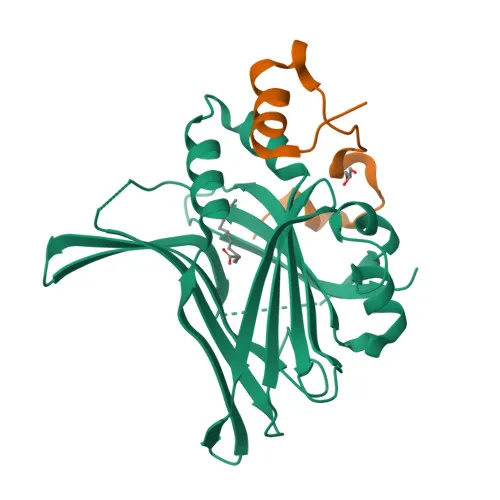
- Post-translational modifications and protein interactions, including its three-dimensional structure as recorded in UniProt, further modulate its transcriptional activity.
Experimental Guidance and Technical Tips
- The immunogen corresponds to an internal region (amino acids 140-240) of human TEAD4, suggesting the antibody may recognize all isoforms if the epitope is conserved; confirm isoform specificity by molecular weight on Western blot (34, 44, 48 kDa bands).
- For Western blot, consider using nuclear extracts to enrich TEAD4 signal, given its nuclear localization.
- For ELISA, the antibody can be used for detection of recombinant or endogenous TEAD4; validate with appropriate controls.
- Cross-reactivity is reported for human; reactivity with other species should be tested if required.
- Avoid multiple freeze-thaw cycles; store as recommended.
CamelBio: Your One-Stop Sourcing Bridge
CamelBio offers a comprehensive one-stop bridge for diagnostic manufacturers and laboratories, providing validated IVD raw materials including monoclonal antibodies like this TEAD4 clone, optimized antibody pairs, bulk ancillary reagents, and custom sourcing for rare targets. Our TEAD4 rabbit monoclonal antibody supports Hippo pathway and oncology research applications, backed by integrated technical and regulatory consulting.
REQUEST A QUOTE
Our professional team will reply to you within one business day. Please feel free to contact us!