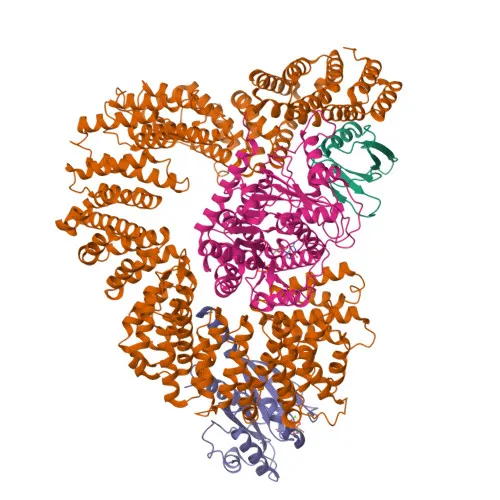
Polyclonal Antibodies
Anti-TBCE Polyclonal Antibody for IF-P and ELISA - Q15813
Item Number : CM0022412
Price varies based on specs and customizations
- Application
- IF-P, ELISA
- Cross Reactivity
- Mouse
- Protein Weight
- 59kDa

Shipping:
Contact us to get shipping details Enjoy On-time Dispatch Guarantee.
Why Choose Us
Easy ordering process, quality products, and dedicated support for your business success.
Core Product Specifications and Parameters
| Parameter | Value |
|---|---|
| Product Name | TBCE Rabbit pAb |
| Remarks/Alias | HRD; KCS; KCS1; pac2; PEAMO; TBCE |
| Species | Human |
| GeneID (human) | 6905 |
| GeneID | 6905 |
| Immunogen | Recombinant fusion protein containing a sequence corresponding to amino acids 328-527 of human TBCE (NP_003184.1). |
| Source | Rabbit |
| Category | Polyclonal Antibodies |
| Application | IF-P, ELISA |
| Cross Reactivity | Mouse |
| SWISS | Q15813 |
| Protein Weight | 59kDa |
| Shipping | Ice bag |
Biological Background: TBCE Function and Localization
- TBCE, also known as tubulin-specific chaperone E or tubulin-folding cofactor E, is a key player in the tubulin folding pathway.
- It participates in the second step of tubulin heterodimer assembly and regulates tubulin heterodimer dissociation.
- TBCE is essential for proper organization of the microtubule cytoskeleton and formation of the mitotic spindle.
- It is particularly important for maintaining the neuronal microtubule network, highlighting its role in neural function.
- The protein is localized to the cytoplasm and associates with the cytoskeleton.
- TBCE undergoes post-translational modifications such as acetylation and phosphorylation, which may regulate its function.
- The TBCE gene undergoes alternative splicing, potentially yielding isoforms with diverse roles.
- Mutations in TBCE are associated with diseases including dwarfism, intellectual disability, and neurodegeneration, underscoring its clinical relevance.
Experimental Guidance and Technical Tips
- The immunogen is a recombinant fusion protein spanning amino acids 328–527 of human TBCE; the antibody may detect both native and denatured forms under appropriate conditions.
- For immunofluorescence-paraffin (IF-P), consider optimizing antigen retrieval steps as the epitope may be masked in formalin-fixed tissues.
- In ELISA applications, the antibody can be used to capture or detect TBCE; verify linearity and sensitivity with known standards.
- Cross-reactivity with mouse TBCE allows for use in mouse model studies; however, confirm species-specific reactivity in your experimental system.
- Include proper controls, such as knockout cell lines or blocking peptides, to ensure signal specificity.
CamelBio: Your One-Stop Sourcing Bridge
CamelBio provides diagnostic manufacturers and research institutes with a streamlined sourcing solution for IVD raw materials. For microtubule biology and tubulin folding research, we offer a portfolio of validated antibodies, including this anti-TBCE polyclonal antibody, plus bulk buffers and ancillary reagents to support your assay development. Our team also assists with rare target sourcing to bridge gaps in your workflow.
REQUEST A QUOTE
Our professional team will reply to you within one business day. Please feel free to contact us!