Polyclonal Antibodies
Anti-TAS1R3 Polyclonal Antibody for WB, ELISA - Q7RTX0
Item Number : CM0016088
Price varies based on specs and customizations
- Application
- WB, ELISA
- Cross Reactivity
- Human, Mouse, Rat
- Protein Weight
- 93kDa

Shipping:
Contact us to get shipping details Enjoy On-time Dispatch Guarantee.
Why Choose Us
Easy ordering process, quality products, and dedicated support for your business success.
Core Product Specifications and Parameters
| Parameter | Value |
|---|---|
| Product Name | TAS1R3 Rabbit pAb |
| Remarks/Alias | T1R3; TAS1R3 |
| Species | Human |
| Gene ID (Human) | 83756 |
| Gene ID | 83756 |
| Immunogen | Recombinant fusion protein containing a sequence corresponding to amino acids 400-570 of human TAS1R3 (NP_689414.2). |
| Source | Rabbit |
| Category | Polyclonal Antibodies |
| Application | WB, ELISA |
| Cross Reactivity | Human, Mouse, Rat |
| SWISS | Q7RTX0 |
| Protein Weight | 93kDa |
| Shipping | Ice bag |
Biological Background: TAS1R3 Function and Localization
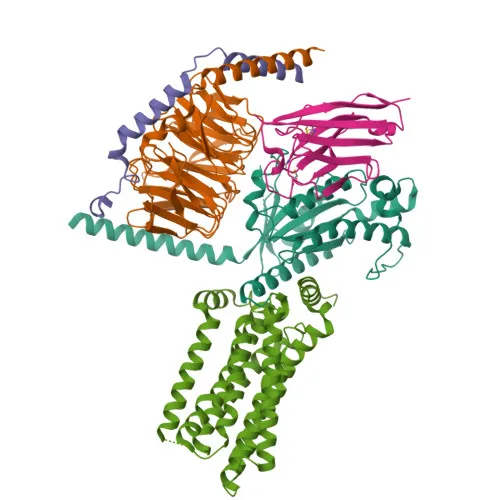
- Taste receptor type 1 member 3 (TAS1R3), also known as sweet taste receptor T1R3, is a G protein-coupled receptor that mediates gustatory perception.
- TAS1R3 forms heterodimeric receptors: TAS1R1/TAS1R3 functions as the umami taste receptor responding to monosodium glutamate, while TAS1R2/TAS1R3 recognizes diverse natural and synthetic sweeteners.
- TAS1R3 is essential for the recognition and response to the disaccharide trehalose, highlighting its role in carbohydrate sensing.
- Sequence variations within and between species can significantly influence the selectivity and specificity of TAS1R3-mediated taste responses.
- The receptor localizes to the cell membrane, consistent with its role as a transmembrane receptor involved in signal transduction.
- TAS1R3 belongs to the TAS1R taste receptor family and carries a glycoprotein modification, which may affect its folding and function.
- Keywords associated with TAS1R3 include sensory transduction, taste, transmembrane helix, and reference proteome, underlining its classification as a signaling receptor.
Experimental Guidance and Technical Tips
- The immunogen corresponds to amino acids 400–570 of human TAS1R3, a region likely targeting extracellular or intracellular domains; consider these epitopes when designing blocking or competition experiments.
- For WB, a band around 93 kDa is expected; including appropriate positive controls (e.g., taste tissue lysates) and loading controls is advisable to confirm specificity.
- In ELISA applications, direct or indirect formats using the recombinant immunogen or native receptor from tissue homogenates can be explored; validate with species-matched samples.
- Cross-reactivity with mouse and rat allows for translational studies; however, confirm antibody specificity in the relevant species and tissue context before use.
CamelBio: Your One-Stop Sourcing Bridge
CamelBio provides comprehensive access to IVD raw materials and technical support, helping diagnostic manufacturers and research labs accelerate their projects from concept to clinic. For taste receptor studies involving TAS1R3, we can supply validated antibody pairs, optimized monoclonal or polyclonal antibodies, and bulk ancillary reagents. Our network also enables sourcing of rare-target reagents, including those for sensory transduction and G protein-coupled receptor research, ensuring you find the right materials for your workflow.
REQUEST A QUOTE
Our professional team will reply to you within one business day. Please feel free to contact us!