Polyclonal Antibodies
Anti-TAS1R2 Rabbit Polyclonal Antibody for WB and ELISA - Q8TE23
Item Number : CM0023881
Price varies based on specs and customizations
- Application
- WB, ELISA
- Cross Reactivity
- Human
- Protein Weight
- 95kDa

Shipping:
Contact us to get shipping details Enjoy On-time Dispatch Guarantee.
Why Choose Us
Easy ordering process, quality products, and dedicated support for your business success.
Core Product Specifications and Parameters
| Parameter | Value |
|---|---|
| Product Name | TAS1R2 Rabbit pAb |
| Remarks/Alias | TR2; T1R2; GPR71; TAS1R2 |
| Species | Human |
| Gene ID (Human) | 80834 |
| Gene ID | 80834 |
| Immunogen | Synthetic Peptide |
| Source | Rabbit |
| Category | Polyclonal Antibodies |
| Application | WB, ELISA |
| Cross Reactivity | Human |
| SWISS | Q8TE23 |
| Protein Weight | 95kDa |
| Shipping | Ice bag |
Biological Background: TAS1R2 Function and Localization
- TAS1R2 (Taste receptor type 1 member 2) is also referred to as G protein-coupled receptor 71 (GPR71) or sweet taste receptor T1R2.
- It forms a heterodimer with TAS1R3 to create the sweet taste receptor, responsible for detecting sweet compounds.
- This receptor recognizes diverse natural and synthetic sweeteners, playing a central role in sweet taste perception and sensory transduction.
- TAS1R2 is a G protein-coupled receptor featuring seven transmembrane domains and is classified under sensory transduction and signal transduction pathways.
- The protein localizes to the cell membrane, consistent with its function as a membrane-bound receptor.
- Post-translational modifications include glycosylation, as indicated by the Glycoprotein keyword.
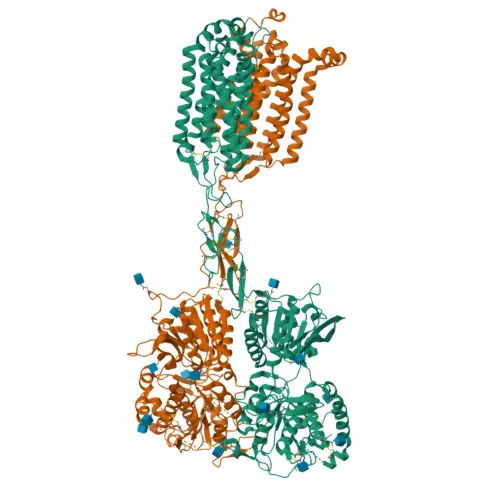
- High-resolution structures (3D-structure keyword) are available, offering insights into its ligand-binding mechanisms.
Experimental Guidance and Technical Tips
- The immunogen used is a synthetic peptide positioned within the intracellular C-terminal region (amino acids 450–550). This suggests the antibody may detect the receptor in intracellular compartments or after membrane permeabilization.
- For Western blotting, consider using membrane protein extraction methods and optimizing sample preparation to account for the transmembrane nature of TAS1R2.
- Validate antibody performance in human tissue or cell lines known to express TAS1R2, such as taste bud cells or heterologous expression systems.
- In ELISA applications, peptide competition assays can help confirm binding specificity and assess antibody titer.
- Due to the high molecular weight (~95 kDa), allow sufficient migration time during SDS-PAGE for clear band separation.
CamelBio: Your One-Stop Sourcing Bridge
CamelBio serves as a comprehensive sourcing partner for IVD raw materials, supporting diagnostic manufacturers and research institutes with high-quality reagents from discovery to commercialization. This anti-TAS1R2 polyclonal antibody exemplifies our portfolio in taste receptor and sensory transduction research. Our supply capabilities include validated antibody pairs, optimized monoclonal/polyclonal antibodies, bulk ancillary reagents, and assistance with rare target procurement to streamline your development workflows.
REQUEST A QUOTE
Our professional team will reply to you within one business day. Please feel free to contact us!