Polyclonal Antibodies
Anti-TAPBP Rabbit Polyclonal Antibody for WB, IHC-P, IF/ICC, ELISA - O15533
Item Number : CM0021354
Price varies based on specs and customizations
- Application
- WB, IHC-P, IF/ICC, ELISA
- Cross Reactivity
- Human, Mouse, Rat
- Protein Weight
- 48kDa

Shipping:
Contact us to get shipping details Enjoy On-time Dispatch Guarantee.
Why Choose Us
Easy ordering process, quality products, and dedicated support for your business success.
Core Product Specifications and Parameters
| Parameter | Value |
|---|---|
| Product Name | TAPBP Rabbit pAb |
| Remarks/Alias | TPN; TAPA; TPSN; NGS17; TAPBP |
| Species | Human |
| Gene ID (Human) | 6892 |
| Gene ID | 6892 |
| Immunogen | Recombinant protein containing a sequence corresponding to amino acids 30-260 of human TAPBP (NP_757345.2) |
| Source | Rabbit |
| Category | Polyclonal Antibodies |
| Application | WB, IHC-P, IF/ICC, ELISA |
| Cross Reactivity | Human, Mouse, Rat |
| SWISS | O15533 |
| Protein Weight | 48kDa |
| Shipping | Ice bag |
Biological Background: Tapasin Function and Localization
- Tapasin (TAPBP) is a transmembrane glycoprotein belonging to the immunoglobulin superfamily, encoded by the TAPBP gene; alternative splicing produces multiple isoforms.
- As a dedicated chaperone, tapasin is essential for the assembly of MHC class I molecules with peptides in the endoplasmic reticulum.
- It bridges MHC class I heavy chain-β2-microglobulin dimers to the transporter associated with antigen processing (TAP), facilitating peptide loading.
- Tapasin stabilizes the peptide-loading complex and optimizes the peptide repertoire presented on the cell surface for immune surveillance.
- The protein is anchored in the endoplasmic reticulum membrane via a single transmembrane helix, with an N-terminal signal peptide directing its localization.
- Post-translational modifications include N-linked glycosylation and formation of a conserved disulfide bond within its luminal immunoglobulin domain.
- Tapasin expression is prominent in neutrophils, especially in fully differentiated cells, linking it to innate immune responses.
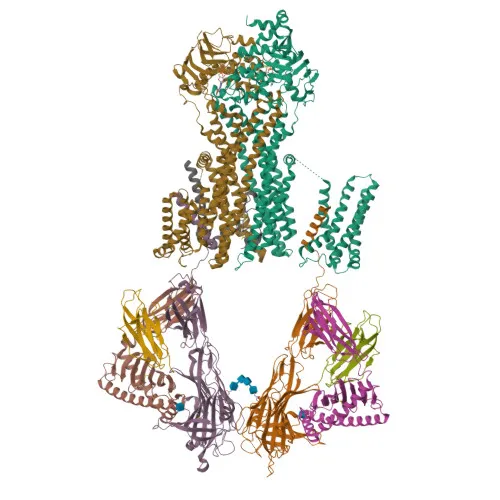
- Structural studies have elucidated the molecular basis of tapasin function in peptide selection and MHC class I optimization.
Experimental Guidance and Technical Tips
- The immunogen, spanning the luminal domain (amino acids 30–260), targets the peptide-binding and TAP-interacting region; the antibody may recognize both native and denatured tapasin.
- For western blotting, a specific band near 48–50 kDa is typically detected; note that glycosylation can cause slight size shifts.
- In immunohistochemistry (IHC-P) and immunofluorescence (IF/ICC), validation on human lymphoid tissue or cultured antigen-presenting cells is recommended.
- The reported cross-reactivity with mouse and rat tapasin enables translational studies in these species.
- For ELISA, consider pairing with a monoclonal capture antibody to enhance sensitivity and specificity.
- Optimal antibody dilutions should be empirically determined for each application and sample type.
CamelBio: Your One-Stop Sourcing Bridge
CamelBio is your comprehensive partner for IVD raw materials, supporting research and diagnostic development from concept to clinic. For tapasin-targeted projects, we offer validated antibody pairs, optimized polyclonal and monoclonal antibodies, and bulk ancillary reagents to accelerate assay development. Our global sourcing network can also secure rare target reagents, ensuring seamless supply for your immunology and immune monitoring workflows.
Product Datasheet
Anti-TAPBP Rabbit Polyclonal Antibody for WB, IHC-P, IF/ICC, ELISA - O15533
REQUEST A QUOTE
Our professional team will reply to you within one business day. Please feel free to contact us!