Polyclonal Antibodies
Anti-TAAR1 Rabbit Polyclonal Antibody for WB, ELISA - Q96RJ0
Item Number : CM0024386
Price varies based on specs and customizations
- Application
- WB, ELISA
- Cross Reactivity
- Human, Mouse, Rat
- Protein Weight
- 39kDa

Shipping:
Contact us to get shipping details Enjoy On-time Dispatch Guarantee.
Why Choose Us
Easy ordering process, quality products, and dedicated support for your business success.
Core Product Specifications and Parameters
| Parameter | Value |
|---|---|
| Product Name | TAAR1 Rabbit pAb |
| Remarks/Alias | TA1; TAR1; TRAR1; TAAR1 |
| Species | Human |
| Gene ID (Human) | 134864 |
| Gene ID | 134864 |
| Immunogen | Synthetic Peptide |
| Source | Rabbit |
| Category | Polyclonal Antibodies |
| Application | WB, ELISA |
| Cross Reactivity | Human, Mouse, Rat |
| SWISS | Q96RJ0 |
| Protein Weight | 39kDa |
| Shipping | Ice bag |
Biological Background: TAAR1 Function and Localization
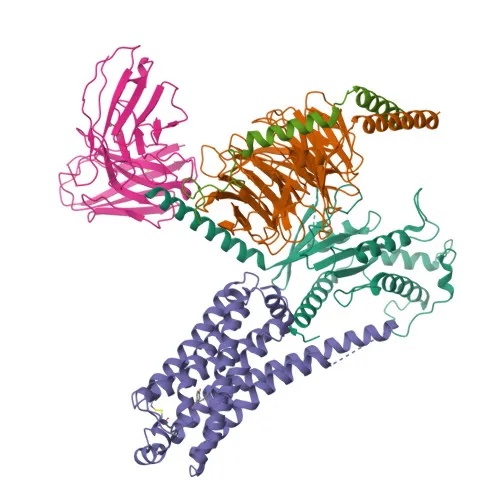
- TAAR1 is an intracellular G protein-coupled receptor that recognizes trace amines such as beta-phenylethylamine (beta-PEA), 3-iodothyronamine (T1AM), isoamylamine (IAA), cadaverine (CAD), cyclohexylamine (CHA), p-tyramine, trimethylamine (TMA), octopamine, and tryptamine. Related references: PMID:11459929 PMID:11723224 PMID:15718104
- It also acts as a receptor for psychoactive substances like amphetamine and methamphetamine, mediating their effects. Related references: PMID:31399635 PMID:37935376 PMID:37935377
- Depending on the ligand, TAAR1 couples to G(i)/G(o), G(s), or G(q)/G(11) G alpha proteins, leading to inhibition or activation of adenylate cyclase, or activation of phospholipase C-beta. Related references: PMID:37935376 PMID:37963465
- It is localized to the endomembrane system, endoplasmic reticulum membrane, and cell membrane.
- TAAR1 is expressed at low levels in both the central and peripheral nervous system, with moderate expression in the stomach, and trace amounts in other tissues like amygdala, kidney, lung, and small intestine. Related references: PMID:11459929
- The protein contains disulfide bonds and is glycosylated, typical of GPCRs.
Experimental Guidance and Technical Tips
- The immunogen is a synthetic peptide corresponding to amino acids 100–200 of human TAAR1; the antibody may recognize linear epitopes, so denaturing conditions in WB are likely suitable.
- TAAR1 is a multi-pass transmembrane protein; ensure efficient membrane protein extraction and consider using mild detergents to maintain solubility.
- Cross-reactivity with mouse and rat is reported; validate the antibody in the relevant species and tissue samples prior to critical experiments.
- For ELISA, the polyclonal nature may enhance sensitivity; however, optimize coating conditions and antibody concentration for best results.
- As a GPCR, TAAR1 may be expressed at low levels; enrichment techniques or extended exposure might be needed for detection.
CamelBio: Your One-Stop Sourcing Bridge
CamelBio provides diagnostic manufacturers, labs, and research institutes with one-stop access to IVD raw materials, technical services, and consulting—covering every stage from concept to clinic. For neuroscience and GPCR-targeted assay development, we supply validated antibody pairs, optimized monoclonal/polyclonal antibodies like this anti-TAAR1 reagent, bulk ancillary reagents, and rare target raw-material sourcing to support your research and diagnostic workflow.
REQUEST A QUOTE
Our professional team will reply to you within one business day. Please feel free to contact us!