Polyclonal Antibodies
Anti-SYMPK Rabbit Polyclonal Antibody for WB/ELISA - Q92797
Item Number : CM0029786
Price varies based on specs and customizations
- Application
- WB, ELISA
- Cross Reactivity
- Human, Mouse
- Protein Weight
- 141kDa

Shipping:
Contact us to get shipping details Enjoy On-time Dispatch Guarantee.
Why Choose Us
Easy ordering process, quality products, and dedicated support for your business success.
Core Product Specifications and Parameters
| Parameter | Value |
|---|---|
| Product Name | SYMPK Rabbit pAb |
| Remarks/Alias | SPK; SYM; Pta1; SYMPK |
| Species | Human |
| GeneID | 8189 |
| Immunogen | Recombinant fusion protein containing a sequence corresponding to amino acids 310-530 of human SYMPK (NP_004810.2). |
| Source | Rabbit |
| Category | Polyclonal Antibodies |
| Application | WB, ELISA |
| Cross Reactivity | Human, Mouse |
| SWISS | Q92797 |
| Protein Weight | 141kDa |
| Shipping | Ice bag |
Biological Background: SYMPK Function and Localization
- SYMPK (Symplekin) is a scaffold protein that functions as a key component of the histone mRNA 3'-end processing complex, essential for proper histone gene expression.
- It is also a component of the tight junction (TJ) plaque, contributing to cell adhesion and epithelial barrier integrity, though it may not be exclusively junctional.
- SYMPK is involved in pre-mRNA polyadenylation, a critical step in mRNA maturation, and enhances the phosphatase activity of SSU72.
- The protein localizes to multiple cellular compartments, including the cytoplasm, cytoskeleton, tight junctions, cell membrane, and the nucleoplasm.
- Tissue expression is broad, with detection in testis (polar epithelia and Sertoli cells), stomach, duodenum, pancreas, liver, fetal brain, various carcinomas, lens-forming cells, fibroblasts, and lymphocytes, but absent from vascular endothelium, epidermis, and certain heart structures.
- SYMPK undergoes alternative splicing, generating multiple isoforms, and is modified by phosphorylation and ubiquitin conjugation (isopeptide bond), which may regulate its functions in RNA processing and junction assembly.
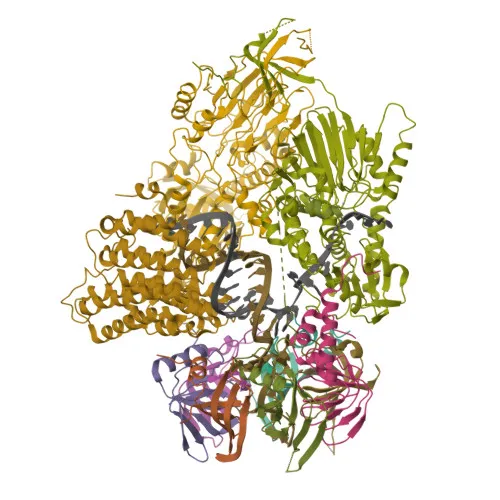
- Structural studies have provided insights into its domain organization and interactions with other processing factors.
- The protein has a molecular weight of approximately 141 kDa.
Experimental Guidance and Technical Tips
- The immunogen corresponds to amino acids 310-530 of human SYMPK, a region with potential homology in mouse; cross-reactivity is indicated, but validation in the relevant sample system is recommended.
- For Western blotting (WB), consider testing a range of antibody dilutions to optimize the signal-to-noise ratio for your specific sample type.
- In ELISA applications, the antibody may be used as a capture or detection reagent; experimental conditions should be empirically determined.
- Due to the large molecular weight (~141 kDa), ensure adequate protein transfer times and use appropriate molecular weight markers during SDS-PAGE.
CamelBio: Your One-Stop Sourcing Bridge
CamelBio streamlines IVD raw-material procurement, providing diagnostic manufacturers and researchers with reliable access to validated antibodies like this anti-SYMPK polyclonal antibody. From optimized antibody pairs and monoclonal/polyclonal reagents to bulk ancillary materials, we support every stage of assay development. For emerging targets like SYMPK in RNA processing and tight junction biology, CamelBio also offers customized sourcing solutions for rare or difficult-to-obtain raw materials, helping you bridge from concept to clinic efficiently.
REQUEST A QUOTE
Our professional team will reply to you within one business day. Please feel free to contact us!