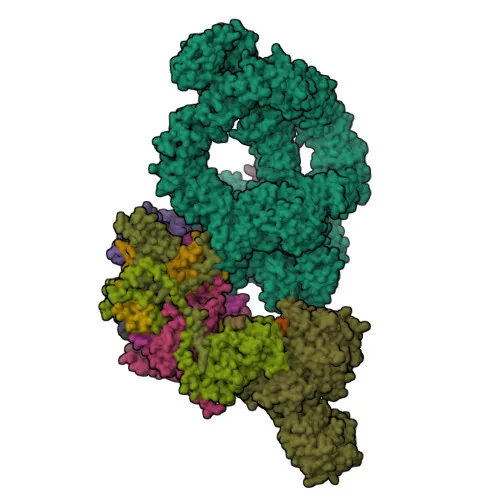
Polyclonal Antibodies
Anti-SUPT20H Polyclonal Antibody for WB, IHC-P, ELISA - Q8NEM7
Item Number : CM0029553
Price varies based on specs and customizations
- Application
- WB, IHC-P, ELISA
- Cross Reactivity
- Human, Mouse, Rat
- Protein Weight
- 86kDa

Shipping:
Contact us to get shipping details Enjoy On-time Dispatch Guarantee.
Why Choose Us
Easy ordering process, quality products, and dedicated support for your business success.
Core Product Specifications and Parameters
| Parameter | Value |
|---|---|
| Product Name | SUPT20H Rabbit pAb |
| Remarks/Alias | C13; FP757; P38IP; SPT20; FAM48A; C13orf19; SUPT20H |
| Species | Human |
| GeneID (human) | 55578 |
| GeneID | 55578 |
| Immunogen | Recombinant protein|Recombinant fusion protein containing a sequence corresponding to amino acids 580-779 of human SUPT20H (NP_001014308.2) |
| Source | Rabbit |
| Category | Polyclonal Antibodies |
| Application | WB, IHC-P, ELISA |
| Cross Reactivity | Human, Mouse, Rat |
| SWISS | Q8NEM7 |
| Protein Weight | 86kDa |
| Shipping | Ice bag |
Biological Background: SUPT20H Function and Localization
- SUPT20H (suppressor of Ty 20 homolog) is a transcription factor homolog, also known as p38IP, FAM48A, and C13orf19, encoded by the SUPT20H gene on chromosome 13. Multiple isoforms exist due to alternative splicing.
- It plays an essential role in MAP kinase p38 (MAPK11, MAPK12, MAPK13, and/or MAPK14) activation during gastrulation, and is required for down-regulation of E-cadherin by regulating protein levels downstream of NCK-interacting kinase (NIK).
- SUPT20H functions independently of transcriptional regulation by FGF signaling and Snail, indicating a post-translational mechanism for E-cadherin control.
- This protein is involved in starvation-induced autophagy, being required for ATG9A trafficking, a key step in autophagosome formation.
- Localized to the nucleus, SUPT20H is highly expressed in testis, moderately in brain and pituitary gland, and in fetal tissues including lung, brain, thymus, and kidney; expression is down-regulated in malignant prostate tissues.
- Post-translational modifications include phosphorylation, and the protein has been identified in various proteomics studies.
- The predicted molecular weight is approximately 86 kDa (UniProt: 85,789 Da), consistent with the product's reported band at 86 kDa.
Experimental Guidance and Technical Tips
- The immunogen is a recombinant fusion protein covering amino acids 580–779 of human SUPT20H (NP_001014308.2). This C-terminal region is likely to have good immunogenicity; consider verifying specificity with appropriate controls like siRNA knockdown or knockout lysates.
- For Western blot, a band around 86 kDa is expected. Use tissues with high expression such as testis or brain as positive samples, and consider a negative control tissue like prostate cancer where expression is down-regulated.
- In immunohistochemistry (IHC-P), testis or brain sections are recommended for initial optimization. Antigen retrieval conditions may need to be tailored to the epitope.
- The antibody's reactivity with human, mouse, and rat species suggests conserved epitope regions; validate species-specific detection by running parallel samples if cross-species use is intended.
CamelBio: Your One-Stop Sourcing Bridge
CamelBio offers a one-stop sourcing platform for IVD raw materials, providing diagnostic manufacturers and research institutions with streamlined access to validated antibodies, antibody pairs, and ancillary reagents. For chromatin biology, autophagy, and developmental signaling research, we supply high-quality reagents like this anti-SUPT20H polyclonal antibody and can assist with custom bulk orders or rare target sourcing. Let CamelBio bridge your project from concept to clinic with reliable procurement support.
REQUEST A QUOTE
Our professional team will reply to you within one business day. Please feel free to contact us!