Polyclonal Antibodies
Anti-STT3B Rabbit Polyclonal Antibody for WB, ELISA - Q8TCJ2
Item Number : CM0013725
Price varies based on specs and customizations
- Application
- WB, ELISA
- Cross Reactivity
- Human, Mouse
- Protein Weight
- 94kDa

Shipping:
Contact us to get shipping details Enjoy On-time Dispatch Guarantee.
Why Choose Us
Easy ordering process, quality products, and dedicated support for your business success.
Core Product Specifications and Parameters
| Parameter | Value |
|---|---|
| Product Name | STT3B Rabbit pAb |
| Remarks/Alias | SIMP; CDG1X; STT3-B; STT3B |
| Species | Human |
| Gene ID (Human) | 201595 |
| Gene ID | 201595 |
| Immunogen | Recombinant protein: Recombinant fusion protein containing a sequence corresponding to amino acids 1-100 of human STT3B (NP_849193.1). |
| Source | Rabbit |
| Category | Polyclonal Antibodies |
| Application | WB, ELISA |
| Cross Reactivity | Human, Mouse |
| SWISS | Q8TCJ2 |
| Protein Weight | 94kDa |
| Shipping | Ice bag |
Biological Background: STT3B Function and Localization
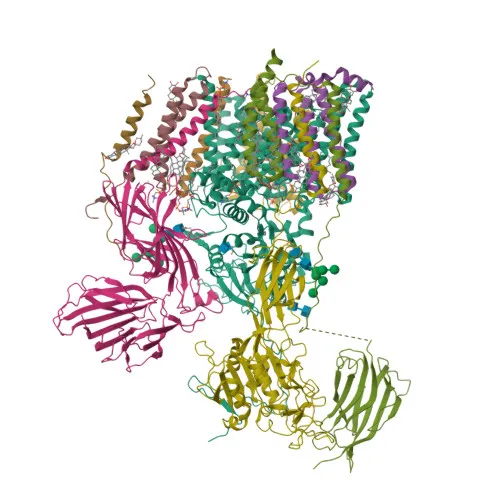
- STT3B acts as the catalytic subunit of the OST complex, catalyzing the initial transfer of a glycan (Glc3Man9GlcNAc2) from dolichol-pyrophosphate to Asn-X-Ser/Thr motifs, a crucial step in protein N-glycosylation. Related references: PMID:19167329, PMID:31296534, PMID:31831667
- STT3B-containing complexes mediate both co- and post-translational N-glycosylation; they are essential for efficient post-translational modification and can rescue skipped glycosylation sites. Related references: PMID:19167329, PMID:22607976, PMID:31296534
- In the ERAD pathway, STT3B N-glycosylates misfolded or unfolded proteins, marking them for ubiquitin-dependent degradation. Related references: PMID:19167329, PMID:22607976
- Specifically glycosylates the disease variant AMYL-TTR ('Asp-38') at Asn-118, leading to its degradation. Related references: PMID:19167329, PMID:22607976
- Localized to the endoplasmic reticulum membrane as a multi-pass transmembrane protein.
- Expressed in heart, brain, placenta, lung, liver, muscle, kidney, and pancreas; detected in skin fibroblasts at the protein level.
- Post-translationally modified by acetylation and phosphorylation; binds metal cofactors (Mg2+, Mn2+). Keywords include congenital disorder of glycosylation, glycoprotein, glycosyltransferase.
Experimental Guidance and Technical Tips
- The immunogen targets the N-terminal region (amino acids 1-100), which is conserved between human and mouse, supporting the observed cross-reactivity. Validate in your specific sample matrix.
- For Western blotting, expect a band at approximately 94 kDa. Optimize antibody dilution and we recommend using enriched ER fractions to enhance detection of endogenous STT3B.
- In ELISA, consider using the recombinant immunogen as a positive control. Titrate antibody concentration to achieve optimal signal-to-noise ratio.
- Always include appropriate positive and negative controls to confirm specificity, especially when analyzing low-abundance targets.
CamelBio: Your One-Stop Sourcing Bridge
CamelBio offers diagnostic manufacturers and research teams a streamlined, one-stop sourcing solution for high-quality IVD raw materials. This anti-STT3B rabbit polyclonal antibody is part of our comprehensive portfolio for N-glycosylation and ERAD research, complemented by validated antibody pairs, optimized monoclonal/polyclonal antibodies, and bulk ancillary reagents. Leverage our expertise to source rare targets or customize production, supporting your projects from concept to clinical application.
REQUEST A QUOTE
Our professional team will reply to you within one business day. Please feel free to contact us!