Polyclonal Antibodies
Anti-STK26 (MST4) Rabbit Polyclonal Antibody for WB, IHC-P, ELISA - Q9P289
Item Number : CM0023197
Price varies based on specs and customizations
- Application
- WB, IHC-P, ELISA
- Cross Reactivity
- Human, Mouse, Rat
- Protein Weight
- 47kDa

Shipping:
Contact us to get shipping details Enjoy On-time Dispatch Guarantee.
Why Choose Us
Easy ordering process, quality products, and dedicated support for your business success.
Core Product Specifications and Parameters
| Parameter | Value |
|---|---|
| Product Name | STK26 Rabbit pAb |
| Remarks/Alias | MASK; MST4; STK26 |
| Species | Human |
| GeneID (Human) | 51765 |
| GeneID | 51765 |
| Immunogen | Recombinant fusion protein containing a sequence corresponding to amino acids 340-416 of human STK26 (NP_057626.2) |
| Source | Rabbit |
| Category | Polyclonal Antibodies |
| Application | WB, IHC-P, ELISA |
| Cross Reactivity | Human, Mouse, Rat |
| SWISS | Q9P289 |
| Protein Weight | 47kDa |
| Shipping | Ice bag |
Biological Background: STK26 Function and Localization
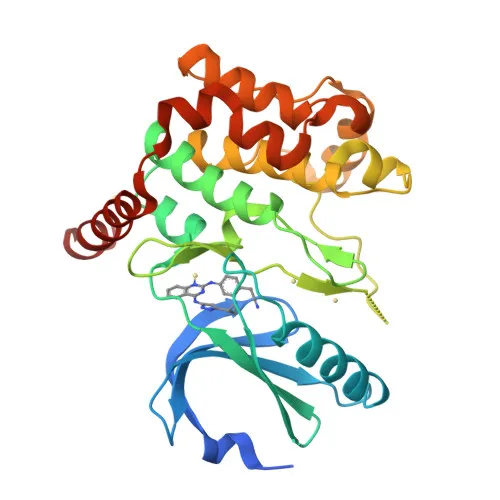
- STK26 (serine/threonine-protein kinase 26), also known as MST4 (mammalian STE20-like protein kinase 4), MASK (MST3 and SOK1-related kinase), is encoded by the STK26 gene (GeneID: 51765) in humans. It belongs to the STE20-like kinase family.
- The kinase acts as a mediator of cell growth and modulates apoptosis. Related references: PMID:11641781 PMID:17360971
- In polarized cell migration, STK26 cooperates with STK24 to negatively regulate Golgi reorientation upon RHO activation. Related references: PMID:27807006
- STK26 phosphorylates ATG4B at serine-383, a modification that increases autophagic flux, implicating this kinase in autophagy regulation. Related references: PMID:29232556
- As a core component of the striatin-interacting phosphatase and kinase (STRIPAK) complexes, STK26 participates in regulating multiple signaling cascades, including Hippo, MAPK, nuclear receptor pathways, and cytoskeleton remodeling, thereby governing processes such as cell growth, differentiation, apoptosis, metabolism, and immune regulation. Related references: PMID:18782753
- Subcellularly, STK26 is predominantly localized in the cytoplasm and at the Golgi apparatus.
- The protein is subject to acetylation and phosphorylation and contains kinase, ATP-binding, and metal-binding domains. It is classified under keywords: 3D-structure, Acetylation, Alternative splicing, Apoptosis, ATP-binding, Cytoplasm, Golgi apparatus, Kinase, Magnesium, Metal-binding, Nucleotide-binding, Phosphoprotein, Proteomics identification, Reference proteome, Serine/threonine-protein kinase, Transferase.
- The canonical isoform has a calculated molecular weight of 46529 Da (UniProt), migrating at an apparent molecular weight of 47 kDa on SDS-PAGE.
Experimental Guidance and Technical Tips
- The immunogen was a recombinant protein covering amino acids 340–416 of human STK26 (C-terminal region). This polyclonal antibody is expected to recognize all isoforms containing this sequence.
- For Western blotting (WB), a specific band at ~47 kDa is typically detected in human, mouse, and rat cell lysates. Optimize loading controls and consider nuclear/cytoplasmic fractionation to enrich signals.
- For immunohistochemistry (IHC-P), antigen retrieval using citrate buffer (pH 6.0) or EDTA buffer (pH 8.0) is recommended. Validate staining patterns in known positive tissues (e.g., tumor lines, epithelial tissues).
- In ELISA, use the antibody as a capture or detection reagent after confirming binding affinity to the recombinant immunogen or native STK26.
- As this is a polyclonal antibody, batch-to-batch variability may exist; include appropriate positive and negative controls and validate specificity in your experimental system (e.g., via knockdown/knockout models or blocking peptides).
CamelBio: Your One-Stop Sourcing Bridge
CamelBio provides diagnostic manufacturers, laboratories, and research institutes with comprehensive access to IVD raw materials, spanning monoclonal and polyclonal antibodies, validated antibody pairs, bulk ancillary reagents, and rare‑target sourcing. For research involving apoptosis, autophagy, cell migration, or STRIPAK‑related signaling, our team can assist with tailored procurement of reagents against STK26/MST4 and associated pathway components. Contact us to discuss your project needs and accelerate your assay development from concept to clinic.
Product Datasheet
Anti-STK26 (MST4) Rabbit Polyclonal Antibody for WB, IHC-P, ELISA - Q9P289
REQUEST A QUOTE
Our professional team will reply to you within one business day. Please feel free to contact us!