Polyclonal Antibodies
Anti-STING/TMEM173 Rabbit pAb for WB, IHC-P, IF/ICC, ELISA - Q86WV6
Item Number : CM0030760
Price varies based on specs and customizations
- Application
- WB, IHC-P, IF/ICC, ELISA
- Cross Reactivity
- Human, Mouse, Rat
- Protein Weight
- 42kDa

Shipping:
Contact us to get shipping details Enjoy On-time Dispatch Guarantee.
Why Choose Us
Easy ordering process, quality products, and dedicated support for your business success.
Core Product Specifications and Parameters
| Parameter | Value |
|---|---|
| Product Name | STING/TMEM173 Rabbit pAb |
| Remarks/Alias | ERIS; MITA; MPYS; SAVI; NET23; STING; hMITA; hSTING; TMEM173; STING-beta; STING/TMEM173 |
| Species | Human |
| GeneID (Human) | 340061 |
| GeneID | 340061 |
| Immunogen | Recombinant fusion protein containing a sequence corresponding to amino acids 254-379 of human STING/TMEM173 (NP_938023.1). |
| Source | Rabbit |
| Category | Polyclonal Antibodies |
| Application | WB, IHC-P, IF/ICC, ELISA |
| Cross Reactivity | Human, Mouse, Rat |
| SWISS | Q86WV6 |
| Protein Weight | 42kDa |
| Shipping | Ice bag |
Biological Background: STING/TMEM173 Function and Localization
-
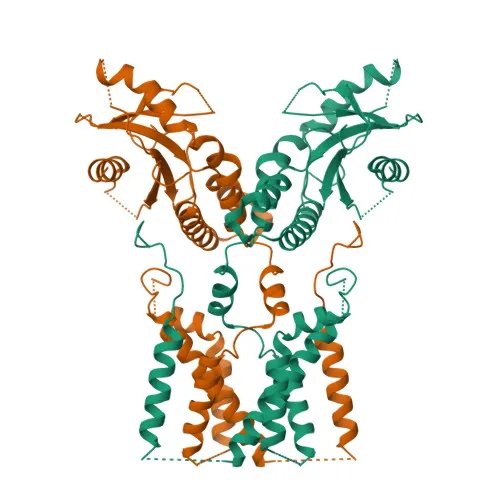
STING/TMEM173 (gene STING1) is a transmembrane protein that acts as a key facilitator of innate immune signaling by sensing cytosolic DNA from bacteria and viruses, promoting production of type I interferons (IFN-alpha and IFN-beta). Related references: PMID:18724357 PMID:18818105 PMID:19433799 PMID:26300263
-
It functions as a direct sensor of cyclic dinucleotides, including bacterial c-di-GMP, and the CGAS-produced second messenger cGAMP, with a preference for the 2',3'-linked isomer. Related references: PMID:21947006 PMID:23258412 PMID:23707065 PMID:23747010 PMID:23910378 PMID:26300263 PMID:26150511
-
Upon ligand binding, STING oligomerizes and translocates from the endoplasmic reticulum; it is then phosphorylated by TBK1 on the pLxIS motif, leading to recruitment and activation of the transcription factor IRF3 to induce type I interferon expression. Related references: PMID:22394562 PMID:25636800 PMID:29973723
-
Beyond interferon induction, STING plays a direct, TBK1-independent role in autophagy by directing COPII vesicle budding from the ER to form ERGIC, which serves as a membrane source for LC3 lipidation and autophagosome formation, targeting cytosolic DNA or DNA viruses for lysosomal degradation. Additionally, it acts as a proton channel to facilitate autophagy. Related references: PMID:30568238 PMID:30842662 PMID:41639454 PMID:41639452 PMID:37535724
-
STING is localized to multiple organelle membranes, including the endoplasmic reticulum, ER-Golgi intermediate compartment, Golgi, autophagosomes, mitochondrial outer membrane, and plasma membrane.
-
It is ubiquitously expressed, with confirmed presence in skin endothelial cells, alveolar type 2 pneumocytes, bronchial epithelium, and alveolar macrophages. Related references: PMID:18724357 PMID:18818105 PMID:25029335
-
Antiviral activity of STING can be antagonized by viral oncoproteins such as human papillomavirus E7 and adenovirus E1A, which interfere with its ability to sense cytosolic DNA. Related references: PMID:26405230
Experimental Guidance and Technical Tips
- The immunogen corresponds to the C-terminal region (aa 254-379) of human STING, which contains the ligand-binding and dimerization domain. This polyclonal antibody may recognize multiple epitopes within this region; consider epitope mapping if precise binding sites are required.
- For western blot, a band of approximately 42 kDa is expected. Validate in your specific cell or tissue lysate, as post-translational modifications may cause slight molecular weight shifts.
- For immunohistochemistry (IHC-P), antigen retrieval may be necessary, and staining conditions should be optimized for each tissue type. For immunofluorescence (IF/ICC), permeabilization is required to access intracellular STING pools, as it is primarily localized to cytoplasmic organelle membranes.
- The antibody is reported to cross-react with mouse and rat STING, making it suitable for studies in rodent models; nevertheless, independent validation in the relevant species is recommended.
- As with all polyclonal antibodies, batch-to-batch variability may occur; consider lot-specific testing for critical quantitative applications.
CamelBio: Your One-Stop Sourcing Bridge
CamelBio supports diagnostic manufacturers and research laboratories with comprehensive access to IVD raw materials, including validated antibody pairs, optimized monoclonal and polyclonal antibodies, and bulk ancillary reagents for the STING innate immunity pathway. Our experienced sourcing team can assist in securing rare-target raw materials and provide technical consulting to streamline your assay development from concept to clinic. Partner with CamelBio to simplify your supply chain and accelerate your STING-targeted projects.
REQUEST A QUOTE
Our professional team will reply to you within one business day. Please feel free to contact us!