Monoclonal Antibodies
Anti-STING/TMEM173 Monoclonal Antibody for WB, IHC-P, ELISA - Q86WV6
Item Number : CM0005764
Price varies based on specs and customizations
- Application
- WB, IHC-P, ELISA
- Cross Reactivity
- Human, Mouse, Rat
- Protein Weight
- 42kDa

Shipping:
Contact us to get shipping details Enjoy On-time Dispatch Guarantee.
Why Choose Us
Easy ordering process, quality products, and dedicated support for your business success.
Core Product Specifications and Parameters
| Parameter | Value |
|---|---|
| Product Name | STING/TMEM173 Rabbit mAb |
| Remarks/Alias | ERIS; MITA; MPYS; SAVI; NET23; STING; hMITA; hSTING; TMEM173; STING-beta; STING/TMEM173 |
| Species | Human |
| GeneID (Human) | 340061 |
| GeneID | 340061 |
| Immunogen | Recombinant protein of human STING/TMEM173 |
| Source | Rabbit |
| Category | Monoclonal Antibodies |
| Application | WB, IHC-P, ELISA |
| Cross Reactivity | Human, Mouse, Rat |
| SWISS | Q86WV6 |
| Protein Weight | 42kDa |
| Shipping | Ice bag |
Biological Background: STING/TMEM173 Function and Localization
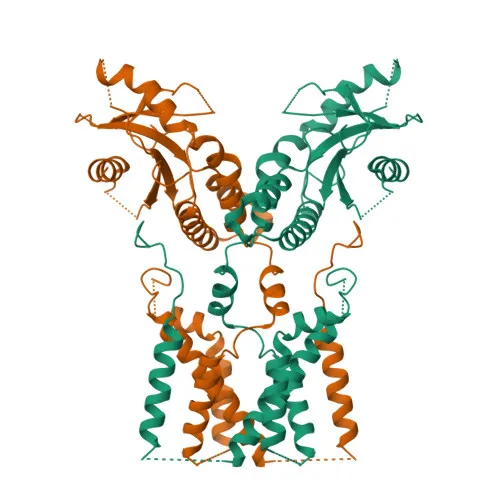
- STING (Stimulator of interferon genes protein), also known as TMEM173, ERIS, MITA, MPYS, is encoded by the STING1 gene. It acts as a pivotal cytosolic DNA sensor in innate immunity.
- Functions as a facilitator of innate immune signaling by sensing non-CpG double-stranded DNA from viruses and bacteria, promoting production of type I interferons (IFN-α and IFN-β). Related references: PMID:18724357 PMID:18818105 PMID:19433799
- Recognizes and binds cyclic dinucleotides, including bacterial c-di-GMP and endogenous 2',3'-cGAMP produced by cGAS in response to cytosolic DNA. STING preferentially recognizes 2',3'-linked cGAMP due to its organized conformation that pre-matches the binding pocket. Related references: PMID:21947006 PMID:23258412 PMID:23707065 PMID:23747010 PMID:23910378 PMID:26150511 PMID:26300263
- Upon ligand binding, STING oligomerizes, translocates from the endoplasmic reticulum, and is phosphorylated by TBK1 on the pLxIS motif, leading to recruitment and activation of IRF3 to induce type I interferons, establishing an antiviral state. Related references: PMID:22394562 PMID:25636800 PMID:29973723
- In addition to interferon induction, STING directly triggers autophagy. Following activation, it buds from the ER in COPII vesicles to form the ER-Golgi intermediate compartment (ERGIC), which serves as the membrane source for LC3 lipidation and autophagosome formation, targeting cytosolic DNA for lysosomal degradation. This autophagy function is independent of TBK1 phosphorylation. Related references: PMID:30568238 PMID:30842662 PMID:41639452 PMID:41639454 PMID:37535724
- Subcellular localization spans the endoplasmic reticulum, ERGIC, Golgi apparatus, autophagosome, mitochondrial outer membrane, and plasma membrane. STING also localizes to the perinuclear region and cytoplasmic vesicles.
- Ubiquitously expressed, with notable presence in skin endothelial cells, alveolar type 2 pneumocytes, bronchial epithelium, and alveolar macrophages. Related references: PMID:18724357 PMID:18818105 PMID:25029335
- STING can be cross-activated by 2',3'-cGAMP from infected cells to propagate interferon signaling in neighboring cells. Moreover, viral oncoproteins such as HPV E7 and adenovirus E1A antagonize STING-mediated DNA sensing. Related references: PMID:26405230
Experimental Guidance and Technical Tips
- For Western blot (WB), use reducing and denaturing conditions; expect a band at approximately 42 kDa. Validate in your specific cell line or tissue lysate, as STING expression may vary with stimulation status.
- For immunohistochemistry on paraffin-embedded sections (IHC-P), optimize antigen retrieval and antibody dilution based on your tissue of interest.
- For ELISA, this antibody can be employed as a detection or capture reagent; note that the immunogen was recombinant human STING/TMEM173 protein.
CamelBio: Your One-Stop Sourcing Bridge
CamelBio provides diagnostic manufacturers and researchers with a comprehensive portfolio of IVD raw materials, including validated antibody pairs, optimized monoclonal antibodies like this anti-STING/TMEM173 clone, and bulk ancillary reagents. Our one-stop facility bridges the gap from concept to clinic, ensuring reliable access to critical targets for innate immunity and infectious disease assay development.
REQUEST A QUOTE
Our professional team will reply to you within one business day. Please feel free to contact us!